


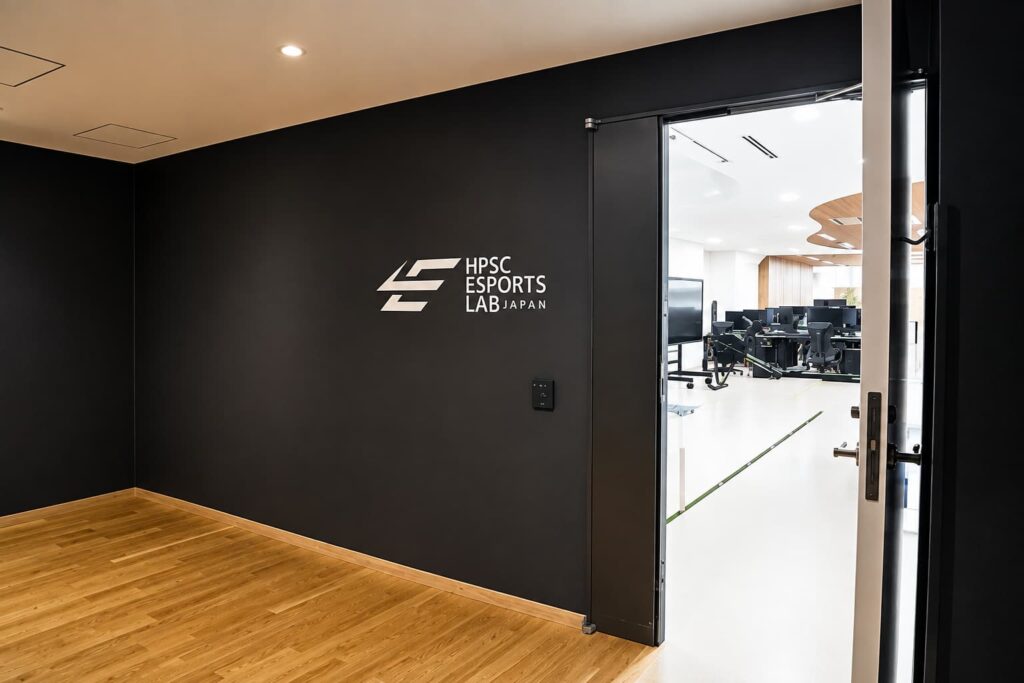


The Japan Sport Council (JSC), a government-affiliated body that supports Japanese athletes, has opened a new research facility dedicated to esports. The center, called the HPSC ESPORTS LAB, is part of the High Performance Sport Center (HPSC) and is located at the Ajinomoto National Training Center in Japan, inside the center’s Indoor Training Center East building.
The stated goal is to help Japanese esports players compete better internationally by studying them through sports medicine, science, and data analysis, the same kind of support that has traditionally been given to Olympic and Paralympic athletes.
The lab is divided into three zones, each with a different focus:
- Esports Zone: research and support centered on conventional esports titles.
- Virtual Sports Zone: this covers “virtual sports,” where a person’s real physical movements are captured by sensors and translated into a digital space so they can compete.
- Wellbeing Zone: research focused on athletes’ overall wellbeing, meaning their physical, mental, and social health together.
In a press release translated from Japanese, the Japan Sport Council mentioned that esports has been gaining attention from major sports organisations in recent years, including the International Olympic Committee and various national sports federations. Japan is also updating its national sports policy, and the draft of that plan includes support for athletes using digital technology, esports among them. At the same time, international esports tournaments have grown in popularity, and some organisations have already started applying sports science methods to esports training.

The HPSC ESPORTS LAB is meant to bring this kind of research under one roof in Japan. It is run in connection with the National Institute of Sports Science (JISS), which is the research arm at the core of the HPSC.
The Japan Sport Council isn’t the only organisation that is investing into esports research labs lately. G2 Esports launched its own in-house research division this year, the G2 Performance Lab, to study how its pro players train and stay healthy. Around the same time, over on the hardware side, Philips Monitors signed a donation agreement with HUFS C&T about five months ago and opened the Philips Evnia Esports Lab.
Not long after that, Fort Erie International Academy partnered with media and consultancy firm A5 Labs to open Canada’s first purpose-built scholastic esports facility, complete with its own competitive program. And further back, Logitech committed €2.5 million (roughly $2.9 million) in 2025 to a four-year research partnership with Lero, the Science Foundation Ireland Research Centre at the University of Limerick.