



Italy’s draft 2027 Budget Bill (Manovra 2027) has triggered renewed regulatory turmoil across the domestic esports sector by placing local area network (LAN) gaming venues under the supervision of the Customs and Monopolies Agency (ADM), Italy’s gambling regulator.
Embedded in Article 25 of the draft legislation, the framework introduces flat-rate taxation, biennial authorisation fees, and operational controls modelled on regulated public gaming, despite explicitly prohibiting betting and cash prizes on venue premises. The proposal, viewed as a setback by Italian esports stakeholders spoken to by The Esports Radar, has prompted the Italian Interactive Digital Entertainment Association (IIDEA) to demand the complete removal of Article 25 from the bill.
The draft legislation is currently under parliamentary review, with IIDEA actively engaging all political groups to advocate for the sector’s position and highlight the critical flaws in the proposal. A clearer picture of the bill’s trajectory is expected to emerge next week.
Also read:
- FENNEL expands B2B push with Toyohashi Sekkei corporate esports club
- Raleigh to host ERN’s flagship esports academic conference in 2027
- Seoul sets aside $1 million to host 2027 League of Legends Worlds finals
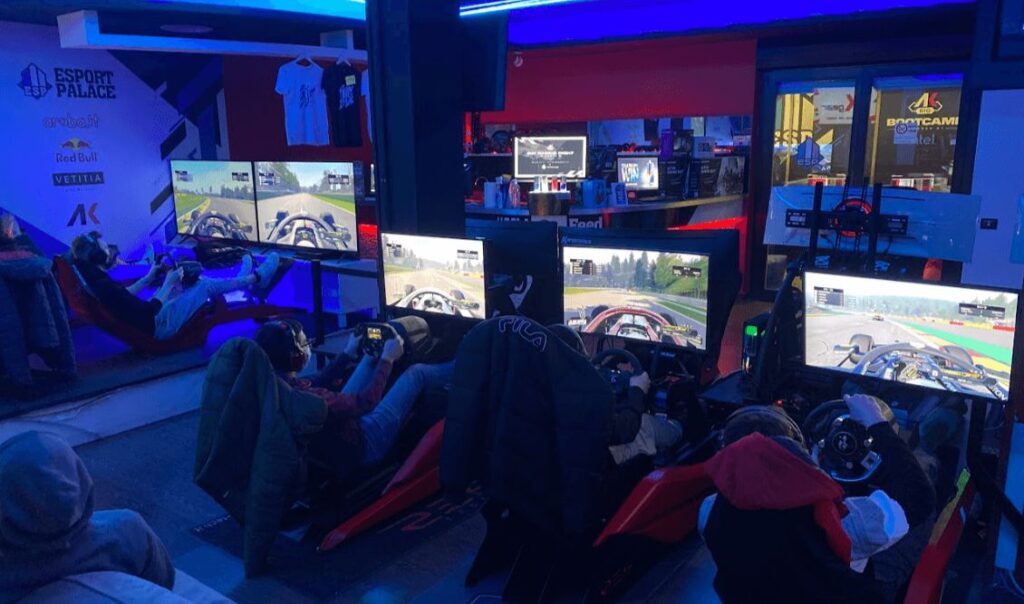
According to an analysis by Italian technology portal Hardware Upgrade, Article 25 modifies Italy’s Consolidated Law on Public Security to establish an 8% entertainment tax on skill-based digital games delivered via remote online platforms in commercial venues. Rather than taxing actual venue turnover, the levy is calculated on a deemed flat annual income of €15,000 per standard PC or console station, equating to €1,200 per year per device, and €25,000 for large-scale simulators, resulting in a €2,000 annual levy per unit. For a venue operating the newly mandated minimum threshold of 20 stations, the baseline tax liability reaches €24,000 annually before accounting for additional licensing charges.
Beyond annual taxation, operators must obtain biennial ADM authorisations carrying steep administrative levies: €200 per gaming station, €1,000 per venue, €2,000 per video game title offered, and €10,000 per online platform utilised. As detailed by Hardware Upgrade, venues must restrict PCs exclusively to gaming and ranking functions, verify user ages via the PEGI classification system, design premises so customers remain aware of the passage of time, and retain user activity and communication logs for at least five years. Additionally, the bill grants ADM authority to cap tournament entry fees and prize pools while collecting a supervisory levy of up to 8 per cent on participation fees. Existing venues would face a 60-day transitional window to submit self-declarations and pay initial taxes while awaiting implementing decrees within eight months.
Industry opposition centres on the stark disparity between the government’s fiscal projections and Italy’s actual commercial footprint. As reported by Hardware Upgrade, the bill’s technical report admits a lack of reliable sector data, estimating 200 active venues (4,000 stations) in 2027 generating €5.87m in taxes and fees, before scaling to 2,300 venues, one for every municipality exceeding 5,000 inhabitants, and 46,000 stations from 2028 to yield €66.03m annually (€56.27m in 2029).
In briefings challenging the bill, IIDEA countered that Italy currently houses approximately 70 active LAN centres, of which only 20 meet the 20-station minimum requirement. Furthermore, IIDEA values the entire Italian esports industry at between €32m and €35m in 2026 — and up to €60m by 2030 — meaning the state’s projected €66m tax take exceeds the economic value of the entire sector. IIDEA stressed that video games are products of the cultural and creative industries rather than regulated public gambling, warning that disproportionate compliance costs threaten small businesses and grassroots associations while creating operational barriers across publishers, developers, online platforms, tournament organisers, and players.
The legislative clash reopens a regulatory dispute that appeared on track for resolution four years ago. In April 2022, ADM seized gaming hardware from multiple Italian LAN venues for lacking amusement and gambling machine certifications, prompting Undersecretary of Finance Federico Freni to pledge dedicated legislation formally recognising and regulating esports in May 2022.
Rather than delivering tailored recognition, Article 25 reimposes gambling-style oversight at a critical juncture as Italian organisations work to close the developmental gap with major European peers, a challenge recently examined in The Esports Radar’s interview with NOVO Esports CEO Emanuele Acerbis. IIDEA has urged lawmakers to scrap Article 25 in full and open structured consultations to establish proportional, data-driven rules tailored to the sector’s operational reality.