

France possesses one of the most advanced esports ecosystems in the world. Its organisations—names like Team Vitality and Karmine Corp—have tasted huge success at the highest levels across multiple titles, from Counter-Strike 2 to League of Legends and Rocket League. That pedigree naturally positions the country as a strong contender for the Esports Nations Cup (ENC) championship when the multi-title event launches later this year.
Among the applications submitted to the Esports World Cup Foundation (EWCF) for the right to select and manage France’s national representatives, one stood out as interesting: the bid from the recently established Union Française des Clubs d’Esport Professionnels (UFCEP), a coalition of the nation’s leading professional clubs. The Esports Radar reached out to understand how this collective is organising its proposal—even if, as its President Nicolas Maurer admits, much of the detail will be discovered along the way.
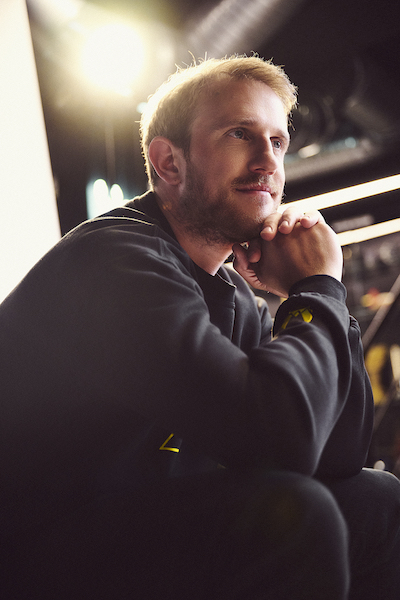
The UFCEP, founded in 2025, brings together clubs like Team Vitality, Karmine Corp, Gentle Mates, Solary, and even the Swiss Team BDS under a single banner. Their bid is co-founded by Bertrand Amar, the former Head of Esports at Webedia and a prominent media personality, and Matthieu Dallon, Founder of the Trust Esport investment fund and long term esports industry veteran. Olympic medallist Matthieu Péché has been designated to lead athlete preparation, focusing on high-performance development.
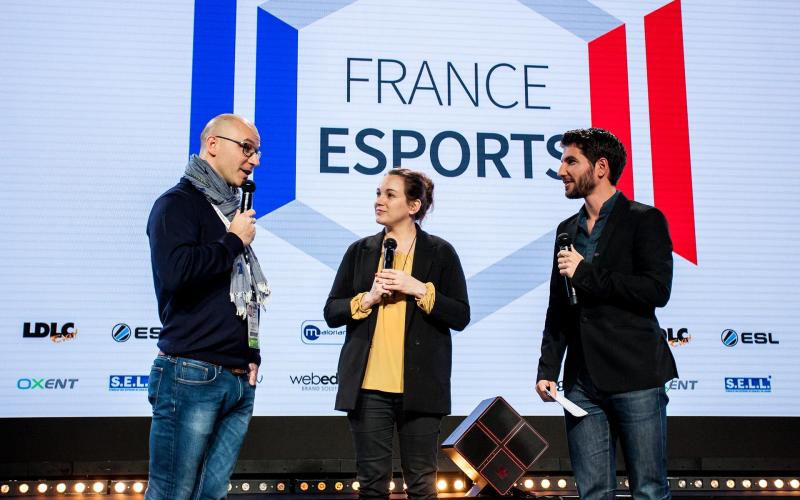
They face stiff competition from France Esports. Led by President Désiré Koussawo, the not-for-profit association, founded in 2016, is positioned as a central body for French esports policy and has played a key role in raising the profile of esports in the country. Its proposal is built on a coalition that includes the Syndicat des Éditeurs de Logiciels de Loisirs (SELL), the Union des Associations Esportives Françaises (UAEF), and Women In Games France. This structure aims to integrate various levels of the industry, from commercial publishers and municipal partners to grassroots amateur organisers and professional organisations.
The bid’s operational strategy includes the appointment of two-time Dota 2 world champion Sébastien “Ceb” Debs as National Team Manager, intended to provide professional competitive oversight. This proposal emphasizes a state-supported infrastructure as the foundation for international competition. Interestingly, the bid also presents a complex political backdrop, as it is currently locked in a direct confrontation with a rival proposal led by Matthieu Dallon, who is a Founder and former President of France Esports itself.
Both applications are now under review by the Esports World Cup Foundation (EWCF), which will select National Team Partners for each competing country.
Nicolas Maurer, Founder and CEO of Team Vitality and President of the UFCEP, does not hedge when asked what distinguishes the coalition’s proposal—even without knowing the full field of applicants.
“We think we have by far the strongest application, and I say that without knowing the number of other applications or who’s in there,” Maurer states. “I think we have by far the best track record, expertise and legitimacy to deliver the best results and fulfill the expectation of the federation and the organisers of the ENC.”
“We are the clubs, so we know a few things about performance. We have players under contract. We have the expertise of tournaments, forming teams, resolving conflicts, finding ways to perform. We are working with esports OGs and experts of the French scene and people that have a great business track record,” Maurer continues,” and we know the French scene very well and we know no one can match that in France. So that’s why we’re super confident to win the bid.”
But the coalition’s formation was not merely an exercise in assembling star power—it was about preventing fragmentation at the most critical moment. With limited information available during the bidding’s initial phase, the clubs faced a choice.
“It will be a mess. It will be complicated. We have different interests, different expertise. It will be messy. But at least let’s make it our mess of clubs that work together all year long, of experts. At least we will argue, we will try to find the right way, but together. We won’t have someone, a third party, X, Y, or Z, that’s random, that’s here, that will tell us what we should do when we come to perform and select the right player. So let it be our problem, our challenge, our mess, and we’ll find the ways.”
Structuring for integrity
One of the most delicate challenges facing any National Team Partner is avoiding conflicts of interest—particularly when clubs with their own players are responsible for selecting national representatives. Maurer acknowledges this tension and outlines how the UFCEP intends to address it.
While ENC organisers are still making information available about format, game selection and commercial parameters, the coalition is designing flexible structures.
“The way the bid has been and the process of bidding has been done, we and everyone in every country has very limited information. Basically it says, hey, we want a national team partner per country. The national team partner will have to do X, Y, Z in very broad terms. It’s not clear on the financials, not clear on what’s doable or not in terms of commercializing, marketing, the sports part, how many games. Will every country need to send a team in every game or not? How does it work? Do we have to pick? So it’s very unclear yet, but it’s the way it was designed in the initial phase, where they want to understand who’s interested to be a national team partner.”
The proposed solution involves empowering independent coaches per game title.
“And then what it will mean is also probably designing a system where teams cannot influence the decision. So basically, maybe having a coach per game with a specific attribution and scope, we design a process to get that coach. And after that, we don’t pick, we don’t influence. That’s probably the way it will work. I don’t have the details yet. We are working on different options right now. But my view is that we should never be in a position where teams are conflicted or say, ‘hey, I want my player to go in that game’. That’s the thing we need to avoid in the way we design it, of course.”
When discussion turns to expectations, Maurer’s confidence in French talent is evident—but so is his nuanced understanding of how success should be measured. “Where can France go? France can certainly do well. We have a lot of talent in France, probably much more than we should if we only look at the population number of players.”
“What it takes to compete in many games, then what will the rules be exactly in terms of aggregating the game and everything? I don’t know enough to answer. I know in certain specific games we can play for the gold medal and the win. For others, we can try to get top three. It will depend.”
Crucially, Maurer argues that competitive results cannot be the sole measure of success for the first edition.
“But at the end of the day, yes, performance is one of the metrics of judging success, but it shouldn’t be the only one. There’s also a very key component in my view is: Are the fans in France supportive and pushing and watching and rooting for the French team. Because if we build a super good team, but no one is excited and no one watches, what’s the point? So the idea is really, how do we market it right? How do we communicate right about this team? How do we get people excited? And that’s also where, as the clubs and as our partner, Bertrand, Mathieu, we have everything it takes to hype the French team as much as we can.”
The question of presidential support
The UFCEP bid has attracted attention following suggestions of public support from the French presidency. Asked to clarify, Maurer indicates that any comments from the president Emmanuel Macron should be understood as general support for esports rather than a formal endorsement of the coalition’s application.
Maurer reminds that the president has consistently spoken positively about esports, supported French teams such as in titles won by Team Vitality, and the country has consistently hosted major tournaments from a range of different games from Rocket League (RLCS Major) and Rainbow Six Siege (Six Invitational 2026) to Counter-Strike 2 (BLAST.tv Paris Major 2023). In his view, the statements reflect that broader stance rather than any official backing of a specific bid.
However, pressed on whether there is an official backing for the bid, Maurer clarifies: “I would say it’s not specifically tied to Macron. I would say that any formal support, letter, official stamp, ministry, whatever, I think it’s too early in the way the bid and the process is designed to happen. Might happen in the future. That’s part of the political game.”

Embracing the ENC vision
Despite the compressed timeline and operational challenges of a first-edition event, Maurer expresses genuine enthusiasm for what the Esports Nations Cup represents for the industry.
“I’m both excited and confused. Probably the confusion comes from the fact that it’s super short notice for everything. Apply, build the teams, compete. But it’s the first edition and the people behind it have proven that they can build products super fast and iterate to a point where it really becomes really good and meets the exact expectation for ENC. It’s edition one. There will be things to be improved. There will be mistakes. There will be a lot of stuff that will not be perfect, but it doesn’t matter because it will get better and better.”
For a club owner, national team competitions present an inherent tension: players may spend weeks away from their organisations, disrupting preparation for club-level events. But Maurer views this through the lens of his role in the UFCEP, which exists to grow the French ecosystem as a whole.
“Yes, of course, there is the part that our players might not train for us, might not prepare for events. They will spend X weeks not being with us. That’s a problem. That’s a challenge for sure. And we have to acknowledge that. But also, at the end of the day, that’s why we created the French Club Union. I’m not only working for my club and for Vitality. I’m also working to make sure esports is thriving, growing, and esports is there in the long run. And in that context of, hey, we are creating an industry, we are developing an industry, we want this industry to succeed and be there in the long run, national competitions are super interesting and super exciting.”
With applications now under EWCF review, the French esports community awaits a decision that will shape how the country presents itself on one of the industry’s newest international stages.
For his part, Maurer returns to the theme that has defined his approach throughout the conversation.
“I want to state again that we are builders, we are entrepreneurs and what matters the most to me is how we can deliver to be the best French national team in performance, in public recognition, viewership, excitement. That’s why we are putting the energy to apply and get that national team partner status. Hopefully it works, let’s see. But super convinced and confident that we are bringing what we need to the table to get there.”

Follow The Esports Radar on social media: