

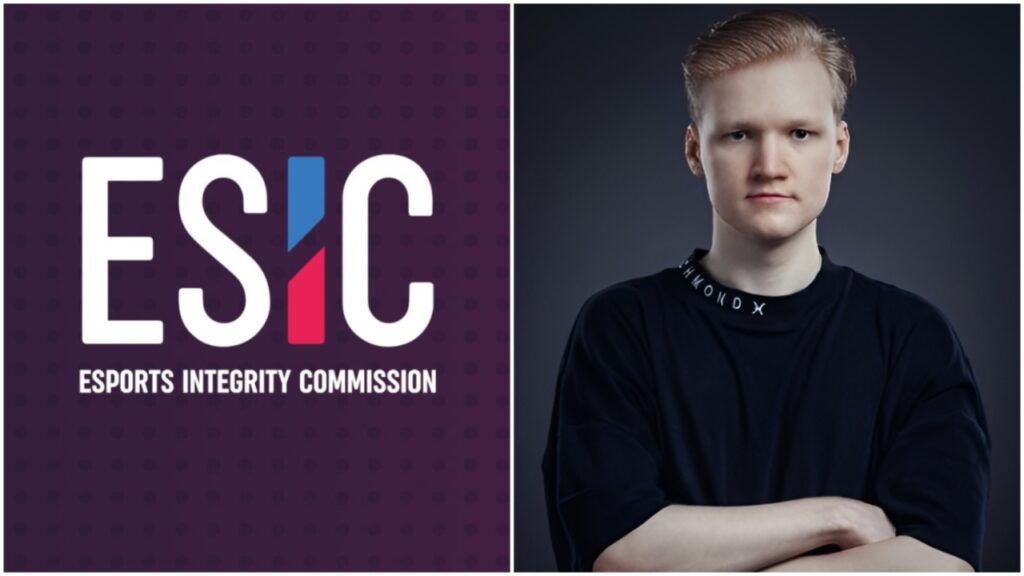


The Esports Integrity Commission (ESIC) has issued a lifetime ban to Dota 2 player Alexandr “Sensibility” Filatov on April 23, 2026, after finding him guilty of serious corruption-related offenses.
The commission said Filatov committed 17 violations of its Code of Conduct and 13 violations of its Anti-Corruption Code, showing a repeated pattern of wrongdoing across several matches. According to ESIC, the investigation found strong evidence, including messages, financial records, and other supporting material.
ESIC stated that Filatov was involved in fixing matches and influencing how games were played. He was also found to have taken and offered bribes related to match outcomes, placed bets on matches he was involved in, and used inside information for betting. In addition, he encouraged other players to take part in such activities and failed to report corruption when he was aware of it.
The Code of Conduct violations included cheating, helping others cheat, pressuring other players, offering money to support match-fixing, and repeatedly failing to report illegal actions. The commission also noted that Filatov did not cooperate with the investigation, and said he even tried to ask for money in exchange for helping investigators, which made the situation worse and influenced the final decision.
As part of the lifetime ban, Filatov is no longer allowed to take part in any ESIC-related events in any role, including as a player, coach, or manager. He is also banned from working with teams, attending events, or contacting other players about competitions. This effectively removes him from most professional tournaments in Dota 2.
Filatov has been linked to match-fixing before and is often associated with the “322” scandal, a term used in the Dota 2 scene for intentionally losing matches for betting purposes. The case is also connected to Norwegian player Tommy Le, also known as Taiga, who was given a similar lifetime ban around the same time.
The two players have publicly blamed each other since 2024. Taiga admitted to sharing some confidential information but denied deliberately losing matches, saying he was under pressure. Filatov, on the other hand, claimed they were working together at first.
Despite the ban, ESIC clarified that it applies mainly to events run by its member organizations, such as ESL and BLAST. Any further action from Valve Corporation, which runs Dota 2, would be separate.
This decision continues a streak of actions by ESIC as serious cases surfaced recently. Earlier this week, Counter-Strike 2 player MAUschine he got a lifetime ban after assaulting another player at CAGGTUS Leipzig 2026. In another case involving betting and corruption, ESIC also gave Dmytro Tediashvili, also known as “nifee,” a four-year ban from professional Counter-Strike 2.

Follow The Esports Radar on social media: