

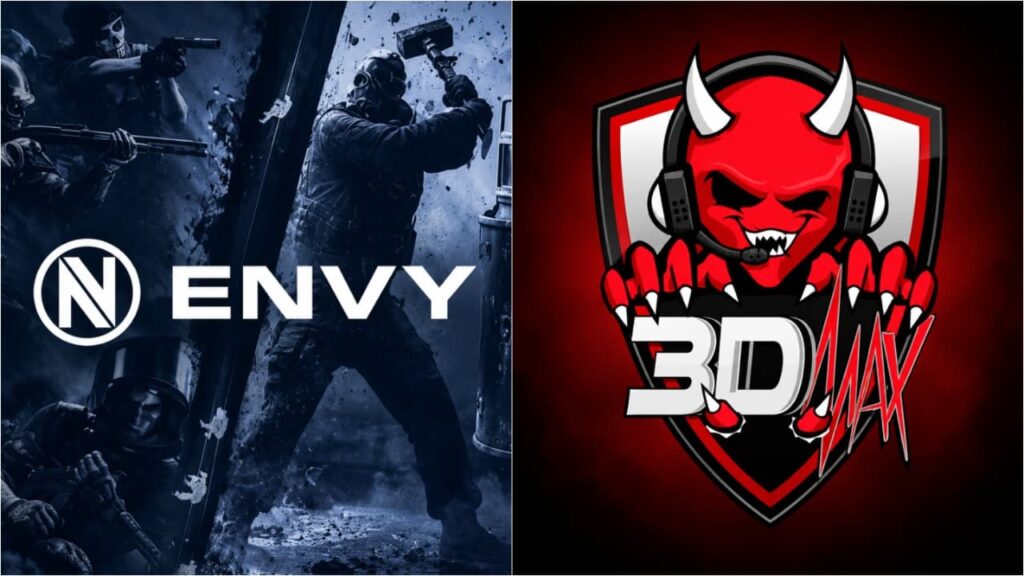


The Counter-Strike esports scene is going through a major shake-up, with some organisations stepping away from the game while others are returning. Envy is the latest to make a comeback, announcing on September 29, 2026, that it has acquired the former roster of French team 3DMAX.
The squad joining Envy is an all-French lineup: Bryan “Maka“ Canda, the team’s captain and AWP player/in-game leader; Lucas “Lucky“ Chastang; Kévin “misutaaa“ Rabier; Filip “Graviti“ Brankovic; and Jeremy “Kursy“ Gast. The team is expected to make its first appearance under the Envy name at Stake Pulse Beat III, set to begin October 12, followed by DraculaN Season 7, both before the qualification cutoff for the Major.
The acquisition move follows a lengthy period of financial trouble at 3DMAX. Reports put the French organisation’s overall debt at around $2 million, including about €1.5 million in unpaid salaries, prize money, and sticker revenue owed to current and former players and staff. In late August 2026, Maka, current coach Damien “wasiNk“ Dufour, and former coach Pierre “YouKnow“ Marco all spoke publicly about ongoing payment delays, which they said had put pressure on the team and affected results.
Other organisations had reportedly previously discussed taking over the team. Spanish organisation Team Heretics had offered to take on part of 3DMAX’s debt, and French content creator CYRILmp4 also held talks, but both fell through. Other organisations, including TSM and Luminosity, had shown interest at various points as well. Envy’s agreement was structured differently: it allegedly acquired only the players and their VRS points, without taking on any of 3DMAX’s outstanding debts, giving the roster a clean start under the new organisation.
Envy’s return comes at a time when several other organisations have been cutting back on or exiting Counter-Strike entirely, largely due to a change Valve made to how sticker revenue is shared at Majors. Valve altered the model about four months ago, and organisations say the change has sharply reduced their share of that revenue, making it harder to cover costs such as player salaries, international travel, coaching staff, and other operational expenses.
The financial pressure has been compounded by another major change from Valve last year, when it banned the promotion of skin gambling, case-opening, and skin trading websites at officially licensed esports tournaments using its games, including Counter-Strike 2 (CS2). While organisations such as Team Vitality, G2 Esports, Berlin International Gaming (BIG) and FURIA continued to feature these skin trading sites through digital content, social media activations and community campaigns, their visibility entirely shifted away from traditional tournament sponsorship and on-stage branding to comply with Valve’s new rules.
This reduced the prominence of these sponsors within the live esports environment and further limited the ways in which organisations could monetise their existing relationships with them. Those websites had been an important source of sponsorship and advertising revenue for esports organisations, particularly in Tier-2 Counter-Strike, and the ban affected a significant pool of potential endemic sponsors.
With organisations now facing reduced sticker income while also having fewer sponsorship opportunities available to them, the economics of running a top-level Counter-Strike team have become increasingly challenging. For teams already operating on tight margins, the combination of lower tournament-related revenue and reduced sponsorship opportunities has made it harder to justify the high costs associated with maintaining a competitive roster.
The financial pressure created by those changes has already led several organisations to scale back their Counter-Strike operations. Complexity Gaming, which shut down a few days ago, had already fully exited Counter-Strike 2 in 2025, with its roster moving to Passion UA. Gaimin Gladiators benched its entire Counter-Strike 2 roster in June 2026, pointing to a low share of Valve’s sticker revenue.
Despite that broader pullback from the scene, some organisations are now beginning to make their way back into competitive Counter-Strike 2. Envy is one of two notable organisations to return recently, alongside the American-owned Copenhagen Wolves, which officially returned to the game just a day earlier.