

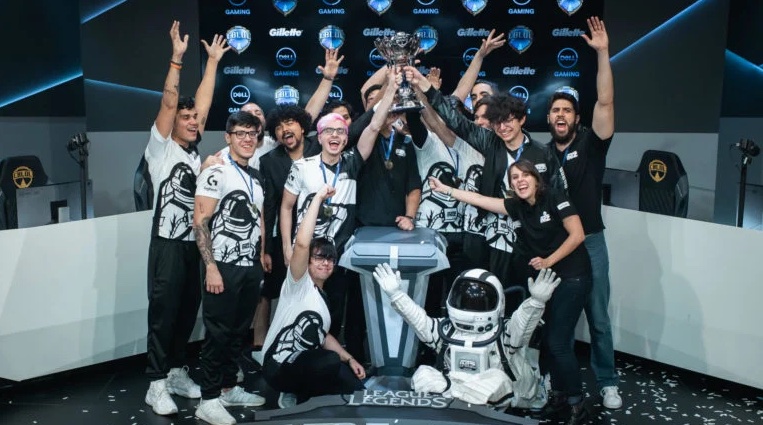


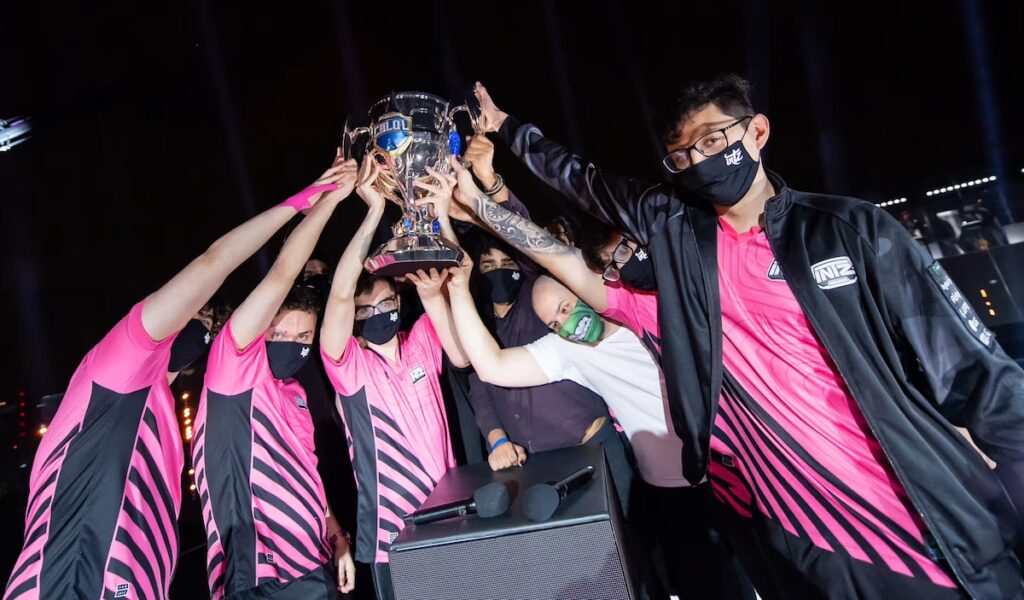
As the Brazilian esports scene expanded throughout the 2010s, few organisations stood as tall as INTZ. A true giant of the domestic League of Legends scene, the club became a symbol of competitive prowess, amassing a record five titles in the Brazilian League of Legends Championship (CBLOL) and etching its name into the collective memory of fans with its historic victory over Chinese powerhouse EDward Gaming (EDG) at the 2016 World Championship.
However, the dawn of the new decade signalled a gradual decline. After securing its last CBLOL title in 2020, INTZ began to lose ground and relevance. Once backed by major partners like LG and Claro and present in multiple games, by 2024 the organisation found itself with virtually no sponsors. The breaking point arrived in 2025 when the CBLOL was restructured into the new League of the Americas (LTA). INTZ was one of four partner teams left out of the new framework, leading the organisation, still under the administration of Lucas “Simon” Almeida, to cease competitive activities.
Yet, a brand with such a storied legacy could not simply disappear. As a five-time CBLOL champion and the protagonist of Brazilian LoL’s finest moment on the global stage, the INTZ name retained immense value. It remained a powerful presence in the conversation around Brazilian esports, a sleeping giant waiting for an opportunity to return.
That moment came in 2026, when Simon agreed to sell the organisation. Brazilian holding company HiveScale, which already owned esports outfit Stellae Gaming, acquired the storied brand with a clear mission: to revitalise INTZ and integrate it into a broader, more sustainable gaming ecosystem. To understand how this resurrection is taking shape, The Esports Radar spoke with Lucas Catharino, CEO of the HiveScale Holding.
His role, he clarifies, is at the group level. HiveScale oversees the newly acquired INTZ, the existing Stellae Gaming, and an investment in the production agency Black Duck. “So I’m the CEO of the group,” he states, adding that while Stellae and INTZ report directly to him, Black Duck operates independently under an independent structure.
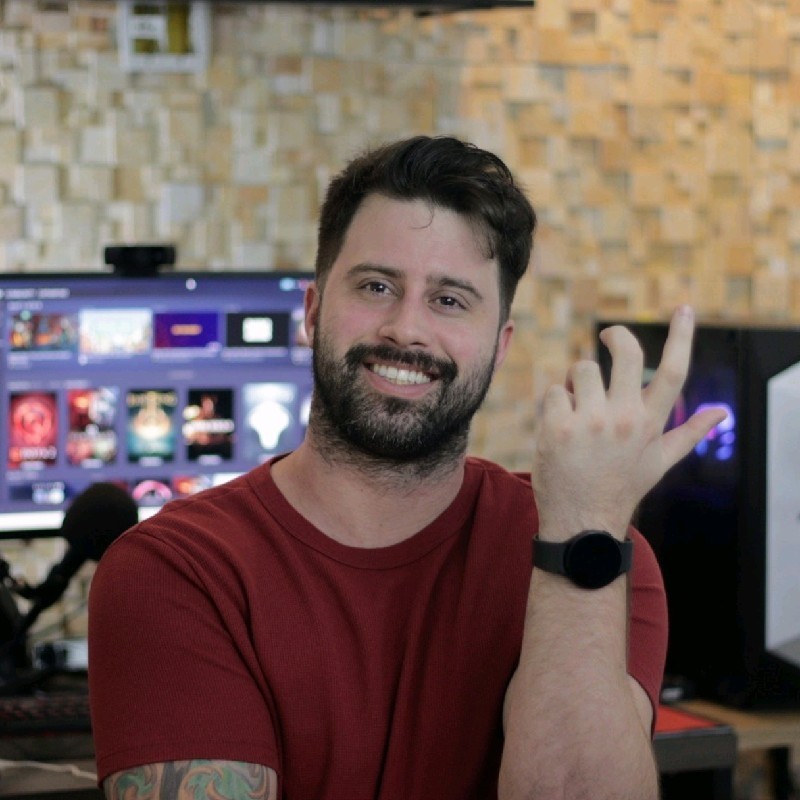
The opportunity to acquire INTZ was a strategic one. “It was more about us understanding our moment and what we wanted to do in the market,” Catharino explains. Having spent three years growing Stellae steadily, HiveScale saw INTZ as a way to accelerate their broader ambitions. “It was a very big, very strong, consolidated brand. We understood the synergies we could create, and so we started talking.”
That broader ambition, in Catharino’s words, is nothing less than enhancing the professionalisation of the entire Brazilian esports market. “To make everyone earn more money, develop more, have a better future,” he says. He draws a parallel to the evolution of motorsport or tennis: passions that eventually had to be structured into sustainable businesses.
“If motorsport in general had remained dependent on constant cash injections from athletes and drivers, as it was in the beginning, it wouldn’t exist today,” he argues. “Who knows, maybe one day we’ll reach the Formula 1 model, with race suits covered by many sponsors. That would be the dream.”
This vision directly informs his approach to revenue. For Catharino, sponsorship is a crucial “thermometer”—a vital part of any esports team’s profit and loss statement. However, he is adamant that relying on it exclusively is “a recipe for disaster.” The real goal is to build a healthier ecosystem where multiple revenue streams exist, but a proliferation of sponsors is the ultimate sign of success.
“If INTZ has 500 sponsors and all my competitors also have 500 sponsors, the market is doing great,” he asserts. “That will only happen as we increasingly improve technical knowledge and professionalise every aspect of the market—from the player who follows a diet and does physical training, to the person creating social media content. We need to help raise that bar.”
This philosophy extends to his view of the competition. Rejecting a “mentality of scarcity,” he hopes for the success of rivals like Fluxo W7M. “I want W7M to be right there next to me with 500 sponsors. That’s a good sign for the market.”
Within the HiveScale group, this mission is divided between its two main properties. While the holding’s overarching goal is to close the gap between the massive gaming audience and corporate investment, each brand has its own distinct role.
“INTZ will focus heavily on the competitive side,” Catharino reveals. “100% of the effort we put in there is to be champions, to be the best team.” This doesn’t necessarily mean assembling a roster of superstars, but rather providing the best possible back-office support and strategic planning.
Conversely, Stellae Gaming will pivot entirely towards education and social impact. “Everything related to developing and training people will fall under Stellae,” he says. This includes projects like Sonho Além do Jogo (The Dream Beyond the Game), an approved digital inclusion initiative designed to show young people the diverse career paths within esports, from journalism and video production to law and administration.
Black Duck, the agency, acts as the “glue,” able to transform ideas into branded campaigns for both organisations.

The INTZ appeal and the road ahead
So, what is the unique selling point of INTZ in a crowded market? For Catharino, it’s a blend of tradition and innovation. “If I were to draw a persona today, it would be that girl on TikTok and Instagram, but the photo she takes is with a vintage Sony Cybershot she got from her aunt,” he muses. “It’s about understanding the new and the old and combining the best of both worlds.”
But from a business perspective, his main appeal is rooted in his own corporate background, which includes a stint at beverage giant Ambev. “I want the sponsor to understand exactly what they’re signing up for. We’ll show them what’s happening every step of the way. If an adjustment is needed because something isn’t working, it doesn’t have to be the end of a partnership. That’s the big appeal from a business point of view.”
For the first half of 2026, INTZ will compete in five titles: Rainbow Six Siege, VALORANT, League of Legends, EA FC, and Free Fire. The choices were strategic. Rainbow Six and VALORANT leverage existing expertise from Stellae. EA FC received a push due to the FIFA World Cup year, which could bring attention to virtual football titles. League of Legends and Free Fire were chosen for their massive audiences and, in LoL’s case, INTZ’s unparalleled history.
“I can’t bring this brand back without being present in the game where it has its greatest history,” Catharino affirms. While Counter-Strike 2 is on the radar, he acknowledges it is an “extremely costly” endeavour that would require the right sponsorship backing.
As for the immediate future, Catharino’s goals for 2026 are grounded in operational success: to be performing well in their five chosen titles, to become a benchmark for management, and, crucially, to have satisfied partners. “If all our partners are talking about renewing for 2027, then 2026 will have been a success,” he says. The first competitive success is already achieved: INTZ has qualified for the tier-1 South American Rainbow Six scene through the Challenger Series 2026.
And for a giant to truly wake, it cannot do so alone. Catharino is candid about the fact that the resurrection of INTZ is not just a matter of internal restructuring; it’s a conversation with the market. While he remains tight-lipped about specific negotiations, he confirms that the organisation is actively engaged in discussions with potential partners across various sectors. The response, he suggests, has been encouraging.
“We have a massive opening because of the serious work we were already doing with Stellae,” he explains. “When we approach someone and say, ‘we’re the people who ran Stellae and now we’re in charge of INTZ,’ that alone opens a lot of doors. And the brand itself opens them even wider.”
He also leverages his own corporate network from his time at Ambev, where former colleagues are now scattered across decision-making roles in different companies and consumer facing brands.
The groundwork is being laid, but Catharino is careful to manage expectations. This is not about quick, transactional deals. “We’re trying to evolve towards a model where I truly understand the sponsor’s pain points and translate that into a contract with deliverables that guarantee their objectives,” he says. “That demands time.” He wants partners who are willing to build something lasting, ideally for years or even decades, rather than simply buying a logo on a jersey for a single season.
Part of that commitment to partners and fans is a pledge of radical transparency. HiveScale plans to hold monthly transparency livestreams, with Catharino and his team facing the camera to speak directly with the INTZ fanbase—the 1.4 million “bosses” he now answers to. “If tomorrow no one likes INTZ, it’s worth nothing,” he concludes. “We are fully aware of that.”
For now, the message to the market is clear: INTZ is back, it is building, and it is open for business. The organisation is actively looking for brands that want to be part of continuing a story that aims to blend tradition with innovation, and that are ready to engage with the passionate fanbase in Brazilian esports. The invitations are out, and as Catharino teases with a smile, the search for partners who share the vision of a professionalised, sustainable future is very much underway.

Follow The Esports Radar on social media: