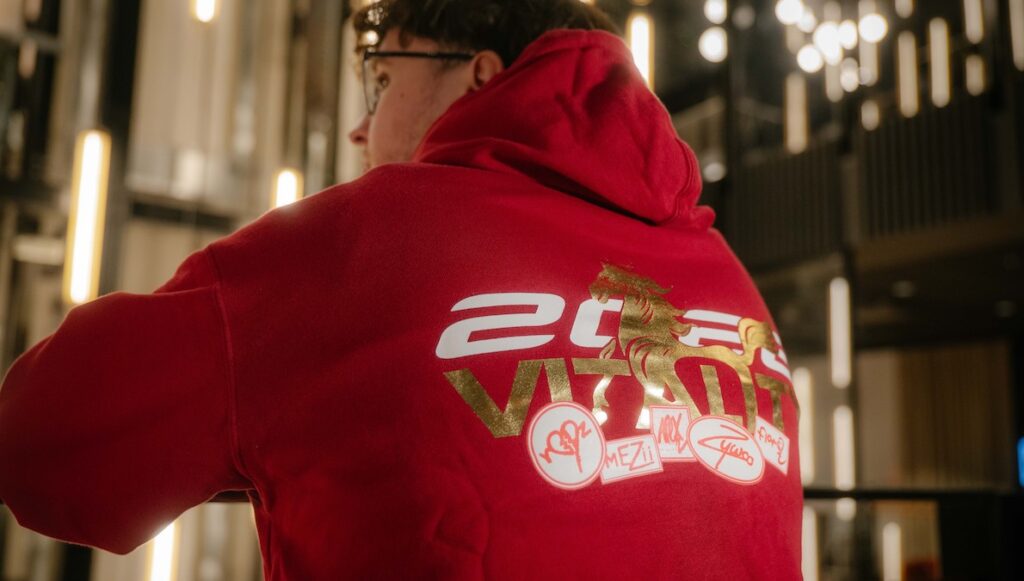
As the esports industry closes the chapter on a year defined by correction, discipline, and recalibration, Reflections 2025 takes a closer look at how leaders across the ecosystem are interpreting the moment. In this edition, Danny Engels, Corporate Director of Global Operations at Team Vitality, reflects on the challenges and progress that defined 2025, the operational and organisational lessons learned by one of esports’ leading clubs, and the priorities that will shape a more sustainable, professionalised ecosystem in 2026.
Read his key insights below, and stay tuned for more in our ongoing “Reflections” series.
1. Looking back at 2025, would you say it was ultimately a good or challenging year for esports overall? What factors shaped your view of the industry this year?
It remains a challenging era, though the severity varies wildly between ecosystems. We cannot, in good faith, call it a “good” year for the industry when peers like Guild, Luminosity, TALON, and partners like Freaks4U and theScore are facing insolvency or massive downsizing. We have lost hundreds of passionate professionals in our industry this year, and that loss is felt deeply across the sector.
However, Team Vitality has weathered this storm by diversifying. 2025 was a transformative year for us and possibly our most significant yet. The acquisition of Bigetron Esports in Jakarta, Indonesia, was multi-layered and future-facing, anchoring us in the thriving mobile gaming market. Similarly, launching marketing agency RushBee in Paris, France, allowed us to monetise our creative expertise beyond Team Vitality.
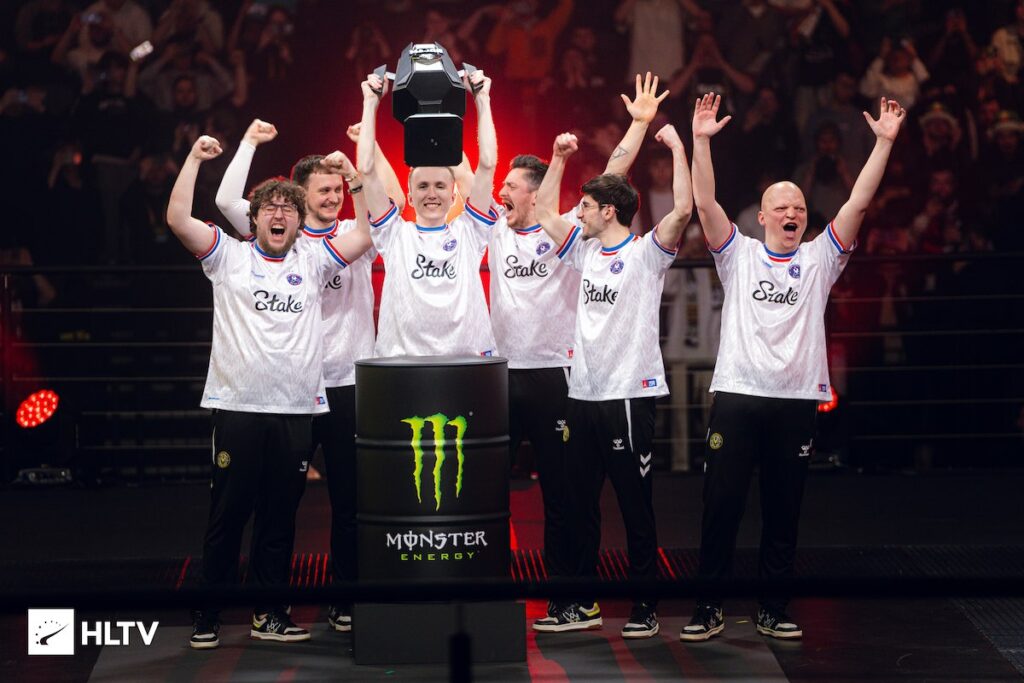
Competitively, securing the ESL Grand Slam, the Austin Major, and a legendary win streak in Counter-Strike 2 (CS2) provided the stability we needed. Yet, the business reality remains tough. Sponsorship growth is stagnant, forcing the industry to unlock less traditional categories. Valve’s Open Circuit in CS2, while celebrated for democratisation, has created a more volatile and less stable ecosystem for all stakeholders to operate under.
2. In your opinion, what were the standout milestones, breakthroughs, or moments worth celebrating in 2025 — whether competitively, commercially, or culturally?
We have to celebrate the competitive moments that fuel the legacy of our sport. T1 and Faker defending their throne, our own historic CS2 run, and NRG delivering two major world championships for North America – these are the storylines that keep fans engaged when the business side gets heavy. Culturally, the breakthrough of the year is undoubtedly mobile gaming’s absolute arrival. We can no longer treat it as a “secondary” market.
Finally, the fighting game community renaissance has been a beautiful reminder of our roots. Seeing the community-driven passion at events like Evo and the grassroots support Riot Games is giving to 2XKO grounds us. It reminds us that esports belongs to the community first, a philosophy that is central to Vitality’s brand strategy.

3. Were there organisations, companies, or initiatives you feel genuinely added value to the ecosystem in 2025? What made their contribution significant?
The real value added in 2025 came from global cross-pollination. The public might not see it, but the operational bridges being built between the West, the Middle East, and Asia are vital. Stakeholders in the Middle East are integrating into the global circuit, bringing much-needed infrastructure support. Furthermore, the openness from Tencent and Chinese organisations to collaborate, whether it was welcoming us at the KPL Grand Final or the dialogue at the World Internet Conference, has been essential. These initiatives are breaking down the silos that used to isolate our regions, allowing for a more unified and resilient global ecosystem.
4. Reflecting on Team Vitality’s work and the achievements, what were you most proud of this year?
Seeking global growth is a business goal, but the emotional reality of it has been my proudest moment. The rollercoaster we shared with our new Southeast Asian fans was indescribable. From welcoming a massive, passionate fanbase to the Vitality family, to witnessing the raw emotion of our community: Tears of heartbreak after the Free Fire EWC final, and tears of joy when our women’s team lifted the Esports World Cup trophy in MLBB [Mobile Legends: Bang Bang]. Seeing Vitality jerseys in the crowd at MPL ID events in Jakarta proves that we aren’t just “investing” in a region; we are slowly becoming part of its culture.
Also read: Inside Team Vitality: strategy, expansion, and the rise of French esports
Of course, I am incredibly proud of our CS2 dominance, securing the ESL Grand Slam is a lifetime achievement. But equally, seeing the community’s positive reaction to renewing Jeondding for 5 years showed that loyalty and legacy still matter in this fast-paced industry.
5. Looking ahead, what are your key predictions for esports in 2026? Which trends should people be watching, and where do you see the major growth opportunities and challenges?
2026 will likely feel like a continuation of the current consolidation period. The trend to watch is the rise of National Teams. While the Olympic conversation has stalled, the appetite for national representation is growing. However, governance is the trap here. If we rush into National Team events without clean frameworks, we risk disrupting the club ecosystem and undermining the legitimacy National Teams could develop for our sport. Regionally, I am worried about the North American market, which continues to lose global relevance compared to the Asian scene. The gravity of esports is shifting East, driven by competitive dominance, mobile growth, and the Esports World Cup.
Ultimately, 2026 will widen the gap between the “Global Tier 1 Clubs” – those of us operating across multiple titles and continents – and the regional or game-specific specialists. At Team Vitality, we have firmly entered that global sphere, but in this economy, complacency is fatal. We will continue to scale, but we will do it sustainably.
Follow The Esports Radar on social media: