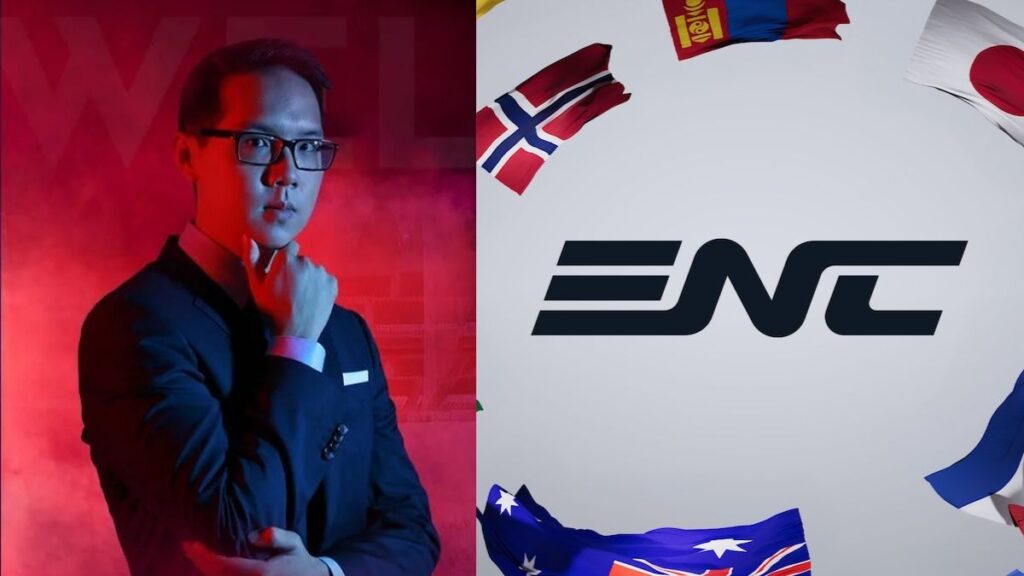




In this edition of Reflections 2025, Sebastian Weishaar, President of Esports at ESL FACEIT Group, looks back on a year that strengthened the industry’s foundations — from deeper audience engagement and the rise of more open competitive ecosystems, to landmark moments for Counter-Strike 2 (CS2).
As 2025 drew to a close, we gathered reflections from esports industry leaders on the year that transformed their world. Read Sebastian’s key insights below, and stay tuned for more in our ongoing “Reflections” series.
1- Looking back at 2025, would you say it was ultimately a good or challenging year for esports overall? What factors shaped your view of the industry this year?

2025 was a constructive year for esports. It wasn’t the largest growth year compared to the post COVID period, but it left the industry in a stronger and more sustainable position. Audience growth continued at a healthy pace and, more importantly, engagement deepened.
Internally, we saw clear gains in hours watched and fan interaction versus 2024, which tells us the core audience is solid and still expanding.
What really shaped my view this year was the shift in how the ecosystem is being built. Publishers continued to invest in esports programs, but with far more discipline, and open or hybrid ecosystems now represent roughly 50% of the landscape for the first time. That structural change is critical as it lowers barriers, strengthens grassroots pipelines, and creates more resilient competition formats.
So while 2025 wasn’t about explosive growth, it was about durability. The industry matured, investment became more selective, and the focus returned to core fans and scalable structures. I’m more confident in the future of our industry than any time in the past.
2 – In your opinion, what were the standout milestones, breakthroughs, or moments worth celebrating in 2025 — whether competitively, commercially, or culturally?
The biggest competitive highlight of 2025 was undoubtedly the success of the Counter-Strike 2 ecosystem. The game is thriving in its 27th year! We’re incredibly grateful to the fans, teams, partners, players, and staff who made it possible. Just looking at our CS2 events, we saw a massive 25% growth in hours watched compared to 2024. Three separate events surpassed 1 million concurrent viewers, and for the first time ever IEM Melbourne, in addition to IEM Katowice and IEM Cologne.
This growth reinforces the strength of the CS2 ecosystem and the rising relevance of the ESL Grand Slam. We also set new gate records for stadium attendance at IEM Cologne and IEM Chengdu, all while awarding over $11 million in player and team compensation throughout the year. Beyond CS2, the success of the Esports World Cup (EWC) was a huge milestone. It gathered the best teams and players in the world, across the biggest games in esports, over 7 weeks of the summer in Riyadh, generating record-breaking viewership.
And last but not least, the Esports Nations Cup got announced, which will help build new, nation based ecosystems across the biggest games in esports. Fostering national pride as a unifier across esports is going to create exciting opportunities for players all over the world and new stars will be born. Commercially, flagship events like IEM Cologne, which generated over 36 million hours watched (excluding China), provided a rock-solid industry foundation. At EFG, we worked with nearly 170 partners, ranging from DHL to Lamborghini. These relationships are built on the undeniable success of our competitions, with each partner adding massive value to the overall esports experience.

3 – Were there organisations, companies, or initiatives you feel genuinely added value to the ecosystem in 2025? What made their contribution significant?
I’d like to acknowledge two groups: first, the organizations continuing to invest in their players and the competitions they care about most. This year, we’ve seen that investment pay off, from Vitality claiming the ESL Grand Slam to Monte and M80 earning ESL Pro League slots via grassroots tournaments like DreamHack Knockout. We’re committed to providing diverse, rewarding opportunities for players to prove themselves and win on the world’s biggest stages, and it’s always gratifying to see the teams that continue to put it all on the line be rewarded with legendary trophy lifts.
The second group is our commercial partners, who genuinely bring immense value to the entire esports ecosystem. Brands like Lamborghini joined our roster in 2025, and their commitment demonstrates the maturing commercial appeal of our audience. These partnerships don’t just provide crucial financial stability; they also elevate the quality of the fan experience and help introduce esports to broader, global audiences.
4 – Reflecting on your own work and achievements, what were you most proud of this year?
We’ve seen consistent growth across all our properties this year, which is a direct reflection of our massive operational scale and the dedication of our teams. I am personally most proud of the sheer volume and quality of content we delivered to fans globally. Just looking at the numbers: we delivered over 11,000 hours of live broadcast content over 1,210 live broadcast days.
That means on 321 days in 2025, or about 88% of the year, EFG had more than three live broadcasts running on average. We executed more than 133 different projects across five continents, demonstrating our truly unparalleled global footprint and capability. On a marquee event level, my personal highlight was being able to announce that IEM Cologne will be a Counter-Strike Major in 2026. It’s the first time the “Cathedral of Counter-Strike” will host a Major in a decade. After seeing over 41,000 in-person attendees at this year’s event, fan anticipation for next year is already through the roof, as tickets are already sold out seven months before the event takes place.
5 – Looking ahead, what are your key predictions for esports in 2026? Which trends should people be watching, and where do you see the major growth opportunities and Challenges?
I think one of the most exciting trends we’ll see is the rise of growing and emerging regions at a scale we’ve not experienced before. This past year gave us a taste of that, with some of the biggest esports events appearing in places like the Middle East and Japan. I suspect this is just the tip of the iceberg, and we will see these new territories become major hubs for both talent and viewership.
Second, the way content is created and consumed will be redefined by two digital trends. Creator-driven content is going to become a primary focus for esports organizations, often outweighing pure team-generated content. The audience now finds and engages with games via influencers and streamers. This trend goes hand-in-hand with the dominance of User-Generated Content (UGC) platforms, which are firmly positioning gaming as “gaming entertainment” blending play, creation, and social interaction.
Another critical trend reshaping the entire fabric of the industry is how tournaments are run, particularly the appetite and need for stronger Tier 2 and Tier 3 ecosystems. Investing heavily in these developmental levels is something that will change the shape of esports fundamentally, creating deeper pipelines for talent and giving more opportunities to local scenes. Ultimately, this will be a net positive for the players, the audiences, and the health of the games themselves. And if you want to experience the vibrant grassroots culture that feeds into this, there’s no better place than the cultural melting pot of esports, DreamHack.
What we know for sure is that 2026 is going to be an absolutely packed year with tons of incredible esports output. We at EFG are thrilled to make IEM Cologne an unforgettable Major, and we are also continuing to actively support the Esports World Cup Foundation, alongside our full calendar of events. Of course, I’m also excited to see what our friends across the industry do. I’m sure it will be a fantastic year for esports globally.
Follow The Esports Radar on social media: