

For mobile esports, 2025 marked a year of global expansion, cultural integration, and growing institutional recognition. In this edition of Reflections 2025, Tiger Xu, Global Head of Mobile Legends Esports at MOONTON, reflects on how MLBB Esports strengthened its international footprint through record-breaking viewership, landmark tournaments at the Esports World Cup, and deeper engagement across regions.
As 2025 drew to a close, we gathered reflections from esports industry leaders on the year that transformed their world. Read Xu’s key insights below, and stay tuned for more in our ongoing “Reflections” series.
1 – Looking back at 2025, would you say it was ultimately a good or challenging year for esports overall? What factors shaped your view of the industry this year?
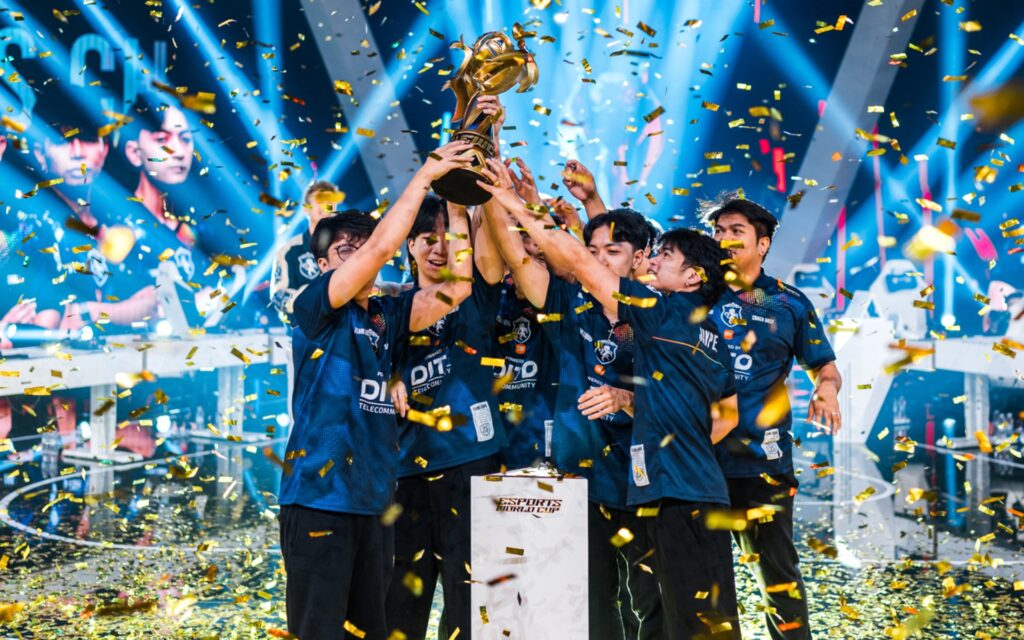
Looking back, I’d say 2025 was an exciting and largely positive year for esports. MOONTON Games continued to expand Mobile Legends: Bang Bang (MLBB) Esports on a global scale, reaching new audiences across regions and growing our international footprint. Notably, we stood out as the most-watched title in Esports World Cup (EWC) history, while tournaments like the Mid Season Cup (MSC) and the MLBB Women’s Invitational (MWI) drew fans and engagement from around the world. The tournaments were able to showcase the talent, competitiveness, and global appeal of our ecosystem.
There are several factors that have shaped my view of the industry this year. The first is how sustained viewership of indicates how esports is becoming a mainstream form of entertainment. When millions of fans consistently tune in, it’s a clear sign that esports isn’t just a hobby. We’re now able to capture the attention of young audiences in the same way traditional sports or popular entertainment do.
Secondly, we’ve seen growing recognition and support from grassroots communities and governments. With MLBB, we’re working increasingly closer with governments around the world. A great example is the Guru Juara MOONTON Masterclass in Malaysia, which we’re running with Esports Integrated—the national initiative under the Ministry of Youth and Sports. The programme equips primary school teachers with digital game management skills and learning strategies for innovative STEM education to engage with students. Initiatives like this show how esports can make a positive social impact and how governments perceive MLBB as a tool for youth engagement. Together, these developments demonstrate how esports is budding into a long-term ecosystem with real impact. We expect it to continue shaping how people play, watch, and engage with entertainment for years to come.
2 – In your opinion, what were the key milestones, breakthroughs, or moments worth celebrating in 2025 — competitively, commercially, or culturally?
Competitively, I was impressed by the MLBB players at MSC at EWC 25—especially the elimination match between Team Spirit and ONIC Philippines. The intensity and skill on display during that match showed how much our players are constantly pushing their limits.
I’d also highlight Team Liquid Philippines—they made MLBB Esports history by becoming the first team to win all major MLBB titles (official regional and international tournaments) during the tournament. That’s a milestone no other MLBB team has reached and it shows how esports gives players a platform to create historic moments.
One of the milestones we’re the most excited about is the M7 World Championship (M7) in Indonesia, which will give us the opportunity to celebrate the nation. Returning to the home ground of MLBB Esports is a huge moment for us and we’re working closely with our stakeholders to make this the largest M Series edition yet. Beyond the matches, we want to celebrate Indonesia’s rich heritage through local art, music, and performances, while creating experiences that resonate with fans. The upcoming M7 will be a key milestone in demonstrating how esports can integrate with local culture to uplift the communities that support it.

3 – Were there organisations or initiatives that, in your view, genuinely added meaningful value to the esports ecosystem this year? What stood out to you?
This year, we’re proud to have been named an Official Publisher of the Esports Nations Cup (ENC). Our participation in ENC stands out as a major milestone, providing our players with a new platform to compete internationally and represent their countries. It creates opportunities for athletes to bring pride to their nations while raising the standard of competition and nurturing talent at a national level.
Alongside the ENC, there are three other key milestones that shaped our international esports calendar in 2025. The first being our annual flagship tournament—the M Series. It remains as the pinnacle of MLBB Esports competitiveness and will continue to set the standard for professional play. Each edition pushes the boundaries of skill, strategy, and production, reinforcing MLBB’s position as a leader in global esports.
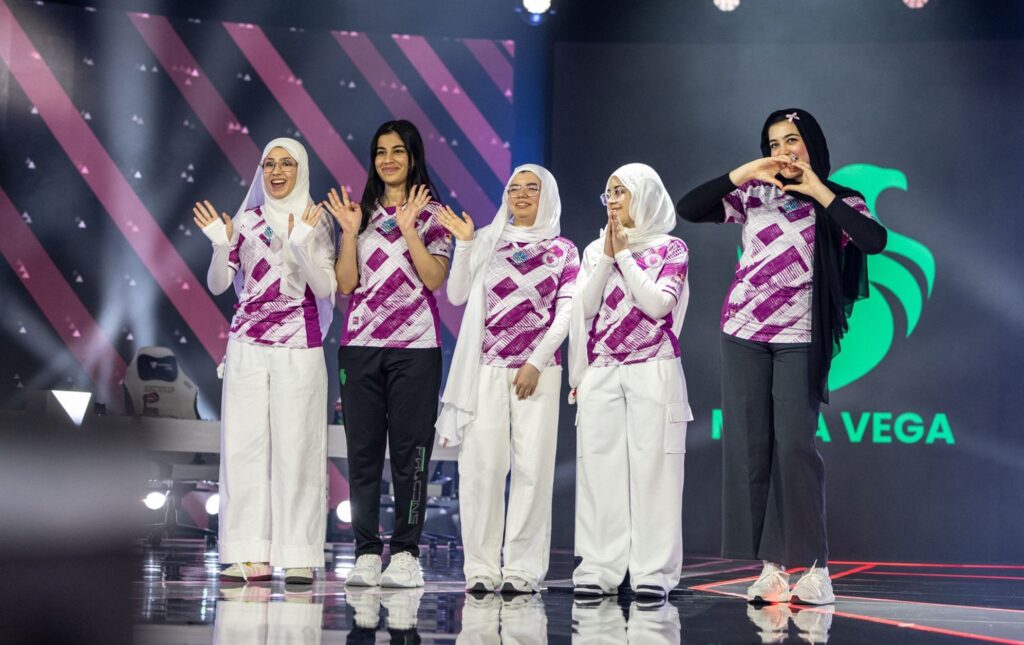
The second are MSC and MWI, which showcase MLBB athletes on the world’s largest multi-title esports stage. These tournaments put our players in the spotlight and show the world the level of competitive skill in MLBB. At the same time, it’s about inclusivity—especially for MWI. The tournament, in particular, stands out as the first and largest women’s event at the EWC. The tournament provides a platform for female athletes to compete alongside the world’s best esports talent, highlighting teams like Falcons Vega MENA—the first Arab women’s team to make their EWC debut. At MOONTON Games, it’s especially important that we’re creating opportunities for everyone to be seen and celebrated.
Third are regional and global sporting events, such as the Southeast Asian (SEA) Games and Asian Games. Our selection for these events stood out because they show how deeply esports is being embraced within mainstream sporting culture. It is part of a broader shift where esports is recognised as a legitimate competitive discipline. Together, these four initiatives—the ENC, M Series, MSC and MWI, and inclusion in major regional sporting events—demonstrate the growing maturity and reach of the MLBB esports ecosystem in 2025.
4 – Reflecting on your own work, what achievements from 2025 are you most proud of, either personally or as a company?
Looking back on 2025, there are several achievements we’re proud of. First, being selected for the regional multi-sports events like the 2026 Asian Games and the 33rd SEA Games was a major milestone for us. It signals how far esports has come in being recognised as part of the mainstream sporting landscape. For MOONTON Games, it’s also an affirmation of the work we’ve put into elevating MLBB to stand alongside traditional athletic disciplines—both in terms of competitiveness and the professionalism of our tournaments.
Second, MSC becoming the most-watched tournament in EWC history was another major highlight. For us, it goes beyond viewership records. It shows that the ecosystem that we’ve built continues to resonate with fans worldwide. It reflects the passion of our community, the level of competition, and the quality of the production that brings these moments to life. It also reinforces MLBB’s position as one of the leading esports titles globally. I’m also particularly proud of how we’ve advanced our women’s ecosystem. Hosting MWI at EWC 25 gave more visibility to our incredibly hardworking female athletes. Showcasing their talent at that scale not only highlighted their dedication, but also reaffirmed our commitment to inclusivity across the MLBB Esports structure.
Finally, being the only mobile title nominated for The Game Awards‘ Best Esports Game for the second year running stands out as a major milestone. It reflects the professional standards and competitive depth we’ve built over the years, reaffirming MLBB’s position as a benchmark for the industry.

5 – Looking ahead, what are your predictions for esports in 2026? Which trends should people be watching, and where do you see the major growth opportunities and challenges emerging?
I’m particularly interested to see how Artificial Intelligence (AI) will integrate with esports in the coming years. There’s a lot of potential to enhance player training, improve strategies, and raise the level of competition across the board. I think we’ll start seeing more tools that help players, coaches, and teams optimise their performance.
Beyond that, I see esports intersecting further with cultural and economic trends. For example, its integration with cultural tourism could create entirely new experiences for fans. But at the same time, these opportunities come with challenges. It’s our job to ensure that advancement in innovation is not a barrier to entry and that the ecosystem remains inclusive.
Overall, I think 2026 will be a year of experimentation and greater integration of esports with technology and society.
Follow The Esports Radar on social media: