

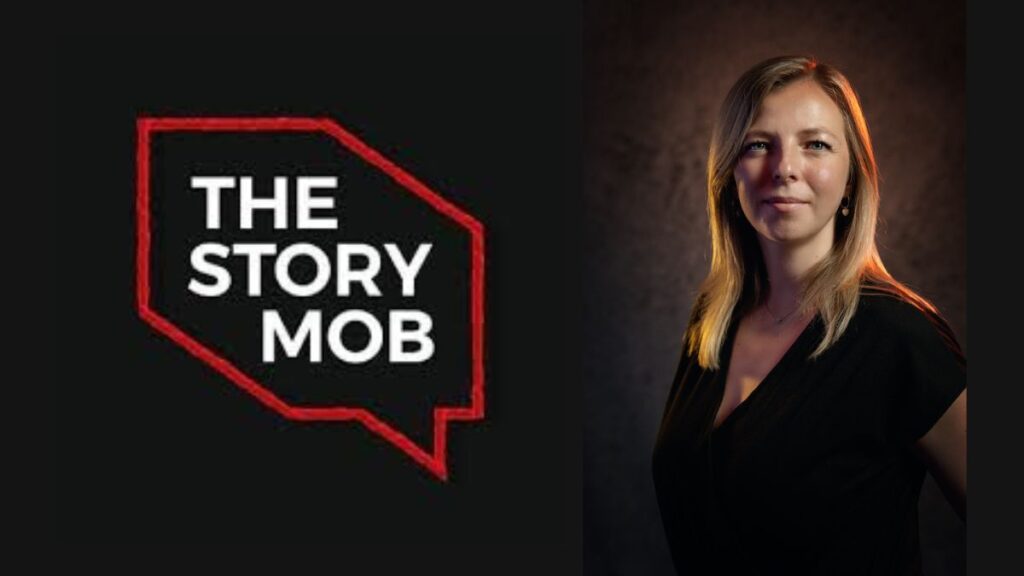


When Anna Rozwandowicz founded The Story Mob in 2018, esports was within a moment of accelerated visibility. Competitive gaming was beginning to capture mainstream attention beyond long-established markets such as South Korea, media interest was growing, and organisations across the ecosystem were suddenly under pressure to explain themselves — not just to fans, but to brands, investors and the wider public.
Rozwandowicz was well placed to understand that shift. Having previously served as Vice President of Communications and Public Relations at ESL (now ESL FACEIT Group), she had spent years navigating the complexities of esports storytelling from the inside. The Story Mob was born directly out of that experience — not as a generalist PR agency experimenting with gaming, but as one built from within the culture itself.
Seven years on, The Story Mob has become one of the most recognisable communications agencies in esports and gaming, working with leading organisations, publishers and global events, with Rozwandowicz featured at the cover of Inc. Arabia’s Women of Influence 2025. The agency’s recent expansion of work with Riot Games across EMEA, alongside clients such as the Esports World Cup Foundation, marks another significant milestone — and a reflection of how both the agency and the industry around it have evolved.
From the outset, the agency’s identity was shaped as much by its people as by its clients. Rather than hiring to a rigid template, Rozwandowicz focused on bringing together individuals who were genuinely embedded in gaming culture.

“The agency evolved alongside the people who make it,” she says. “From day one, we hired authentic gamers — people who live and breathe the space.”
That authenticity, however, was never narrowly defined. While competitive esports sits at the heart of The Story Mob’s DNA, the team’s relationship with games has always been broader than tournaments and broadcasts alone. Some follow esports obsessively, others play casually, some connect through online communities, and many engage with the wider cultural impact of gaming — through fashion, music, creators and digital identity.
Esports organisations started to partner with numerous segments, connecting with audiences both through anime, like the partnership between Team Liquid and BLEACH, and through established fashion brands, such as the deal of FlyQuest with Von Dutch. Over time, that diversity of engagement began to mirror a wider truth about the community itself: As gaming audiences matured, they became harder to categorise. The idea of the “esports fan” as a single, uniform identity started to feel increasingly outdated.
According to Rozwandowicz, this was where many brands — and even parts of the industry — began to struggle.
“Esports fans aren’t one-dimensional,” she explains. “The same people who follow competitive gaming also watch traditional sports, care about film and music, and connect with a wide range of stories and identities.”
For The Story Mob, recognising that complexity wasn’t a pivot away from esports, but a natural extension of it. The agency began to frame its work around what it now calls “player culture” — the wider ecosystem that surrounds people who play games, regardless of how or why they engage.
“Esports fans are players themselves,” Rozwandowicz says. “And players sit within a much larger cultural ecosystem.”
That framing has quietly reshaped how the agency approaches communications. Rather than leading with formats, leagues or titles, the starting point is always the person on the other side of the message — how they experience games, how gaming fits into their wider life, and what kind of stories resonate with them.
This perspective has become increasingly important as The Story Mob’s client portfolio has expanded. Each brings its own pressures, audiences and objectives — and each requires a different approach.
“For us, it always comes back to two things,” Rozwandowicz says. “What is the client trying to achieve, and who are they actually trying to reach?”
A publisher looking to build a community around an indie title is communicating very differently from an event aiming to drive live viewership or ticket sales. Treating those audiences as interchangeable, she argues, is one of the most common mistakes in gaming communications.
“A player who connects with the art style and narrative of a game isn’t necessarily the same person tuning in for elite competition — and that’s fine,” she says. “The problem is when communications assume everyone responds to the same messages in the same way.”
For esports organisations and tournaments, the focus often centres on stakes, competition and moments — giving fans reasons to care and to show up. In other cases, storytelling may lean more heavily into creativity, community and emotional resonance. The underlying philosophy, however, remains consistent: meet players where they are, rather than forcing them into a predefined box.
That mindset also shapes how The Story Mob continues to build internally. The team today includes former journalists, creative writers, media relations specialists, and professionals with backgrounds spanning entertainment and traditional sports. What unites them is not a shared CV, but a shared cultural fluency.
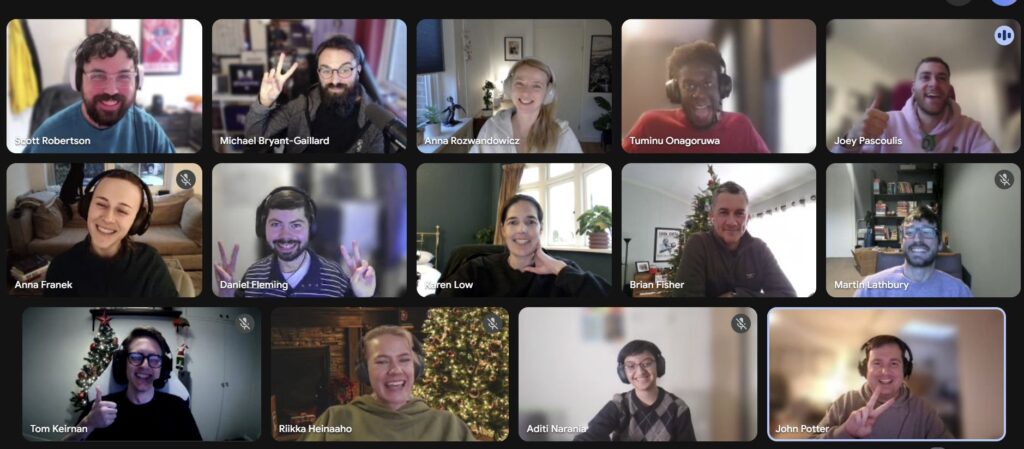
“It’s very much a mob rather than a mould,” Rozwandowicz says. “Everyone brings their own perspective, and that’s what allows us to understand different audiences and tell better stories.”
Looking ahead, Rozwandowicz is clear that esports remains central to the agency’s future. It is still where The Story Mob’s credibility was forged, and where much of its work continues to sit. At the same time, the agency’s scope is expanding in step with the industry itself.
Recent work with Riot Games reflects that broader remit, with The Story Mob now supporting publishing and entertainment communications across EMEA alongside esports. Partnerships with studios such as Fateless and Steer Studios, as well as cultural institutions like the BAFTA Games Awards, further underline the agency’s position at the intersection of games, culture and storytelling.
“They’re different kinds of stories,” Rozwandowicz says, “but they all come from the same place.”
In an industry often fragmented by hype and narrow categorisation, The Story Mob aims to build bridges. By championing the rich, complex ecosystem of player culture, they are not just telling stories for their clients, but helping to narrate the evolving relationship between games and the people who live within their world.

Follow The Esports Radar on social media: