

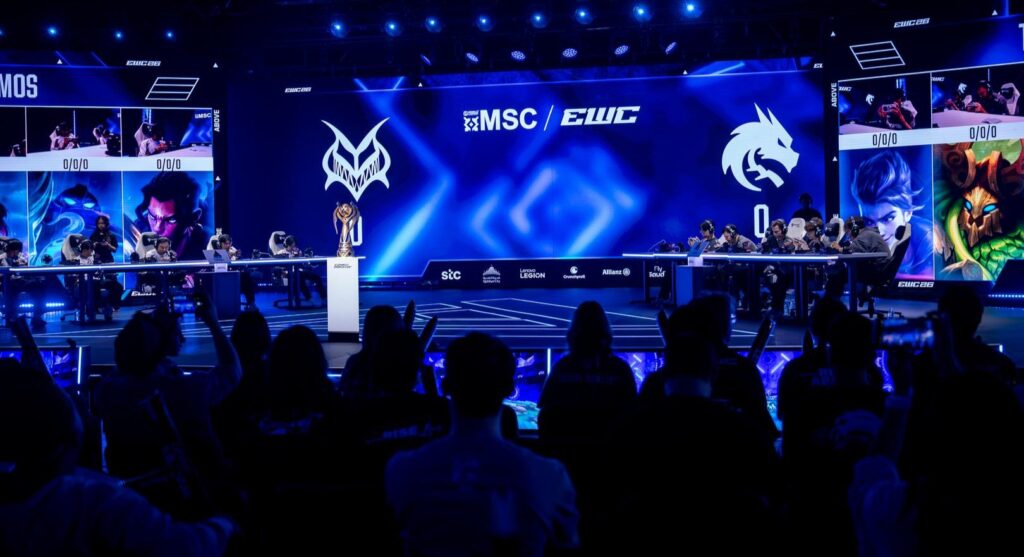


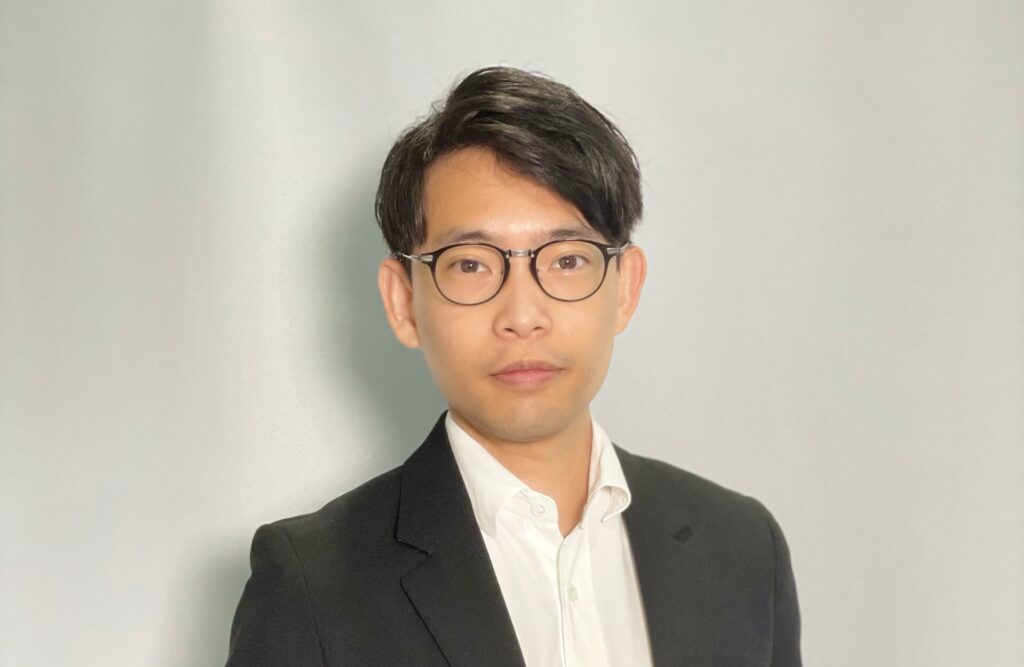
The Esports Radar sat down with Ray Ng, Head of Esports Ecosystem at MOONTON Games, during the Esports World Cup (EWC) 2026 in Paris, one year on from our first conversation with him about whether Mobile Legends: Bang Bang (MLBB) needed the West at all.
The title already commands one of the world’s largest esports audiences, anchored by a dominant base in Southeast Asia and top viewership figures even at a multi-game event like the EWC. Yet, MOONTON remains eager for further growth.
Since then, MOONTON has moved: a partnership with SURGE to build a Western European community following an agreement with the Portuguese Federation, a deal with NODWIN Gaming covering North and South America, a first MLBB Championship Tour stop in Lima, Peru, and a decision to send this year’s M Series World Championship to Turkey, the first time the tournament has left Southeast Asia. Ng laid out the thinking behind each move, and what’s changed since MOONTON’s last attempt to break into the West back in 2020-2022.
Also read:
As happened in Brazil for example, MOONTON’s earlier push into Western lands around the pandemic lockdown period drew in organisations but never built lasting traction. This time, Ng framed the Western expansion as something built with local partners from the ground up, rather than parachuted in.
“SURGE has been a very good partner, helping us to build a community together in different European countries like Germany, France, Italy, and the Eastern and Western Europe side, and it really helps to build the esports community,” Ng said. “They’re having active tournaments, a player base, and for that we opened up a slot at the international stage for Western Europe, they now are able to play in the wildcard this year.”
The Americas deal with NODWIN Gaming, he said, works both ways. “It’s a two-way deal, we are looking to grow the whole of America, and that deal covers North and South America,” Ng explained. MOONTON contributes to prize pool, marketing and operations, while NODWIN handles production, and together the two go to market for sponsors, including a data company and mobile phone brands. Ng also framed it as mutually beneficial for NODWIN, describing the American market as one that had largely “escaped” the Indian firm.
That partnership has already produced a shift in how MOONTON stages events in the region. The first MLBB Championship Tour stop in Lima, Peru, leaned further into entertainment than a standard tournament format. “We have a rap battle and we can see the community starting to really like the way we present the tournament,” Ng said. “It’s not just an esports event but all-round entertainment, music, community and competition.” He described it as a pilot the region will keep building on, with future stops rotating between countries depending on where MOONTON chooses to host each Championship Tour leg.
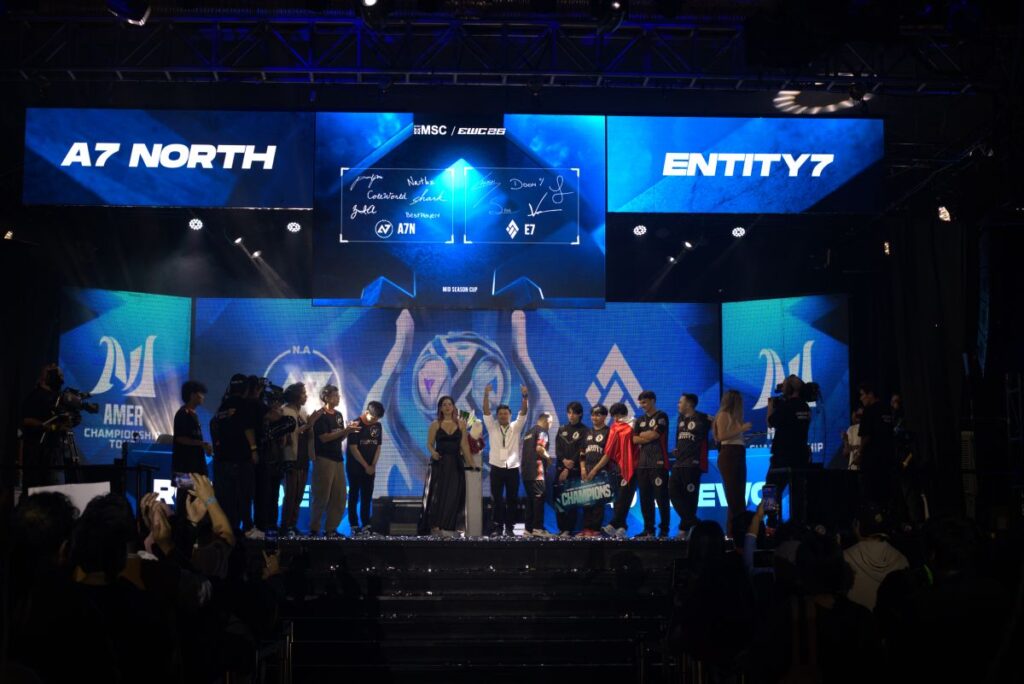
Rather than treating North and South America as separate ecosystems, MOONTON has consolidated them — partly, Ng said, to sharpen competition on both sides. North American teams, previously dominant regionally but untested globally, lost to a South American side at this year’s Championship Tour for the first time. “I think overall the strategy works,” Ng said, pointing to the loss as evidence that competitive pressure between the two regions is already reshaping how teams prepare for the following season.
On the ground, that expansion is also finding smaller, more organic brand interest. MOONTON has worked with Bonoxs, a South American payment platform used by players to top up in-game currency, for two to three years. At the Lima event, Ng pointed to an unplanned sponsorship: a local bubble tea vendor who came to watch a rehearsal and, two days later, signed on to provide drinks to the community. “There’s definitely a lot of potential,” he said. “We just need to introduce the product to the market and give it time to grow.”
MOONTON has also moved to formalise how third parties run MLBB tournaments, working with the Esports Integrity Commission (ESIC) on a shared protocol. Ng said the goal is less about control than protecting organisers and players alike as the volume of community-run events grows. “This is why we work with ESIC. With their know-how, we’re able to implement one of the best protocols in the world when we are organising tournaments, to ensure fairness, safety and the whole structure,” he said.
That same instinct extends to how MOONTON works with newer, less experienced organisations entering the ecosystem. Ng said MOONTON splits its guidance into two tracks: grassroots teams, who are pointed toward open qualifying pathways and relegation systems, and established or well-funded organisations, who are approached directly about entering via franchise slots or the open system. He cited Team Liquid‘s entry into MLBB — which began, he said, with an introduction email — and Weibo Gaming‘s more grassroots approach of building teams in Southeast Asian markets like Myanmar as two different routes into the same ecosystem.
How MOONTON decides where to invest
Asked how MOONTON distinguishes an emerging market from a mature one, Ng described a fairly precise threshold: daily active users measured against a country’s total population. Once that ratio passes ten percent, MOONTON considers the market mature enough to justify direct investment in a local esports scene. Indonesia, Malaysia and the Philippines all clear that bar and now run franchise systems, with Malaysia’s launched only this year. Mongolia, despite its relatively small population of roughly thirty-four million, also registers a surprisingly high penetration rate. Markets between one and five percent are treated as showing early interest; between five and ten percent, MOONTON begins weighing dedicated marketing and esports investment to push penetration further.
Turkey, this year’s M Series host, fell into that five-to-ten-percent band with strong growth potential and competitive local teams already active, including Aurora and FUT Esports. “We’ve been talking about globalisation, and we all think it’s the right timing to bring the world championship out of Southeast Asia,” Ng said, acknowledging that awareness-building in a new market (and a winter tournament in contrast to Southeast Asia’s usual summer scheduling) brings its own set of challenges. MOONTON has already run market surveys to gauge local awareness ahead of the event, and expects to announce the next World Championship host around the M8 grand final.
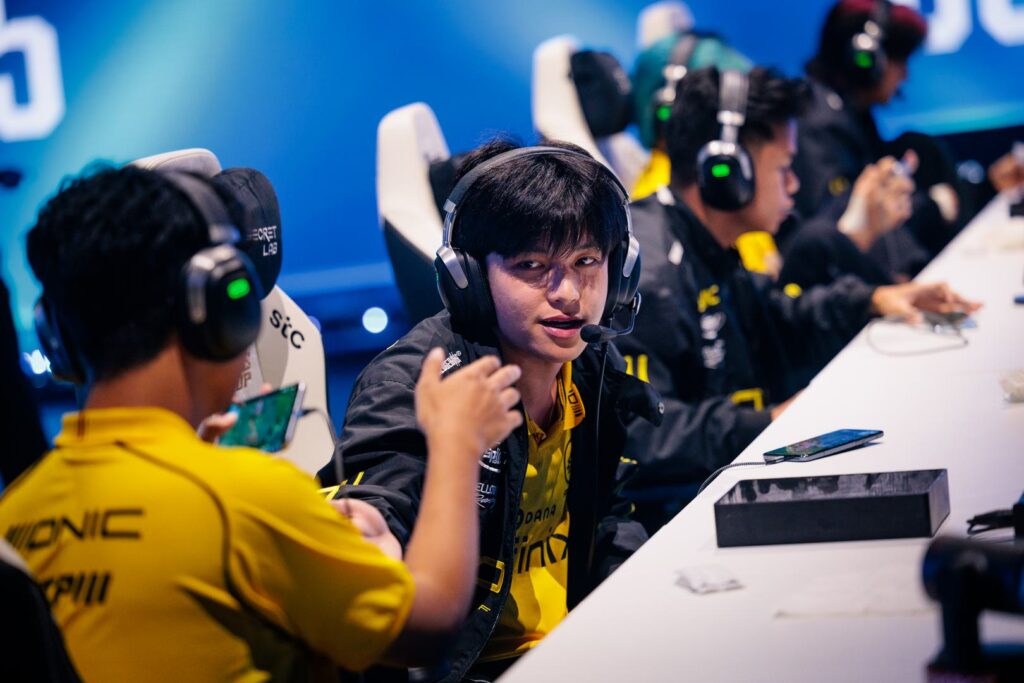
Asked whether the rise of the Esports World Cup, which brings together titles from Counter-Strike 2 to mobile games under one roof, had changed MLBB’s own trajectory, Ng was candid that cross-title viewership remains limited. Fans who follow MLBB rarely migrate to watch other mobile titles, let alone shooters or battle royale games, he said. What EWC does instead, in his view, is create a shared moment: a ‘Southeast Asia Games-style’ stage where each community shows up for its own title, occasionally samples others through EWC’s own content, and ultimately roots for “the best club across titles”, a framing Ng compared directly to the Olympics, and one he expects to carry over into the Esports Nations Cup in a club-to-nation format.
He did point to one continuing strategic thread: MOONTON’s women’s tournament programme, run in partnership with the Esports World Cup, with local qualifiers feeding into the EWC stage. Ng said the ratio of women players is growing faster than the overall base in several emerging markets, particularly in the Middle East and Turkey, which he linked to broader cultural resonance in the region.
MOONTON’s audience skews young: Ng put the split at roughly 30% under eighteen, 40% between eighteen and twenty-three, and about 20% above twenty-three. The global gender ratio sits around 75:25, he said, narrowing to closer to 60:40 in some regions, including the Middle East, where MOONTON’s inclusion push over the past four to five years has coincided with a rising share of women players.
That youth skew is central to how MOONTON pitches sponsors, including Visa, which backed the M7 World Championship in Indonesia.
Ng said the deal, driven by Visa’s APAC team, combined a cash sponsorship with barter elements tied to a card programme rollout, and was renewed on the strength of the broadcast’s reach: more than half of the event’s media value, he said, landed with the youngest segment of Visa’s target audience.
Conversations on renewing for M8 in Turkey are ongoing, now involving MOONTON’s regional teams beyond APAC. Red Bull, also a sponsor at MOONTON’s M7 event, is expected to continue into Turkey as well.
What’s next
With MLBB approaching its tenth anniversary, Ng described a retention strategy built on two fronts: continually refreshing storytelling (this year’s addition of the Asian Games in Nagoya gave the competitive calendar a new narrative after viewership had begun softening around a four-year run of Southeast Asian Games) and building for a longer generational arc: With investments in countries with continued population growth in emerging markets, unlike the birth rate projections in China and Japan, for example, Ng said MOONTON does not see the game’s user base as having plateaued.
He pointed to parents who once played MLBB now bringing their own children to watch events in person, reversing what he described as the traditional ‘play-then-watch’ dynamic into ‘watch-then-play’. “We don’t want to go down,” he said. “We’re still seeing the potential for the next twenty years.”
In line with this, MOONTON is also working with education frameworks and government bodies in Malaysia and the Philippines to position esports as a viable career path, not just a pastime; an effort Ng linked to his own uncertainty, as a psychology student years ago, about whether the games industry was a real career option at all.

The Esports Radar also asked Ray about the Saudi Arabian Public Investment Fund (PIF)’s acquisition of MOONTON in March 2026. While Ng could not comment on it directly, he said that MOONTON continues to operate independently. Ng closed by teasing MOONTON’s next roadmap update, due later this year:
The publisher now organises its esports strategy around five regions: Southeast Asia, East Asia, EECA (Eastern Europe and Central Asia), EMEA (Europe, the Middle East and Africa) and the Americas. It is running pilot Championship Tour formats in the Americas and East Asia, with plans to extend the model across all five regions over the next three years. “There’s a lot to do to fill up the roadmap and a lot of restructuring,” Ng said. “We’ll be very excited to come back with a detailed plan later in the year.”
“Why don’t we do another interview next year to see how all of that worked out?” I asked. “Sounds good,” Ray replied.
So be sure to check back a year from now for the third chapter in The Esports Radar’s series on MOONTON, as we build an annual tradition of tracking MLBB Esports’ global growth.

Follow The Esports Radar on social media: