

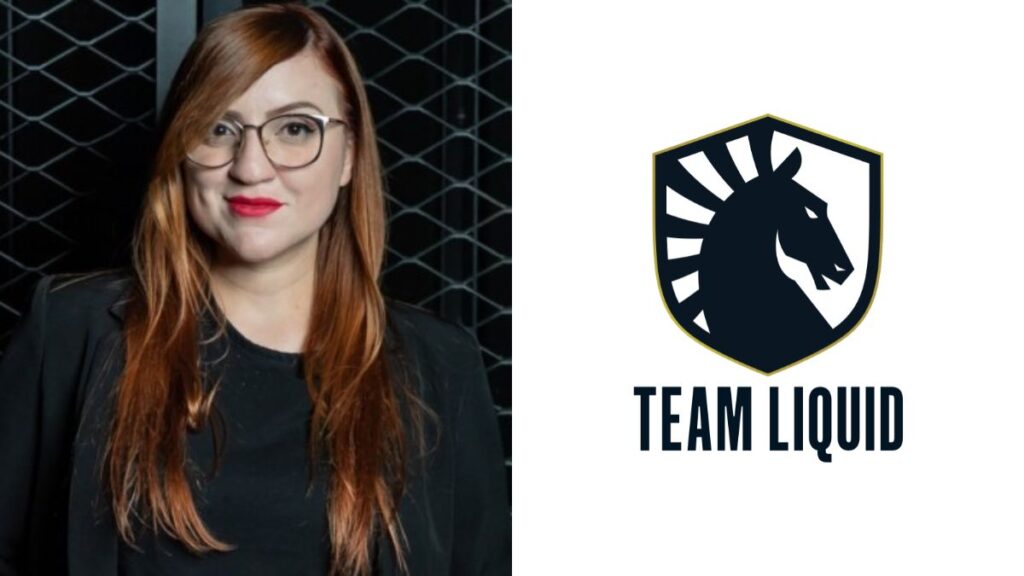


Team Liquid is adapting its Brazilian operation to a changing esports industry, with a renewed focus on commercial growth, competitive development and building a local fanbase around a global organisation. In an our hour-long conversation with The Esports Radar at the organisation’s Alienware Training Facility in São Paulo, Miah Campos, Liquid’s General Manager in Brazil, discussed the restructuring behind that strategy, the lessons learned from the controversial Honda sponsorship incident and how a partnership with Visa that originated in Brazil could eventually expand internationally.
That conversation covered so many compelling insights that we’ve split the interview into two parts. In this first part, Campos discusses Team Liquid’s recent structural adjustments and the internal fallout from the Honda incident, while part two will focus on the organisation’s local commercial approach and its partnership with Visa.
A new leadership phase for Team Liquid Brazil
Miah Campos officially assumed the General Manager position in May 2026, following the departure of Rafael Queiroz, who spent eight years at Team Liquid and helped establish its Brazilian operation. Previously the organisation’s Director of Partnerships and Sales in the country, Campos was invited to enter the recruitment process as the organisation sought a successor who could lead its local business with a strong emphasis on new opportunities.
For Brazil, that means making better use of an established competitive presence and a passionate audience while developing commercial relationships that reflect the market’s specific characteristics. It also means addressing a challenge faced by global esports organisations: how to make fans feel connected to a brand when some of its most prominent teams compete outside their home country.

Campos was not initially expecting to become General Manager. She joined Team Liquid in early 2025 to lead partnerships and sales, but the organisation’s search for a successor to Queiroz brought her into consideration. She said a Team Liquid HR representative, in Brazil to interview candidates in person, asked her whether she would apply. She then spoke with Queiroz, co-CEO Victor Goossens and President Claire Hungate before being offered and accepting the role.
The departure of Queiroz to join Evo was significant for the Brazilian operation, given his contribution to its development. Campos acknowledged the scale of that legacy, describing the new position as an opportunity to continue work that had established Brazil as an important market for Team Liquid, including the facility in São Paulo, the biggest esports headquarters in the world (a 14-store building), which she said grew out of his projects.
“I have enormous shoes to fill, because the work Rafa did here in Brazil is undeniable in terms of how much he accomplished for Liquid in the region,” Campos told TER.
The appointment of a Director of Partnerships and Sales as General Manager also reflects the direction in which Team Liquid wants to take the business. But besides commercial interests, Campos said the organisation sees Brazil as both a source of fans and a market in which it can identify competitive talent for its international teams, calling the country “a great breeding ground of talent”.
Campos points to the country’s passionate esports communities, its influencer-marketing ecosystem and its ability to produce players who can compete internationally. She noted that Team Liquid has previously had Brazilian players in Counter-Strike, including star Gabriel “FalleN” Toledo in 2021, which according to Campos shows that the organisation recognises the level of talent of the region.
The challenge, however, is particularly relevant given that the vast majority of top-tier esports competitions take place internationally, outside Brazil. The organisation aims to show how local supporters can stay deeply connected to Team Liquid in titles like League of Legends or Counter-Strike, even when their teams rarely play on home soil or do not currently feature Brazilian players: “The big challenge we are working on is how to show that you can be a Brazilian fan and there is a home for you here at Liquid, even when the team plays abroad,” Campos explained.
The challenge is particularly relevant when a globally recognised organisation has teams in games with substantial audiences but no corresponding local roster. The organisation aims to show how Brazilian fans can follow Team Liquid in League of Legends or Counter-Strike, for example, without necessarily having a team based in their own region.
Campos wants to bridge that gap by connecting supporters to the wider organisation, while also giving visibility to its locally based competitors. The list of Brazil-based rosters is not small: It includes a VALORANT Game Changers team, a Rainbow Six Siege roster, Crossfire players, a Fortnite player, and EA FC competitor Paulo Neto, who represented Team Liquid at the Esports World Cup (EWC) 2026.

But, in her view, the organisation needs to do more than support those athletes competitively. It must also communicate their presence to audiences who might still associate Team Liquid primarily with its international teams.
TER then put it to Campos that, even if one fan counts as one fan and one jersey sold counts as one jersey all around the world, the exchange rate means Brazilian fans bring in far less revenue in dollar terms than fans in stronger-currency markets, raising questions on the financial rationale behind it. She framed the strategy as building a base rather than chasing immediate returns from merchandise or other purchases. The longer-term objective is to create an association with Team Liquid that fans maintain throughout their lives.
“We want them to grow up and for their kid to be Liquid and their grandchild to be Liquid, and so on,” she said.
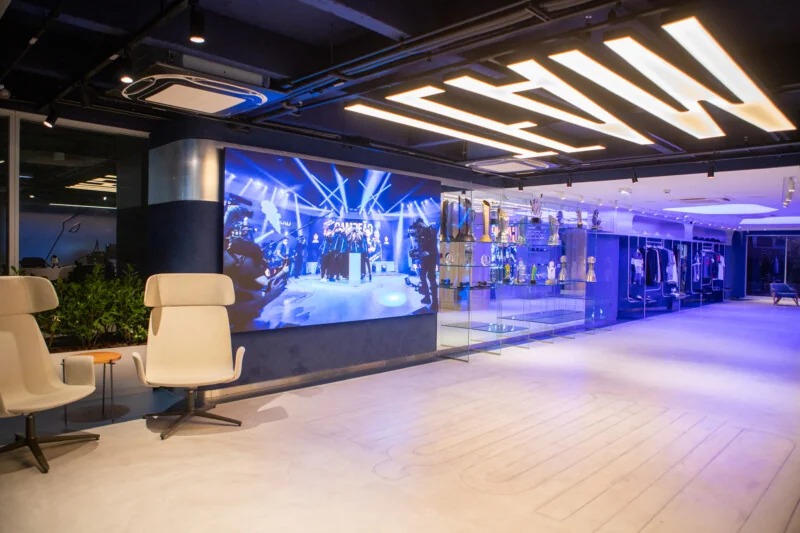
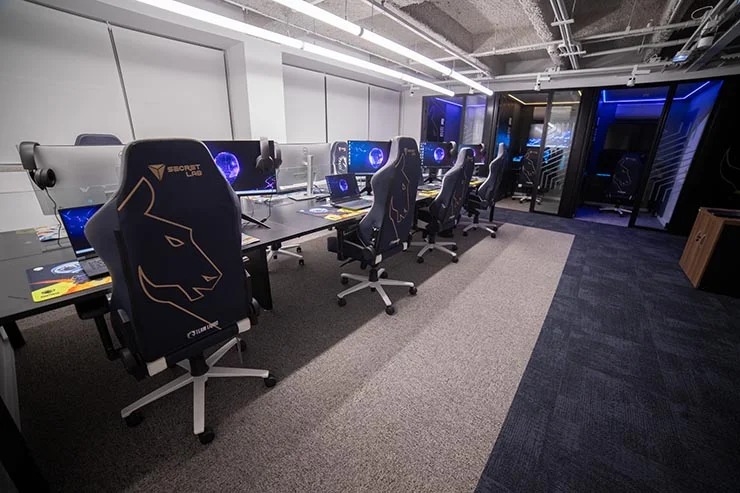
Monetisation remains important, but the organisation is also investing in the infrastructure needed to turn competitive esports into a wider entertainment proposition. Campos pointed to Team Liquid’s Brazilian facility as a space designed to accommodate different formats and activities around competition, rather than serving only as a workplace for its teams. She said it is the only Team Liquid facility built vertically, a design she described as a ‘lighthouse’ for the community. It features a shop and event space on the ground floor, training areas across multiple levels, and additional amenities such as production studios, streaming infrastructure, dormitories, and a cafeteria.
The building also functions as a hub for the wider gaming community. Team Liquid has hosted activities with publishers, welcomed other organisations for bootcamps and opened its facilities for events and content productions. Among the examples Campos cited were activities involving Blizzard and Epic Games, alongside collaborations with entertainment brands such as Disney, including a launch event for the series Alien: Earth, and a Netflix live stream with the Portuguese voice cast of Stranger Things. The building has also hosted a Rolling Stone K-pop talk. In esports, the second floor is currently used by Vivo Keyd Stars, and a floor was previously used by Isurus.
The objective is to make Team Liquid’s Brazilian presence tangible to people who might otherwise interact with the organisation only through digital channels.
Restructuring for a changing esports market
Campos’ appointment comes as the esports organisation reassesses their operating models amid changes in audience consumption and commercial investment. Team Liquid has undergone three rounds of workforce reductions in roughly a year, cutting an estimated 10% of its roughly 300-person global workforce (around 20 to 30 positions total).
Campos describes its current phase as an effort to create a healthier operation capable of growing again rather than a response to any specific cause. Asked about the three rounds of layoffs, Campos said she could not break down the exact number of positions affected or give a detailed account of the decisions. She did, however, outline how the organisation views the changes.
Team Liquid, founded in 2000, has operated through multiple cycles in esports. Campos argues that the industry remains relatively young in terms of professionalisation when compared with established sports such as football, leaving organisations particularly exposed to changes in audience behaviour, investment appetite and the commercial models supporting competition.
“The whole industry goes through highs and lows, and we have winters, so to speak, that we have to face. In esports it is no different,” she said.
Campos described the revisions as necessary to navigate the current market while maintaining the capacity to expand when conditions improve. She also emphasised that changes to the way the company operates should be considered alongside plans for future growth, rather than simply as a reduction in headcount. “Any changes to the team are not about losing this or losing that. They are really about planning with a strategic vision for the future,” she said, adding that all departures were handled with empathy.
She also added that the organisation had reviewed the structure of its partnerships, the type of work it delivers to clients and the volume of those deliverables, with the aim of understanding how operational decisions affect the business. Tha manager said that, in talks with the co-CEO about changes in Brazil, the argument was that a structure built the old way would not have room for everyone once the business grows again.
The Honda episode: a non-renewal that changed internal practices
Although Campos notes that no single factor prompted the layoffs, one of the most difficult episodes in Team Liquid’s recent history involved the end of the partnership with Honda, a global client whose agreement was managed by the organisation’s United States office.
According to a source who spoke to The Esports Radar, however, the case was a turning point that kicked off a period of growing uncertainty at Liquid that preceded the workforce reductions. Based on conversations with individuals close to the situation, The Esports Radar understands that the fallout remains a highly sensitive topic for both current staff and former employees.
The controversy followed a social media post in May 2025 by a Team Liquid player during a Rainbow Six Siege competition in Rio de Janeiro. The post, supposedly meant to say that the team “exploded” after a loss, involved imagery related to the atomic bombings of Japan and, as it happened, their opposing team, CAG Osaka, was Japanese. Campos said the player had not meant to cause offence, and subsequently deleted it.
Campos, who was then responsible for partnerships and sales in Brazil, said the local team became aware of the incident through social media monitoring and an internal Slack channel. The competitive staff had also identified the problem and spoken to the player, who, according to Campos, had not anticipated how the content would be interpreted.
She said she promptly alerted colleagues outside Brazil as the organisation monitored the reaction online. The situation then developed into a conversation with Honda as the controversy circulated online. Campos stressed that Team Liquid communicated the circumstances to Honda proactively, explaining where the incident had occurred, the player’s response and the measures taken internally. “The client thanked us for being proactive,” she said.
However, according to Campos, the organisation was already approaching the end of its existing agreement with the automotive brand and was in discussions around a possible renewal. According to her account, the client was informed, the parties continued to monitor the situation and, six days after the controversy erupted, Honda communicated its decision not to pursue a renewal.
The distinction does not diminish the commercial consequences of the episode, but it provides a more precise account of how the 6-year long partnership ended.
In the aftermath the organisation’s response extended beyond managing the client relationship. Team Liquid reviewed its internal training and introduced workshops for all staff, players and influencers. Measures covered social media conduct, public behaviour and how players should handle moments of frustration after competition.
Campos explained that the objective was not limited to preventing controversial posts: the organisation also wanted to establish clearer guidelines around when players should use their phones and how they should approach public communication after emotionally taxing matches. “The obvious things that need to be said, need to be said,” she stated, reflecting on the lessons learned.
The General Manager acknowledged that the episode left its mark on the organisation, but said that, going by staff surveys, she would not describe it as a continuing cultural shadow over the Brazilian operation. She pointed instead to the internal improvements that followed and the effort to ensure that all Liquid representatives better understand the potential impact of their actions.
For an esports organisation operating across markets, the incident became a benchmark on how quickly a single social media post can become a global commercial issue. Team Liquid’s response then was to move to improve preparation and communication rather than treat the episode solely as a sponsorship dispute.
Still, navigating these headwinds ultimately reflected the strength and resilience of Team Liquid’s global brand. Locally, the organisation has also achieved significant success, with the established Visa deal standing out as a major milestone.
Look out for part two of this interview in the coming days, where we take a deeper look at what lies ahead for Team Liquid, its Brazil-focused Visa partnership, and its regional commercial strategy.