

As the esports industry closes the chapter on a year defined by correction, discipline, and recalibration, Reflections 2025 takes a closer look at how leaders across the ecosystem are interpreting the moment. In this edition, Robin Piispanen, General Manager of PRO and Simulation for Logitech G, shares his perspective on the forces that shaped esports in 2025, the milestones that mattered, Logitech G’s role in building long-term value, and the trends set to define a more mature and sustainable industry in 2026.
Read his key insights below, and stay tuned for more in our ongoing “Reflections” series.
1. Looking back at 2025, would you say it was ultimately a good or challenging year for esports as a whole? What factors most shaped your perception of the industry this year?
I’d call 2025 a reset year. The fundamentals were strong as the global esports audience reached about 641 million people and the broader market is tracking toward ~$3 billion in value. At the same time, we saw the continued correction: major org restructurings, tighter budgets, and an industry forced to operate with discipline. So yes, it was challenging, but in a way that pushed the ecosystem toward healthier, more sustainable models.

2. In your view, what were the standout milestones, breakthroughs, or moments worth celebrating in 2025 — whether in competition, business, technology, or culture?
This was a year of decisive action and significant milestones, confirming the commercial and competitive future of esports.
Competitively, the ecosystem delivered. Our full global tournament calendar across PC, console, and mobile provided undeniable cultural flashpoints. Moments like T1’s historic League of Legends Worlds Championship victory transcended the core audience, driving impressive viewership and highlighting the resilience of a diversified title portfolio.
Most critically, sentiment and discipline have returned. After navigating a challenging period, industry leaders are expressing real optimism anchored in long-term stability. Teams, publishers and key partners are executing with greater clarity and business rigor. These milestones collectively position 2025 as the year we established the crucial foundation for sustained, disciplined growth.
3. Were there any organisations, companies, or initiatives that you feel genuinely added value to the esports ecosystem this year? What made their contribution stand out to you?
This last year, we saw several organisations and initiatives make meaningful contributions to the health of the esports ecosystem.
What stood out most were the companies that focused on long-term sustainability rather than short-term hype. We saw publishers, teams, and tournament operators lean into more disciplined business models, clearer competitive structures, and improved player pathways.

For example:
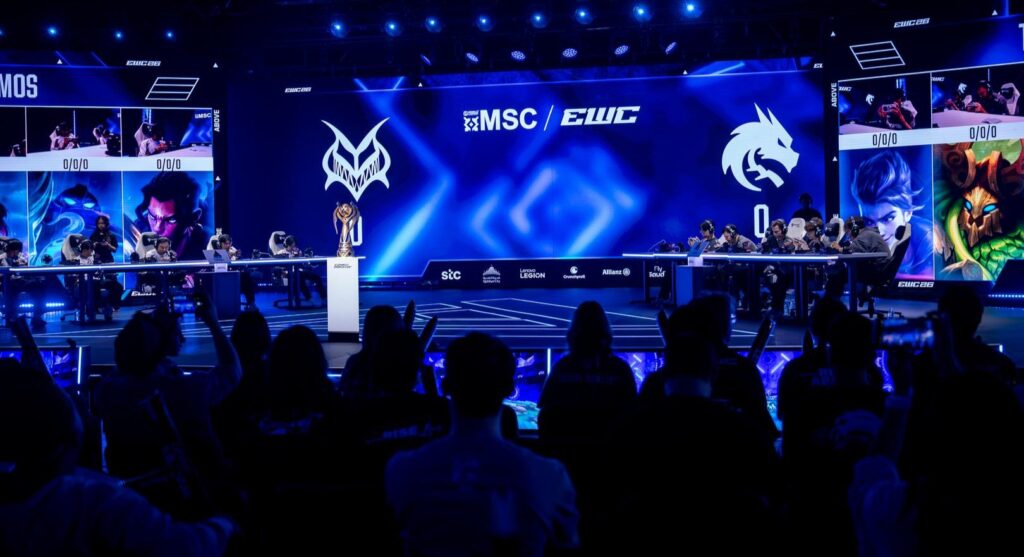
The Esports World Cup Foundation is a pivotal strategic initiative, backed by a huge investment, aiming to fundamentally reshape the global competitive gaming environment. Its central objective is the annual Esports World Cup, a marquee, multi-title, Olympics-style event. This “Club Championship” format encourages organisations to invest in diverse rosters, promoting stability. Crucially, the tournament is engineered for serious global visibility, attracting massive international media attention, mainstream sponsors, and new demographics. The scale and multi-genre format are specifically designed to elevate professional esports’ profile to unprecedented levels, fostering industry legitimization and growth.
Publishers such as Riot and Valve have focused on establishing more sustainable competitive structures and tightening their event calendars, rather than solely relying on large headline prize pools.
Data platforms like Esports Charts have significantly improved transparency for brands and investors by tracking tens of thousands of tournaments.
4. Reflecting on your own company and your personal work, what achievements from 2025 are you most proud of, and why do they matter in the broader industry context?
2025 was a strong year for Logitech G in esports because we focused on adding real, long-term value to players, teams, and the broader competitive ecosystem. One of our biggest milestones was the launch of Logitech G PLAY 2025, which became a global platform to introduce some of the most advanced esports gear we’ve ever built. These products weren’t upgrades; they were designed hand-in-hand with professional athletes and backed by new research into biomechanics, cognition, and player performance. That science-driven approach is helping us push the boundaries of what ‘pro-grade’ equipment can deliver.
We also expanded our global partnerships, from top organisations like FURIA to initiatives that support inclusivity in esports, such as our work with G2 to spotlight women in competitive gaming. Our goal is to strengthen the ecosystem at every level, from elite pro play to community growth, and 2025 reflected that commitment.
Another achievement was broadening the definition of the competitive community itself. We brought sim racing to another level with G-Challenge, which had over 200k participants, and partnered with Aimlabs to create the largest aim-competitive season with over 1.2M players. Whether you’re training for a world championship, competing in a sim league, or building a creator career, Logitech G is building the gear and opportunities for you to compete and connect.
5. Looking ahead, what are your key predictions for esports in 2026? Which trends should people be paying close attention to, and where do you see the biggest growth opportunities and challenges emerging?
2026 will be the year of maturation, integration, and smarter, disciplined growth for esports. We are moving firmly past the pursuit of scale at any cost, focusing instead on sustainability and core business fundamentals, a definite win for players, teams, and partners. Here are our key a couple of other key predictions:
The lines between professional play, creator culture, and mainstream entertainment will continue to blur, meaning the most successful teams will operate as true media companies, and brands must empower creators to own the competitive narrative.
AI will revolutionise elite competition. We see huge advances in performance science and analytics, from biomechanics to cognitive tracking, which heavily influence how players train and how we, as a hardware leader, add value to the players.
Furthermore, global expansion will be driven by accessible, scalable categories & programs. Watch closely for continued acceleration in simulation racing, community esport programs combined with massive audiences in high-growth regions like LATAM, Southeast Asia, and the Middle East.
The key challenge, however, is that the industry must address fragmentation and audience fatigue. Too many conflicting calendars and formats dilute attention; the path to victory lies in simplifying the fan experience and prioritising quality over sheer quantity.
Ultimately, 2026 will be a year where the industry gets smarter, more data-driven, audience-centric, and integrated into broader entertainment. We are backing the companies that build sustainable value, not just spectacle.
Follow The Esports Radar on social media: