

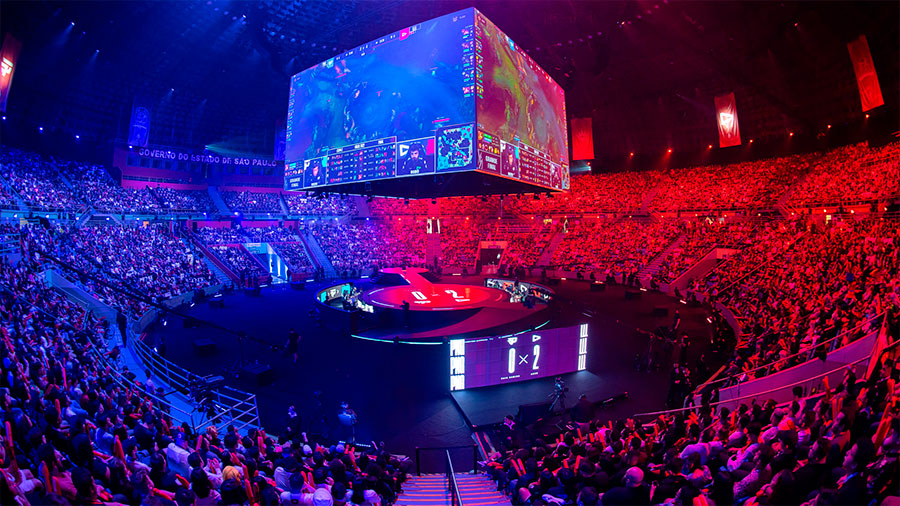


The Esports Radar published an interview with Igor Corrêa, Product Manager of CBLOL at Riot Games. In it, he explained why Riot decided to revert the planned transition of the LCS (League of Legends Championship Series) and CBLOL (Brazilian League of Legends Championship) into the LTA (League of the Americas) format for 2025.
The core reason was simple — and deeply uncomfortable for anyone who believes businesses should always optimise for efficiency: passion.
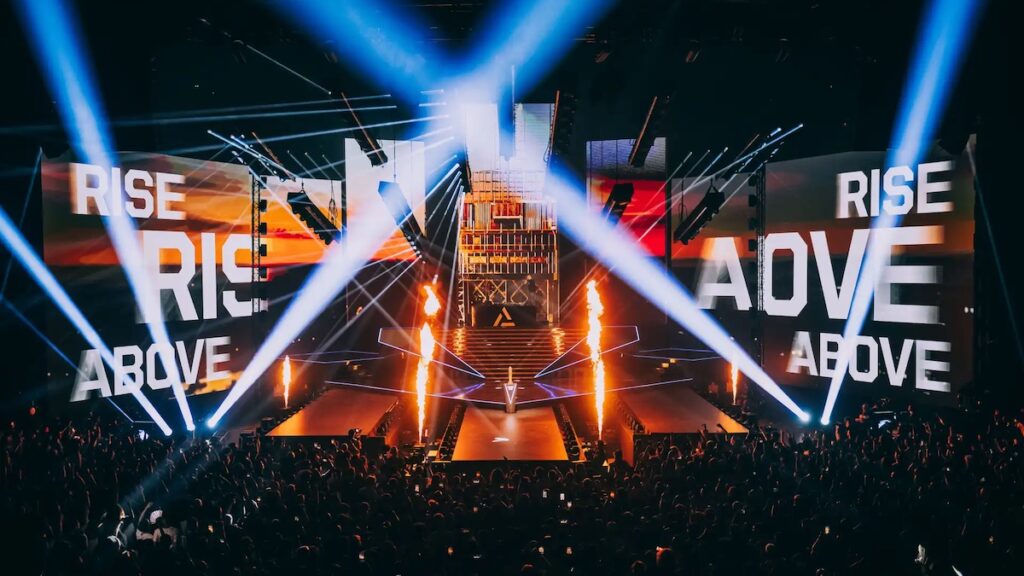
According to Corrêa, CBLOL lost something essential when it moved away from its “big event” moments. Finals in packed arenas disappeared, the spectacle shrank, and with it, part of the league’s appeal. It was a well reasoned move when looking at spreadsheets, but Riot now openly acknowledges that this was a mistake.
And that admission brings us to a broader reflection: esports is not just a business. It is competitive entertainment.
Whether we’re talking about football or League of Legends, this sector, like sports, lives and dies by audience, engagement, and emotional investment — elements that exist far outside the realm of pure rationality.
Fans are the core asset of this industry, but supporting a team makes little to no financial sense. You spend time watching matches, money on tickets and jerseys, emotional energy on wins and losses… and receive nothing tangible in return. Only feelings, only belonging, only the sense that you are part of something bigger than yourself. And yet, this “irrational” behaviour is precisely what makes the entire ecosystem work.
This tension goes even further when we look at competition itself. In most traditional markets, the ideal outcome is dominance: fewer competitors, more control, higher margins. In competitive entertainment, that logic collapses.
However, teams don’t thrive by eliminating rivals. They thrive because rivals exist.

Stories need opposition. Narratives need tension. History needs conflict. A club or team without a meaningful rival rarely reaches its full cultural relevance (Real Madrid v Barcelona, Boca Juniors v River Plate, Celtic v Rangers etc). One side does not exist without the other — and both grow because of that shared friction.
That’s why the instinct to “crush the competition” doesn’t apply cleanly to esports. In fact, the less intuitive move is often the correct one: you must care for your rivals. Not out of kindness, but out of necessity. Without them, the stories cool down, the stakes disappear, and the audience drifts away. A falling tide sinks all ships.
Another truth many business owners struggle to accept: in competitive gaming, people talking badly about your team after a loss is often a good sign. If you lose and no one reacts — no criticism, no mockery, no debate — then you’re not doing your real job. If there’s only indifference then generally speaking, you’re failing to engage. And indifference in this market is far more dangerous than hostility.
Because, at the end of the day, let’s be honest about what this industry is: Whether in basketball or in Counter-Strike 2, we are discussing massive multi-channel marketing activations built on excellence and conflict. We put incredibly skilled players in direct competition, attract attention through that clash, and when audiences tune in, they see one logo on a jersey and another on the opposing side. Perhaps the teams’ crests, but perhaps Red Bull and Monster Energy. The rivalry does the work.
It’s counterintuitive. It’s messy. It doesn’t always align with corporate instincts. But that’s the nature of competitive entertainment.
Now the paradox: Knowing all of that, doesn’t it make the most rational choice to be the non-rational choice? Well, I’ll leave that one to you! Just for the sake of all of us, do not apply that illogic logic to finances, we had enough of it already.
This analysis was first published in the Heat Map newsletter on 12 February 2026. For early access to our analysis and more exclusive content, subscribe to The Esports Radar’s newsletters via this link.

Follow The Esports Radar on social media: