



For years, the esports industry has looked outward for validation. The arrival of ‘non-endemic’ brands — from automotive to finance and betting — has been celebrated as a sign of maturity, of mainstream acceptance, and of growth beyond its original boundaries. Rightly so too; that influx of external capital has played a crucial role in shaping the modern esports economy.
But while the spotlight has been on who is entering the space, something equally significant has been happening among those who have always been part of it. Endemic gaming brands are not just present — they are competing.
Since 2025, that competition is intensifying into what can only be described as a global race for control over the core of esports: the hardware, the stage and the player experience itself.
The Race for Esports’ Core
The monitor category offers perhaps the clearest example:
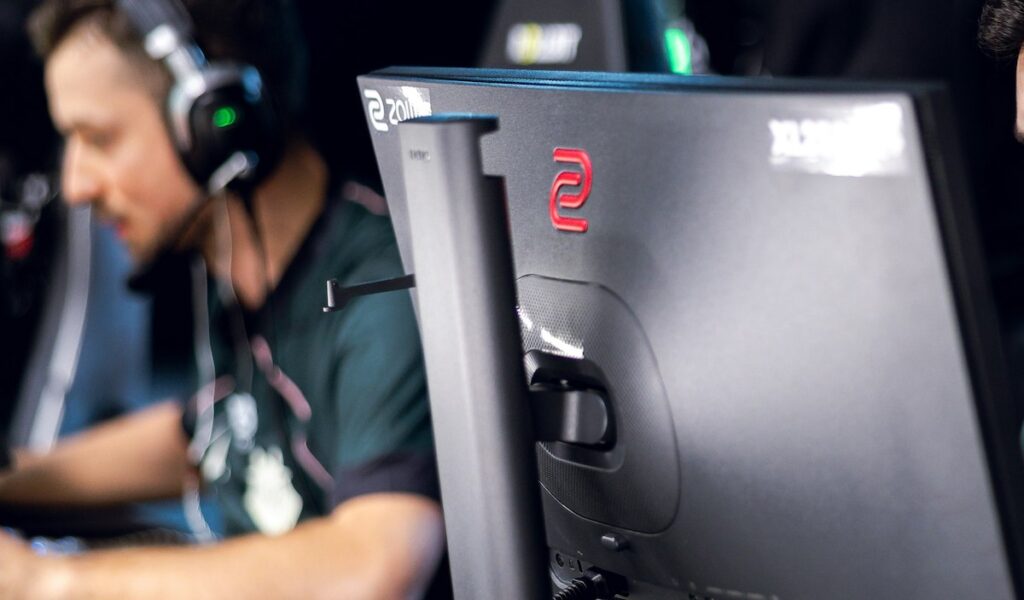
- ZOWIE continues to expand aggressively, reinforcing its “insider” philosophy — a strategy focused on winning credibility directly with professional players — while securing presence at major events such as the StarLadder Budapest Major 2025. Its extended partnership with ESL FACEIT Group ensures exclusivity across the ESL Pro Tour ecosystem through 2027, anchoring the brand at the centre of some of the most visible competitive environments in the world.
- LG Electronics has renewed its long-standing partnership with MIBR and closed a deal for esports casting in its products with South Korea’s streaming service SOOP, maintaining strongholds in some of esports’ most engaged markets;
- ASUS ROG continues to expand its footprint through both grassroots and elite ecosystems, including deals with top organisations like Evil Geniuses and Cloud9, with collegiate initiatives such as the National Association of Collegiate Esports and the National Esports Collegiate Conference (NECC), and top-tier partnerships with BLAST and PGL across the 2026 season;
- Samsung has strengthened its Nordic and UK presence through Metizport and DreamHack Birmingham;
- AGON by AOC has aligned with organisations such as Gaimin Gladiators and Method.
- Even brands traditionally associated with consumer television, such as TCL, are stepping deeper into esports through partnerships with FURIA and Gentle Mates.
This competition for “on-stage real estate” isn’t confined to monitors either. See the latest moves in peripherals:
- Logitech G continues to operate at scale, spanning events such as DreamHack and partnerships with organisations from different regions including KRÜ and Dplus KIA, while also investing in performance research alongside G2 Esports and by investing €2.5 million in a research programme at the University of Limerick.
- Sony, through its INZONE line, is pursuing a dual strategy: integration at the elite level with Fnatic, while expanding grassroots presence through PlayVS initiatives in North America.
- Meanwhile, HyperX — now aligned with OMEN under HP — has openly signalled its intention to expand further into esports, quickly following that statement with a partnership in Japan with FENNEL and activations around the League of Legends EMEA Championship (LEC) roadtrip events.
- After closing with the 2025 Budapest Major, CORSAIR announced a “seven-figure” deal with FaZe Esports.
Furniture has also become contested territory:
- Blacklyte has secured visibility through organisations like Team Liquid and events such as the Rainbow Six Invitational and the 2025 Majors by BLAST and StarLadder;
- Secretlab continues to reinforce its position through partnerships with the Esports World Cup, PGL and VCT Americas.
- Interestingly, even here competition is fragmenting regionally, with Razer providing furniture for VCT EMEA while simultaneously strengthening its peripherals presence through partnerships with MOUZ, Karmine Corp and Hanwha Life Esports.
- Autofull also got in the spotlight by securing a deal with the ESL FACEIT Group (EFG) for 2026 and 2027, a period that includes the CS2 IEM Cologne Major 2026.
Taken individually, these are sponsorship deals; Taken together, they form a pattern.
Endemic brands are no longer simply participating in esports — when ZOWIE, Logitech G, and Razer come forward to highlight a preference by players for their products, they are competing for category dominance across regions, titles and levels of play. From grassroots circuits to Tier 1 events, from monitors to chairs, the objective is clear: secure presence where the game is played, seen and experienced.
At the same time, this resurgence does not whatsoever diminish the importance of non-endemic investment. The industry depends on external capital for scale and diversification. But while non-endemics help to validate esports from the outside, many endemics are now reinforcing their position from within — and doing so with increasing intensity.
In that sense, what we are seeing is not a replacement, but a rebalancing. A market where validation and control coexist. Where external growth meets internal competition. Where the fight for attention is matched by a strategic fight for infrastructure.
Because in esports, infrastructure is not neutral. It shapes performance, visibility, and target-consumer preference. Ultimately, it shapes power.
At the same time, it is worth noting that not all of these partnerships carry the same financial weight. Many endemic deals, while highly valuable in providing equipment and infrastructure, are often structured around product supply rather than direct capital investment. The recent FaZe deal with CORSAIR boasts a “seven-figure” label, but the announcement explicitly highlights the partnership is centred on hardware and does not reveal if or how much of the investment will be covered through equipment provision.
That does not necessarily reduce their importance — on the contrary, they are fundamental to the functioning of the ecosystem, money saved is money not spent — but it does add another layer to how these signals should be read.
Increased presence does not always translate into increased cash flow, and as such, this renewed activity can be interpreted both as a sign of strength and as a reflection of a more cautious, efficiency-driven market.
Which leads to a broader question:
As endemic brands reclaim ground across monitors, peripherals and infrastructure, is the Heat Map getting hotter or colder? Does this renewed dominance signal strength from within, or a shortage of external investment?
Perhaps more importantly: what should the industry learn from this moment — that growth comes more from outside validation, or that true stability is built from within?
This analysis was first published in the Heat Map newsletter on 22 April 2026. For early access to our analysis and more exclusive content, subscribe to The Esports Radar’s newsletters via this link.

Follow The Esports Radar on social media: