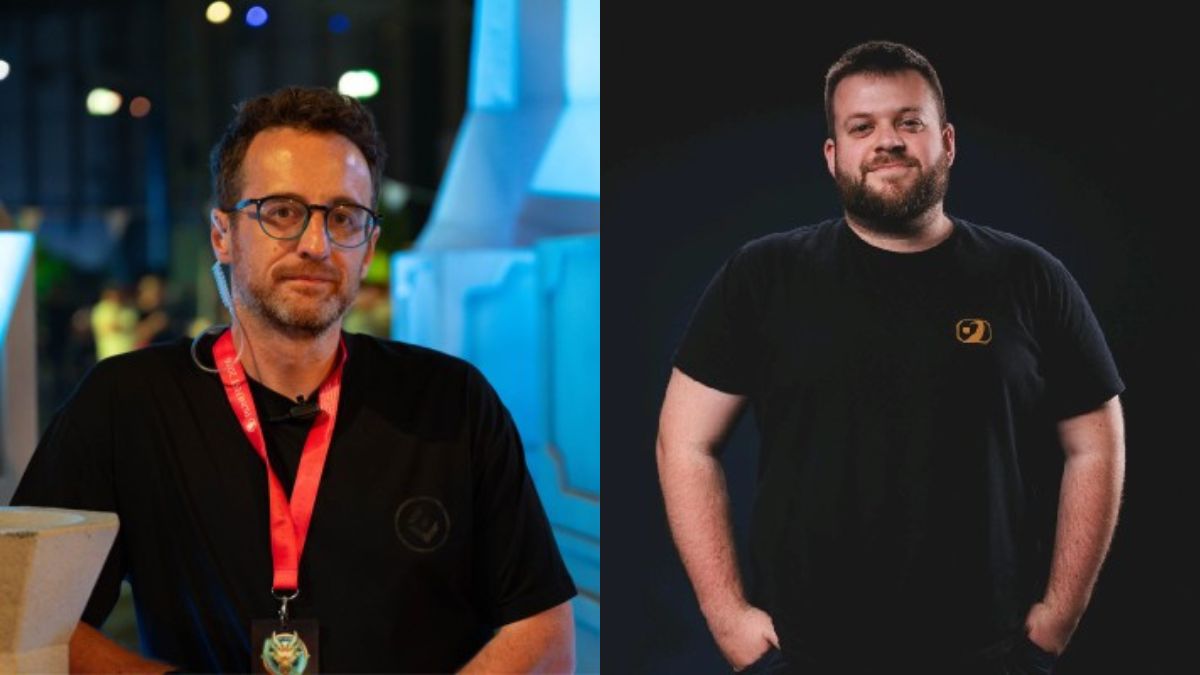




During the Esports World Cup 2026 in Paris, The Esports Radar sat down with G2 Esports CEO Alban Dechelotte to unpack the commercial blueprint, global expansion, and media strategy driving one of the industry’s premier organisations.
In an industry undergoing rapid recalibration, few organisations navigate the shifting tides with as much confidence as G2 Esports. Speaking to The Esports Radar on the ground in Paris during the Esports World Cup 2026, G2 Chief Executive Officer Alban Dechelotte was candid about both the macro state of competitive gaming and the distinct strategy keeping his organisation at the top of the food chain.
While many esports entities continue to struggle under the weight of market adjustments, G2 is operating a $35 million annual turnover machine as of 2026, driven by a hyper-diversified commercial model and an unapologetic commitment to entertainment, in which there is even a framework for content where each player has a ‘role’ to fill in a wider narrative.
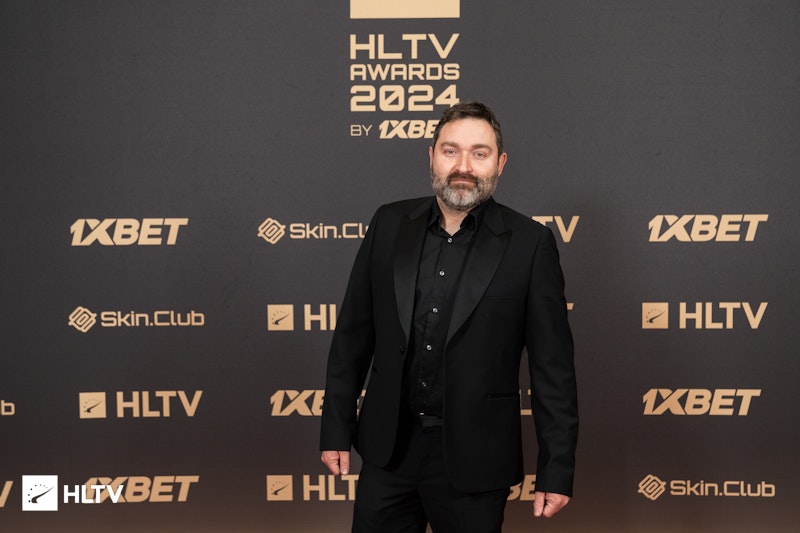
A cornerstone of G2’s commercial success lies in how Dechelotte and his team segment corporate partnerships. G2 categorises brand integration across three distinct levels of partner maturity, which the CEO classifies in three distinct tiers:
- Tier 1: Endemic & R&D Integration (Logitech, ExpressVPN, Herman Miller, Red Bull)
- Focuses heavily on product design and co-development. Performance partners like Logitech actively work alongside G2 pros to research and test future hardware iterations, while Red Bull supports custom initiatives like the G2 Performance Lab.
- Tier 2: Consumer Audience Activation (McDonald’s, Spotify)
- Designed to bridge consumer products with youth demographics.
- Tier 3: Lifestyle & Narrative Elevation (Louis Vuitton, Ralph Lauren)
- Leverages the cultural prestige and storytelling power of esports to reshape brand perception among emerging audiences.
“When we build a partnership proposal, there’s one page on where the logo will be and nine pages on the marketing deliverables we’re going to build for your brand. The jersey is just an implication… The importance is the story,” said Dechelotte.
This flexible approach allows G2 to execute agile, high-impact brand activations—such as their flight narrative partnership with Lufthansa during the League of Legends World Championship 2025 (Worlds 2025), which integrated custom storytelling across the team’s travel journey and secured first-class travel for competing rosters.
For Dechelotte, a core reason international brands gravitate towards G2 is its deliberate strategy to de-risk commercial investment by avoiding regional polarization. Traditional sports and heavily regionalised esports teams face strict cultural boundaries. In his vision, teams like Vitality (France), T1 (Korea), or NAVI (Ukraine) hold deep regional ties.
G2, however, operates on a culturally non-affiliated model, boasting 24 different nationalities across its playing rosters. By balancing top-tier competitiveness with scripted entertainment, banter, and self-deprecating humour, G2 has moved to position itself as either everyone’s primary favourite team, or failing that, their second favourite. If neither is possible, the organisation then is happy to embrace the hate:
“Even when a fan is a fan of another team, they love to hate us—because of the banter, because of the competitiveness, and everything. Brands like that because if you choose one team like Barcelona or Real Madrid, you risk antagonising the other side. With us, it’s less of a risk,” said Dechelotte, in a view that lines up with a stance recently outlined by Lenovo towards sponsorships in sports/esports.
Whether a fan is cheering for G2 or eagerly waiting for them to lose, they are actively engaged with G2’s narrative. This universal cultural reach de-risks multi-game brand partnerships, aiming to ensure sponsors achieve high visibility regardless of local rivalries.
But while traditionally esports teams often rely on sponsorship for approximately 70% of their total turnover, G2 has spent years restructuring its revenue streams to build resilience against market volatility.
To sustain the approximately $35 million revenue per year, G2’s engine is split into three core verticals:
- 45% Sponsorships: Multi-game, multi-year global enterprise deals.
- 45% Competitive Earnings: Publisher profit-sharing schemes, in-game digital items/skins, and tournament prize pools.
- 10% Diversified Businesses: Consumer products, direct-to-consumer digital memberships, and G2’s proprietary B2B marketing and publishing agency (serving publishers such as Tencent and Ubisoft).
Having achieved three consecutive years of net profitability (2022-2024), G2 is currently concluding a planned two-year investment cycle that started in March 2025 with a Series B funding round, aimed at aggressive expansion with a directive to return to profitability in 2027. In its vision of becoming a “next-generation sports club,” G2 relied heavily on expanding far beyond standard video game leagues.
Rather than acting solely as a property selling ad space, G2 launched its own dedicated media house and creative agency, 62 (pronounced Six-Two). Led by agency, advertising and gaming expert Mathieu Lacrouts, 62 functions as a B2B service agency delivering campaign strategy, creative advertising, media buying, and event production. Serving clients such as Tencent, Ubisoft, BMW, Philips Evnia, and AGON by AOC, 62 turns G2’s internal marketing engine into a revenue line.
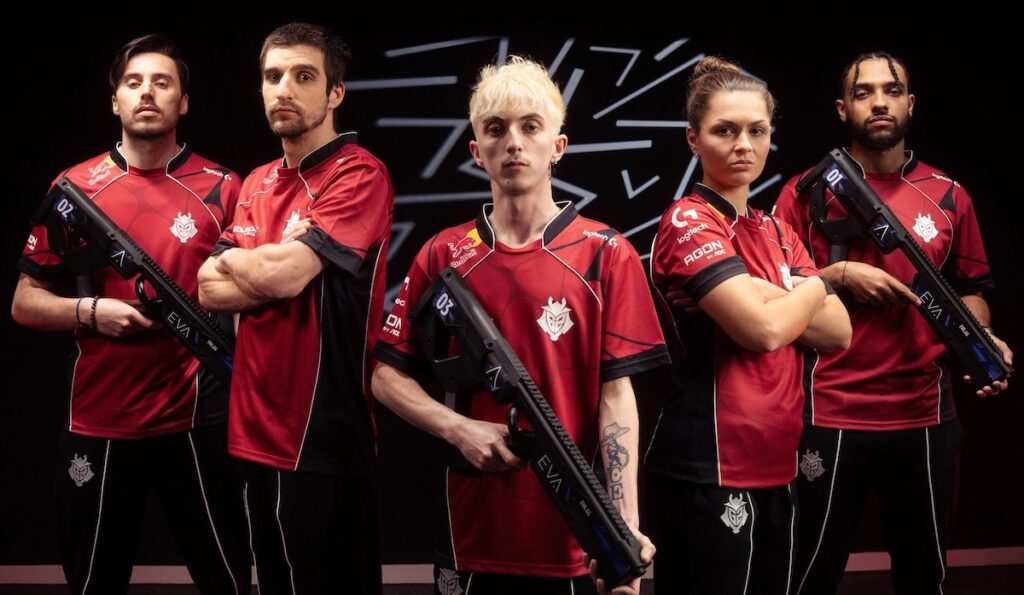
The organisation also expanded into physical entertainment by launching G2 Football Club in Kings League Germany—Gerard Piqué’s seven-a-side football format, aiming to capture mainstream football fans who might never watch a traditional esports stream, and embracing free-roaming virtual reality by competing in EVA (Esports Virtual Arenas)’s inaugural Pro League, described by Dechelotte as an augmented reality “laser quest” hybrid which features 5v5 competitive FPS matches played across massive 500-square-metre arenas. Headquartered in France, EVA has seen huge growth in the past two years, securing a significant fundraising round earlier this year, opening in new countries, and taking home the Esports Leaders Honours 25-26 award in the ‘Best Product Innovation’ category.
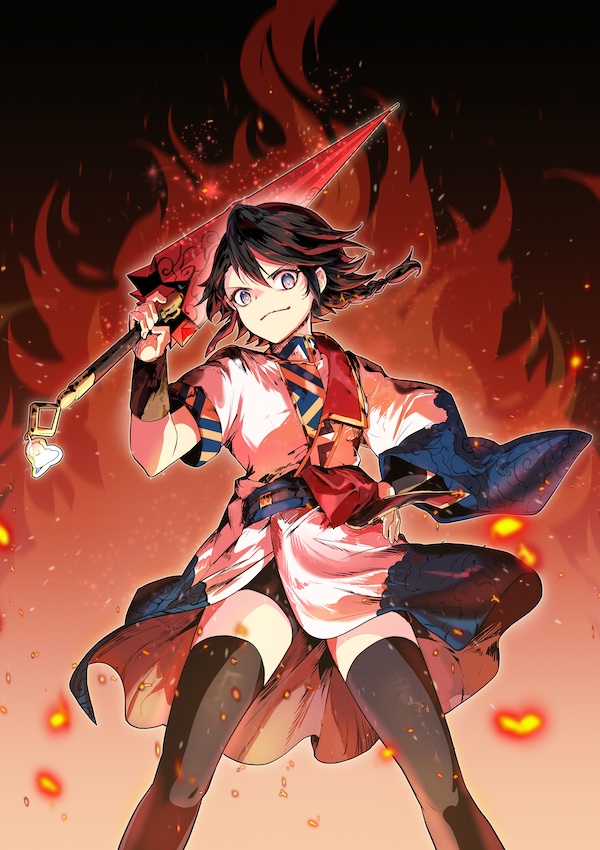
G2 is also actively building original media properties, such as its Japanese-first Webtoon comic Red Aura, which broke into the Top 10 Original IPs on the LINE MANGA platform within its first month of release.
While Red Aura took three years to develop in-house, Dechelotte notes that key learnings have shifted their strategy toward strategic outsourcing to accelerate time-to-market for future IP releases.
Simultaneously, G2 is pursuing a policy of “hyper-localisation within a global identity.” Rather than relying solely on a centralised European narrative, G2 deploys targeted, regional initiatives. Dechelotte outlined them:
- Germany & US: Dominating regional competition and establishing local hero identities.
- Japan & China: Tapping into massive digital item consumption and local fanbases through games like VALORANT.
Dechelotte also highlighted G2’s industry-leading stance on diversity and inclusion, pointing out that while women represent nearly 50% of global gamers, they remain vastly underrepresented on major tournament stages.
Through sustained investment in initiatives like G2 Hel and supporting crossover talent—such as Danish VALORANT star Michaela “mimi” Lintrup, who qualified to represent her country in national mixed-gender competition—G2 has transformed inclusion from a moral imperative into a tangible growth driver.
The power of this commercial framework was best illustrated during negotiations with McDonald‘s Germany. McDonald’s originally approached G2 looking to engage young consumers, but when the internal partnership proposal was pitched, top corporate leadership intervened with a surprising request:
“The person internally that was creating this partnership pitched it as a project, and the CMO said yes—but on the condition that they also back G2 Hel. It came from top leadership,” said Dechelotte, “the original project didn’t have the budget to do both, but she said, ‘I’m going to help, but we need both.'”
G2 had previously made the call to disband its all-female League of Legends roster due to a lack of commercial support. McDonald’s top-down mandate directly funded the return of G2 Hel, turning a standard commercial deal into a major milestone for inclusive esports.
The result? G2’s female fanbase doubled year-on-year, demonstrating that intentional inclusion directly opens new, untapped commercial audiences.
The Industry Squeeze: ‘Everything in Between Will Suffer’
However, Dechelotte’s outlook on the broader competitive landscape is stark. Having spent over a decade in the sector, previously spearheading global partnerships at Coca-Cola and holding senior positions at Riot Games, he views the current market contraction not as an “esports winter”, but as a natural consolidation.
“A few years ago, when I was working for Riot, there were roughly 300 teams globally competing. Nowadays, across the big games, there are fewer than 100. In the next five years, you will have roughly 20 teams that dominate globally across all major games… You will still have 5 to 10 local teams per region specialised in one game. Everything in between will suffer.”
According to Dechelotte, middle-tier organisations that possess local revenue resources but attempt to compete on a global operational scale face an unsustainable imbalance between costs and returns. G2, by contrast, has cemented its position in the top bracket through regular international qualifications across League of Legends, VALORANT, and Counter-Strike, offering partners global brand consistency. “We don’t always win, but we’re always competitive,” he suggests.
G2 Esports’ blueprint proves that surviving the consolidation wave requires far more than winning trophies. By treating esports as a multi-channel media ecosystem, anchored by strong IP, sophisticated commercial tiering, and sharp financial discipline, Dechelotte and G2 are demonstrating what it takes to thrive in an industry that continually pushes everything to the extreme. It’s all or nothing in this sector, and G2 moved to make sure they have it all.

Follow The Esports Radar on social media: