

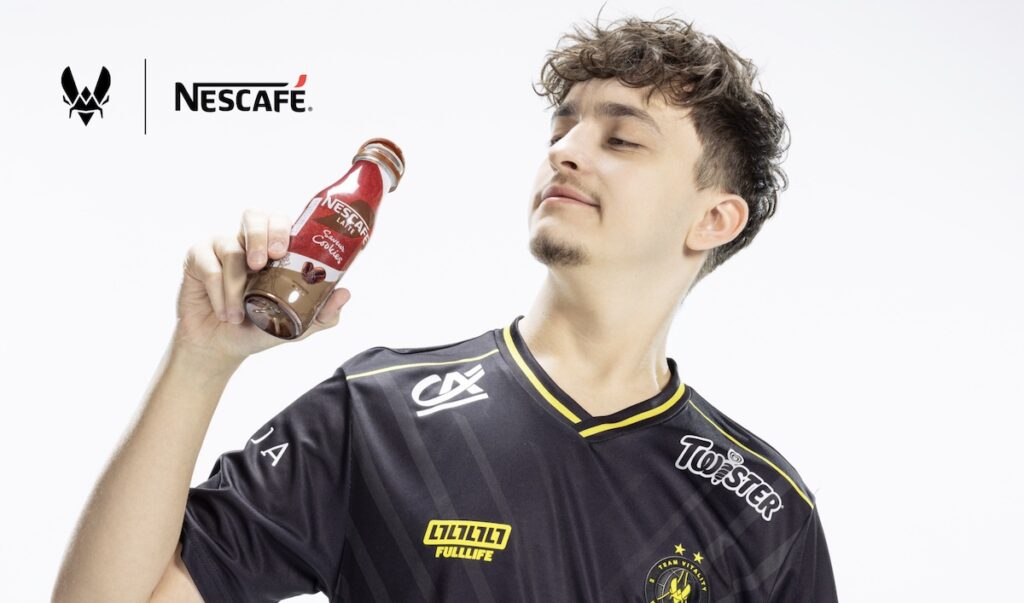


Team Vitality has released performance data from its one‑year collaboration with Nescafé Latte, revealing gains in brand awareness, retail distribution and buyer acquisition. In exclusive insight shared with The Esports Radar, the organisation’s Co‑CEO Vas Roberts explained the measurement methodology and claimed that esports sponsorship can deliver measurable returns comparable to any other entertainment or sports property.
The data, which tracks the performance of Nescafé Latte throughout 2025, indicates that the product was the only brand in its segment—excluding private labels—to gain market share in the French market during the partnership period. The disclosure comes as Team Vitality seeks to standardize ROI measurement in an industry often criticized for a lack of transparent commercial metrics.
The partnership utilized Team Vitality’s participation across several titles, including Rocket League, League of Legends, and EA FC. According to the report, the brand recorded a x2 increase in additional buyers over the last 12 months.
The commercial impact extended to physical retail presence, with Nescafé securing increased store listings across seven of the nine major retailers in its primary market. In terms of audience perception, a survey of 1,400 esports fans aged 17–44 showed a 44% increase in brand awareness among those who recalled the partnership.
Also read:
- HBO Max and Warner Bros. secure Evo 2026 broadcast rights for LATAM
- Evo taps former Team Liquid Brazil GM to lead LATAM expansion
- AutoFull partners with ESL FACEIT Group for ESL Pro Tour
In an interview following the release of the data, Vitality’s Vas Roberts explained the methodology behind the results. Reporting, he said, is “a key pillar” of the organisation’s approach to partnerships. “We place a strong emphasis on measuring and demonstrating the ROI of our partnerships through a combination of external tools and internal expertise.”
On the external side, Vitality works with Blinkfire Analytics and GWI to provide third‑party data. Internally, a dedicated business unit and the organisation’s in‑house marketing agency, RushBee, have developed proprietary surveys and brand lift studies.
“We typically compare key brand metrics before the announcement of a partnership and six months after its activation,” Roberts said. “This allows us to track tangible uplifts in awareness, interest and purchase intention among esports fans.”
Roberts said that clear KPIs are defined with each partner from the outset. Because Vitality designs and runs its own surveys, he argued, it can directly attribute outcomes to the partnership.
“We conduct brand recall studies comparing audiences who recognise the association between the brand and Team Vitality versus those who do not,” the Co-CEO stated. “This enables us to identify significant uplifts in awareness, interest and advocacy among audiences exposed to the partnership.”
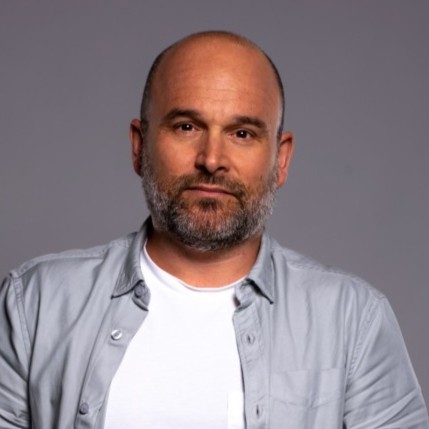
On the sales side, the organisation uses tracking‑based methods – such as participation rates or conversions – alongside comparative analyses over time. “We consistently observe that Team Vitality’s IP and activation mechanics are highly effective at driving conversion, often delivering results significantly above market benchmarks,” he added. This had already been highlighted by the organisation at another recent result disclosure promoted by Vitality, then focused on an activation with ice cream Magnum and Uber Eats.
Roberts said the decision to release activation results publicly is strategic, aimed at demonstrating that esports can support “meaningful, long‑term partnerships built on trust, performance and measurable impact”.
“Beyond transparency, this also helps reassure current and future partners about our ability to both measure and deliver tangible ROI. These case studies act as strong proof points for prospective brands, accelerating trust and interest in working with us.”
“In an evolving market that increasingly values stability and accountability, we differentiate ourselves through the consistency and longevity of our partnerships,” he explained. “By placing data, measurement and innovation at the core of our premium offerings, we ensure full transparency on return on investment.”
He added that Vitality has “always positioned itself as a pioneer in promoting a professional, business‑oriented approach to esports”. Proactively sharing performance results, according to him, helps show that “esports is no longer a niche market.”
Roberts concluded with a direct message to brands and the wider esports ecosystem: “At Team Vitality, our message is simple: esports has nothing to envy from any other entertainment or sports industry. We operate at the highest level, both competitively and commercially.”
“Our ambition is to continue raising standards across the ecosystem and to show that esports is a mature, credible and high‑performing marketing channel for global partners. The opportunity is clear: esports is ready. It’s time for brands to fully embrace it.”

Follow The Esports Radar on social media: