



Esports has never had a problem attracting attention. Major tournaments bring together huge audiences and highly engaged communities built around teams, games and competition. The bigger challenge is what happens when the match ends.
For many organisations, fan engagement is still concentrated around broadcasts, tournament weekends and social media. Fans watch, react and discuss, but much of that activity disappears once the event is over. The next opportunity for the industry may therefore lie not only in attracting larger audiences, but in giving existing communities more reasons to participate.
This is where gamification can add value. Challenges, predictions, points, rewards and community activities can turn a broadcast from the center of the fan experience into one part of a broader ecosystem.
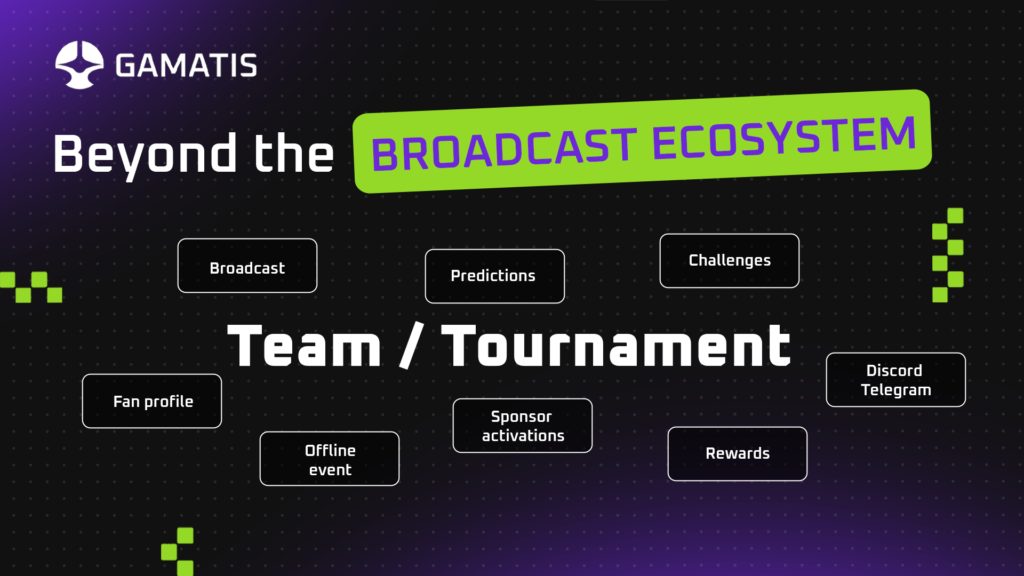
What can this look like in practice?
For arrmy.gg, this is not a theoretical challenge. The company has been operating within esports for years and continues to run its own leagues and tournaments. At the same time, it has grown beyond its original B2C focus and expanded into the B2B sector, developing technology and engagement solutions for brands and business partners. Projects already delivered through arrmy.gg show how this experience can translate into very different esports communities and business needs.
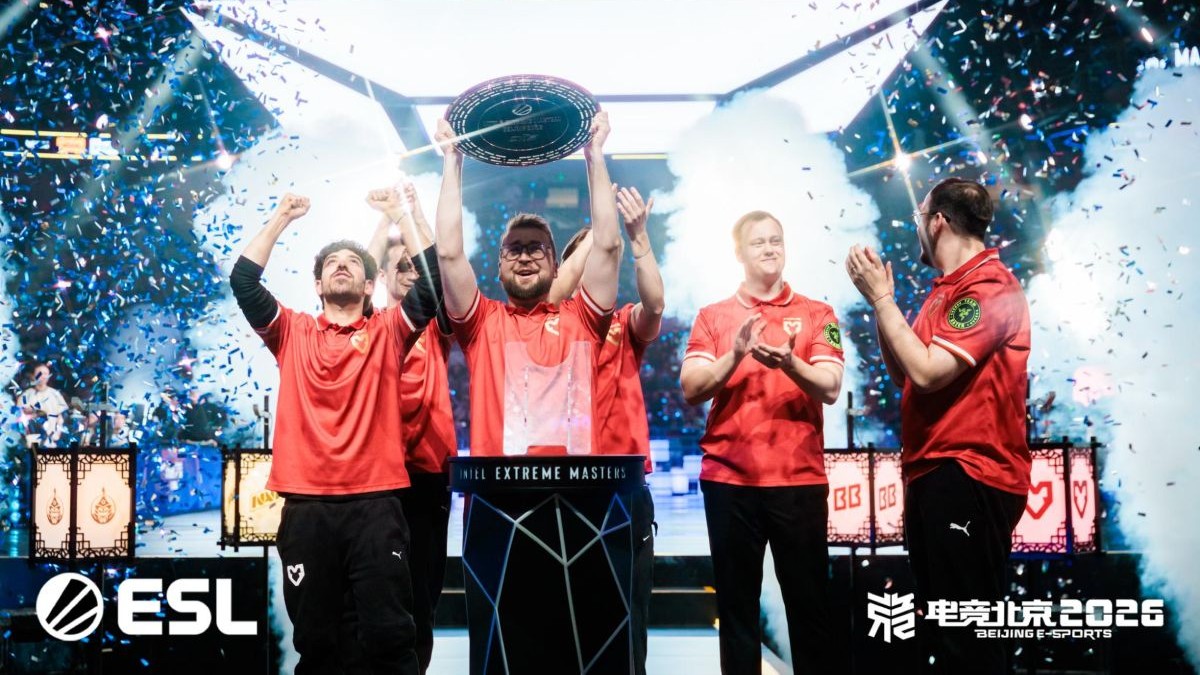
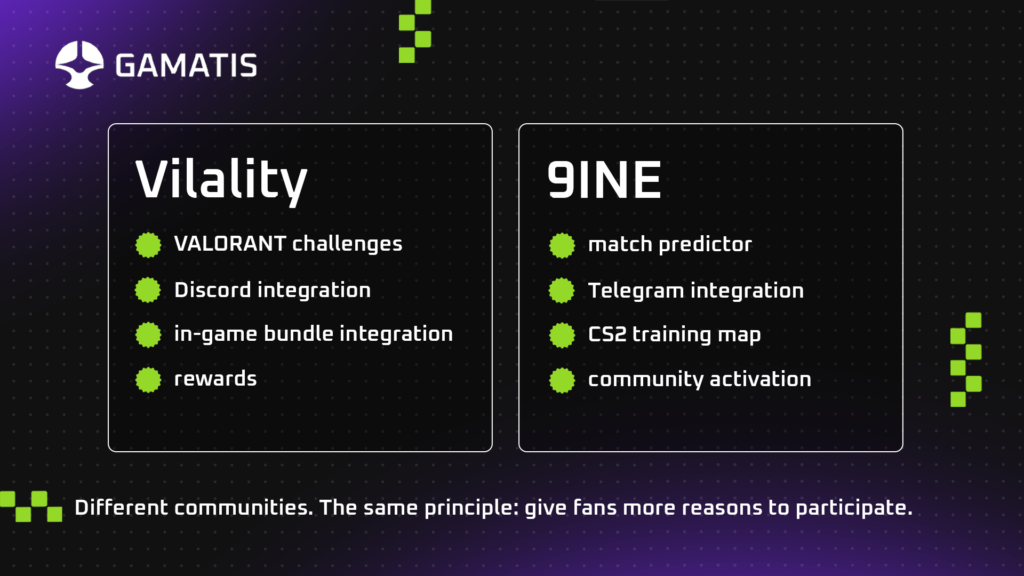
For Team Vitality, the technology was used to create a dedicated engagement platform available in both French and English. Fans could complete VALORANT-related challenges, while integrations added additional layers to the experience. Members of Vitality’s Discord community could access better rewards, and fans who had purchased the organisation’s VALORANT in-game bundle could also receive additional benefits.
The result was a system that connected several parts of the organisation’s existing ecosystem: the team, the game itself, Discord and fan rewards. Instead of treating each touchpoint separately, they became elements of one engagement journey.
A different approach was used for 9INE. A Turkish-language platform included a match prediction feature and a dedicated Counter-Strike 2 (CS2) training map. Access to the prediction game was connected with the organisation’s Telegram channel, giving community members an additional benefit for being part of that space.
Both examples illustrate the same principle: gamification does not require creating an entirely new behavior. It can strengthen the behaviors and channels that already matter to an esports organisation.
From arrmy.gg to GAMATIS
This approach developed naturally within arrmy.gg. The company grew out of esports through academies, leagues and tournaments, while its technology became increasingly complex and began supporting both gaming communities and brand activations.
Today, the platform has over 130,000 registered users and has been used in projects combining esports, challenges, reward systems, sales mechanics and online and offline activities. Over time, it became clear that technology originally developed around competitive gaming could support a much wider range of engagement objectives.
GAMATIS was created as the next step in that evolution. The brand focuses on gamification and technology for business while building on the gaming and esports experience behind arrmy.gg.
Its technology can be used to create challenge programs, reward systems, rankings, loyalty mechanics and integrations connecting different user behaviors within one experience. For esports organisations, this can mean a new engagement layer built around an audience they already have, helping them activate communities between matches, create additional opportunities for sponsors and develop more direct relationships with fans.
The audience is already there
Esports organisations do not always need to find new audiences to create more value. In many cases, the opportunity already exists within the communities surrounding their teams, tournaments and games.
If interaction ends with the broadcast, much of that potential remains unused. Giving fans additional goals, challenges and reasons to return can transform occasional viewership into more regular participation.
For teams, leagues and tournament organisers, that can mean more active communities, stronger first-party relationships, additional sponsorship opportunities and more measurable engagement.
The match can remain at the center of the experience. It simply does not have to be where that experience ends.
More information about GAMATIS and its technology is available at https://gamatis.com/
Sponsored content: This article was produced in partnership with arrmy.gg.