



Runestone is looking to establish itself in the expansion of Mobile Legends: Bang Bang (MLBB) across Europe and the Americas, with the data company seeing mobile esports as an opportunity to connect audiences and competitive ecosystems that have historically developed along different paths.
Speaking to The Esports Radar, Michael Schwartz, Head of Partnerships at Runestone, discussed the company’s involvement in the MLBB Championship Tour (MCT) AMER, its work with tournament organiser SURGE in Europe, and why the growth of mobile gaming in Western markets represents an opportunity beyond the title itself.
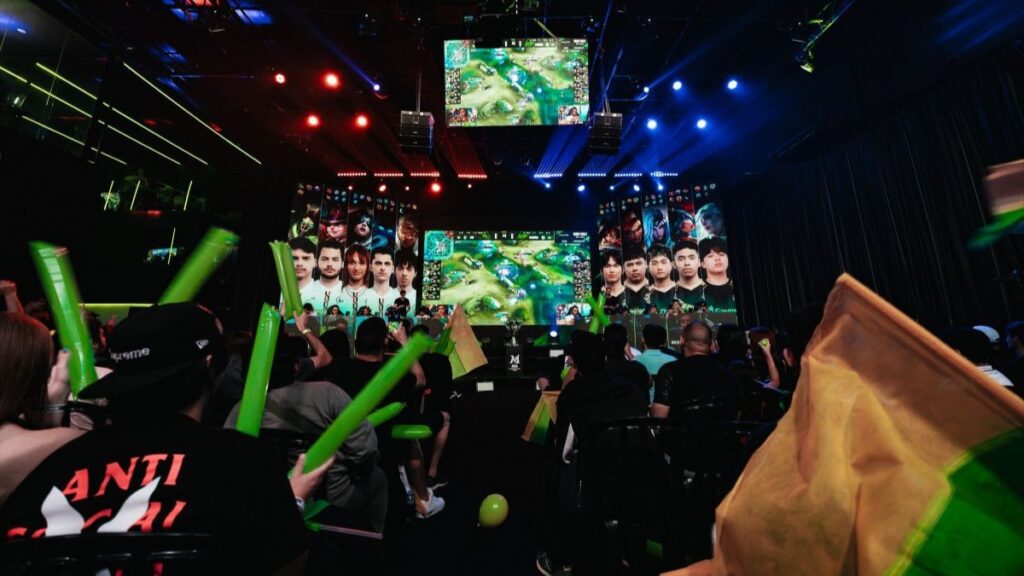
The interview comes as the 2026 MLBB AMER Championship Tour Brazil (MCT AMER BR) concluded its grand final on 14 November in São Paulo. Brazilian organisation DreamMax faced Mexico’s LYON in a best-of-seven series, with the winner securing a direct place at the M8 World Championship in Istanbul, Turkey.
For Runestone, the competition represents part of a wider effort to support MLBB’s development outside its established strongholds in Asia. Schwartz’s confidence in the title is traced back to an experience in Singapore around four years ago, when he was working at OG Esports during The International (TI), the flagship Dota 2 tournament.

“I’ve always been bullish on MLBB. I saw the power of the title firsthand about four years ago, when I was in Singapore for TI working on the team side. I knew anecdotally that mobile gaming was a strong force in the East, but seeing how committed people were to the game, and how our fanbase at the time connected to our existing titles, convinced me that mobile could be the bridge between Eastern and Western audiences,” Schwartz explained.
That conviction is consistent with comments previously made by Runestone Managing Director Shane Clarke to The Esports Radar in May 2026. At the time, Clarke identified strengthening the company’s position in MLBB as a priority, describing the title as a potential leading force in the global gaming market.
“I believe it’s up and coming as the biggest game probably out there,” Clarke said, while pointing to the accessibility of mobile devices and improvements in technology as factors that could accelerate the platform’s growth.
The company’s agreements with SURGE and the MCT AMER circuit have turned that interest into a more concrete commitment. Rather than simply supplying technology to established competitions, Runestone is attaching its services to an ecosystem that is still developing its audience, competitive structure and commercial opportunities in Western markets.
Building an ecosystem before scaling it
The approach is particularly relevant given the difficulties MLBB has previously faced in establishing a lasting presence in Western markets. MOONTON Games‘ earlier expansion efforts around the pandemic period attracted established organisations in Brazil, including Red Canids and Vivo Keyd, but did not produce the sustained regional traction the publisher had hoped for.
This time, MOONTON has emphasised working with local partners and developing communities from the ground up. Ray Ng, Head of Esports Ecosystem at MOONTON Games, previously explained to The Esports Radar that the publisher’s strategy in the Americas was designed to bring North and South America under a more integrated competitive structure, while giving local communities a greater role in how the product is presented.
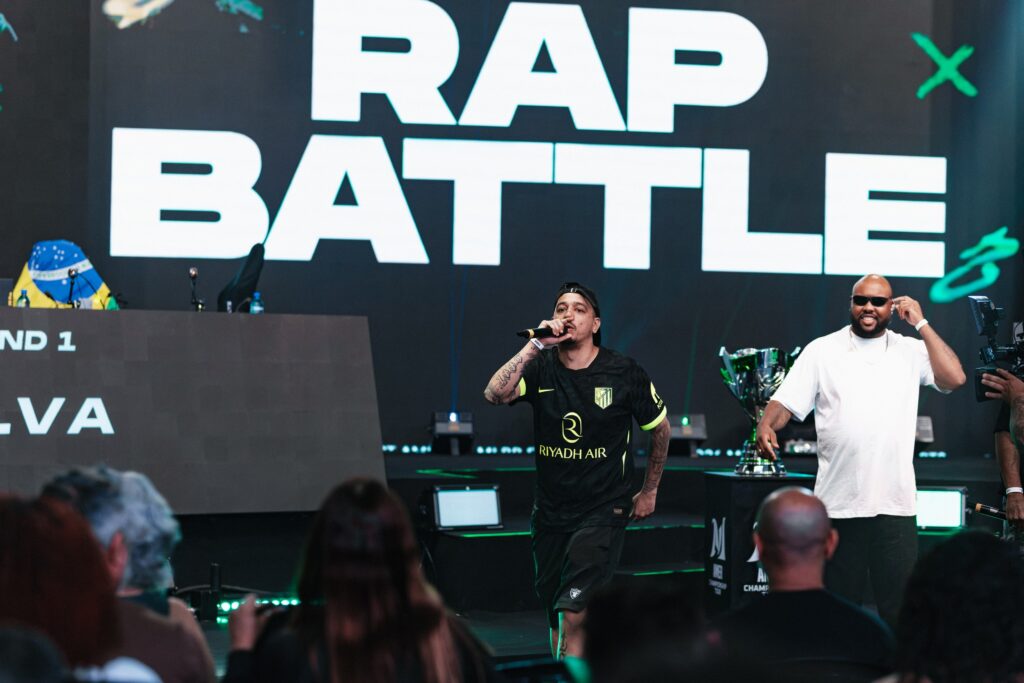
The MCT AMER partnership is a central part of that effort, with events also looking beyond the traditional tournament format. Its MLBB Championship Tour Lima stop in June 2026, for example, incorporated a rap battle and other entertainment elements, reflecting an attempt to make the competition a broader community experience.
Schwartz believes this approach is particularly important for mobile esports, where establishing a connection with local audiences can be more valuable in the long run than immediately introducing large-scale competitions and prize pools.
“I think the approach is the correct one, especially for mobile: come in with a local partner and a grassroots effort and build an understanding of the title, rather than dropping large prize pools and events from day one,” he said.
For Runestone, being involved in that process also creates an opportunity to introduce its own services to an audience that may not previously have been familiar with the company.
“Being the data partner attached to a growth effort like that also helps fans become curious about who we are and how we operate,” Schwartz added.
The distinction matters because data partnerships are not necessarily visible to audiences in the same way as team sponsorships or other traditional commercial arrangements. Their value often sits behind the broadcast, supporting the information that viewers receive and the tools that organisers use to present competition. However, Runestone sees that infrastructure as an opportunity to contribute directly to the viewing experience.
“Data underpins every esports event. The game itself is an amalgamation of data points, so giving viewers the tools to visualize, search and analyse that data helps them build a picture of what’s happening,” Schwartz explained.
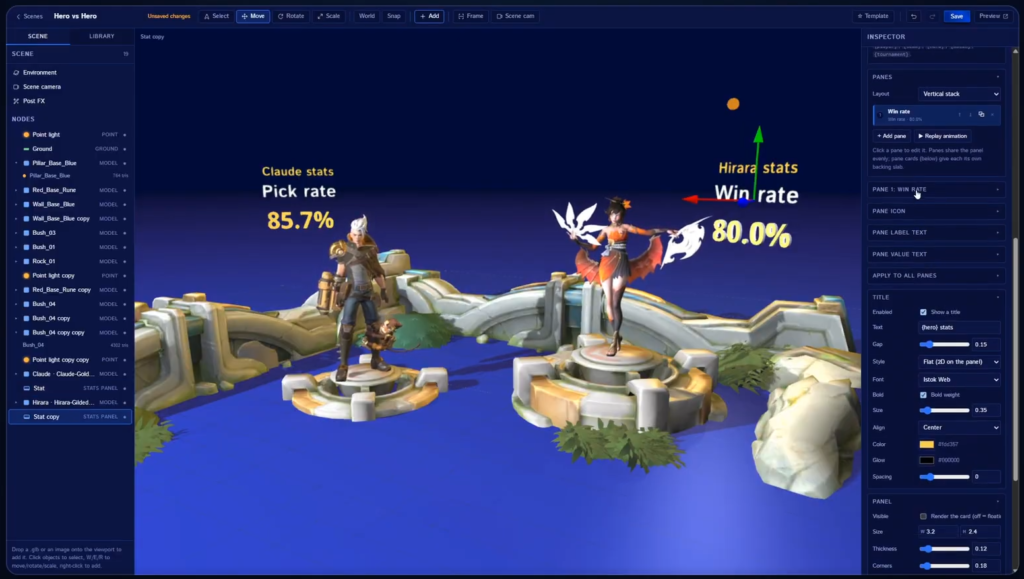
He pointed to the presentation of hero statistics as an example. While ratings and win rates can be listed in isolation, placing that information alongside individual player statistics creates a more accessible visual reference for viewers, helping them understand the relationship between a particular hero and the person using it.
“How we present that data can make a difference. You can list ratings and win rates for certain heroes, but showing those heroes side by side with player stats creates a visual that sticks with the viewer in a way flat text on a page doesn’t,” he said.
That is also where Runestone’s partnership with SURGE comes into play. Schwartz highlighted the organiser’s willingness to integrate Runestone Atlas, a multi-game broadcast graphics and production platform designed to convert real-time and historical match telemetry into 3D visual environments, into MLBB broadcasts, describing the collaboration as an opportunity to explore how data presentation can become a more integral part of the show.
“SURGE have been great partners for us in MLBB and have gone head first with Atlas. We’re continuing to push what’s possible on the broadcast, including integrating sponsorships into the scenes themselves, so they live organically in the show and the broadcast doesn’t have to cut away to them,” he said.
The latter point also touches on the commercial potential of data infrastructure. Rather than relying exclusively on conventional advertising breaks or separate sponsorship segments, broadcast integrations can give brands a presence within the competition itself, provided that they complement the viewing experience.
For an ecosystem still developing its commercial foundations, those opportunities could help make the product more attractive to potential partners while giving existing sponsors additional ways to activate their involvement.
The MCT AMER BR final offers a practical example of how the competition is being positioned in Brazil. Alongside the DreamMax versus LYON showdown, the event in São Paulo also featured a rap battle, a cosplay competition, brand activations and an official closing party. Its commercial partners include smartphone manufacturer Xiaomi through its POCO brand, watchmaker ATOMI, in-game currency platform BONOXS, and logistics company SUNTRANS.
The combination of competition, entertainment and commercial activations reflects the wider ambition to establish MLBB as more than a game with a dedicated player base. It is an effort to build a community and a product that can attract audiences and partners beyond the immediate competitive scene.
Mobile gaming is no longer a regional opportunity
The company’s work with SURGE in Europe raises a question that has historically surrounded mobile esports in Western markets: whether the platform can develop a more established competitive following alongside PC and console titles.
Schwartz believes the transition is already happening, particularly among younger audiences.
“Mobile gaming is the largest platform among Gen Z, closely followed by console in Western Europe and the US. While PC is still strong in competitive gaming and esports, the shift and interest in mobile as a competitive medium is already happening,” he said.

“We’re paying close attention to how mobile gaming is growing with Gen Z and are keen on supporting mobile esports and the community to give it a more established foundation.”
This perspective is important because it frames mobile esports as an opportunity in markets that already have mature PC gaming ecosystems, rather than simply an alternative for regions where access to computers is more limited.
It also helps explain why Runestone is pursuing partnerships across different titles and competitive environments, rather than treating its MLBB involvement as a separate business direction. Runestone’s growing presence in MLBB is taking place alongside an increasingly significant position in PC esports, particularly Counter-Strike 2 (CS2).
The company has established itself as a data and integrity partner across several major tournaments, with its relationship with PGL extending through 2029 and covering both CS2 and Dota 2. In Counter-Strike, Runestone has secured consecutive Major partnerships spanning the PGL Major Singapore 2026, FiReMAJOR Buenos Aires 2027 and the Perfect World CS2 Major in China in late 2027, following its initial Major debut at the StarLadder Budapest Major 2025.
The company has also secured a partnership with the upcoming HLTV Awards, further extending its presence within the Counter-Strike ecosystem. It also invested in Overwatch in an inclusive esports initiative led by Raidiant, and on industry level through the Global Esports Industry Week (GEIW) 2026.
For Schwartz, however, the presence across mobile and PC esports should not necessarily be understood as two distinct strategies: “Our goal is to expand our data coverage to support every level of competition and every title we can,” he explained.
“Data partnerships in Valve titles have long been a staple for us and that market is more mature, so securing the best events has always been a focus there. We’re grateful to the partners who trust us with the most important events in CS.”
While Counter-Strike provides access to some of the most established competitions and data-driven audiences in esports, MLBB represents an opportunity to support a title and ecosystem that are still developing their presence in Western markets. Both, however, fall under the same ambition: making itself present across different competitive environments, while finding ways to turn that information into a more engaging experience for fans and a more useful product for organisers and commercial partners.
The MCT AMER BR final was one step in that process. The long-term opportunity will depend on whether the regional ecosystem can translate its growing community interest into sustained competition, audience engagement and commercial investment. For Runestone, being involved before that development is complete could be just as important as securing partnerships with the biggest tournaments in established esports markets.
Sponsored content: This article was produced in partnership with Runestone.