



Ahead of the Nitto ATP Finals 2026 in Turin, the Federazione Italiana Tennis e Padel (FITP, the Italian Federation of Tennis and Padel) is taking an increasingly structured approach to esports, moving beyond occasional gaming activations to establish competitive gaming as part of its wider sporting framework.
At the centre of the initiative is Tennis Clash. This is the mobile title developed by Brazilian studio Wildlife Studios, which the Italian federation has used to build an ecosystem encompassing online tournaments, live finals, player memberships and commercial partnerships. Speaking to The Esports Radar, FITP General Director Marco Martinasso explained that the original motivation was to reach people who might otherwise have little interaction with the federation, using a form of tennis they were already enjoying on their phones.
FITP officially entered competitive gaming in April 2024, announcing Tennis Clash as its official game and launching the FITP eSports project. The first activation took place just two days later during the Naples stop of the Road to IBI (Internazionali BNL d’Italia, also known as the Italian Open) tour, which was hosted as part of the federation’s Junior Program. Further activations followed in Bari and Milan.
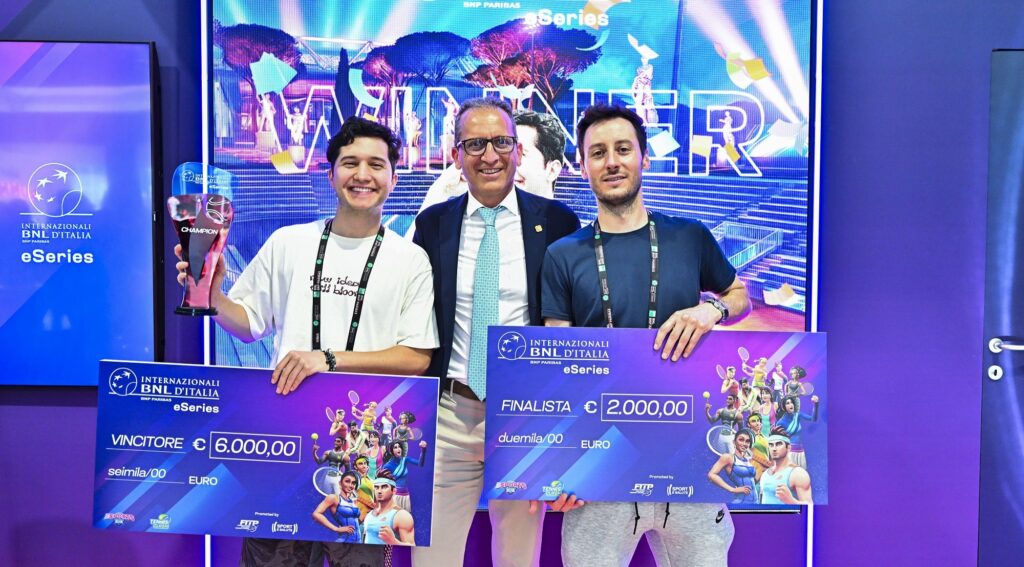
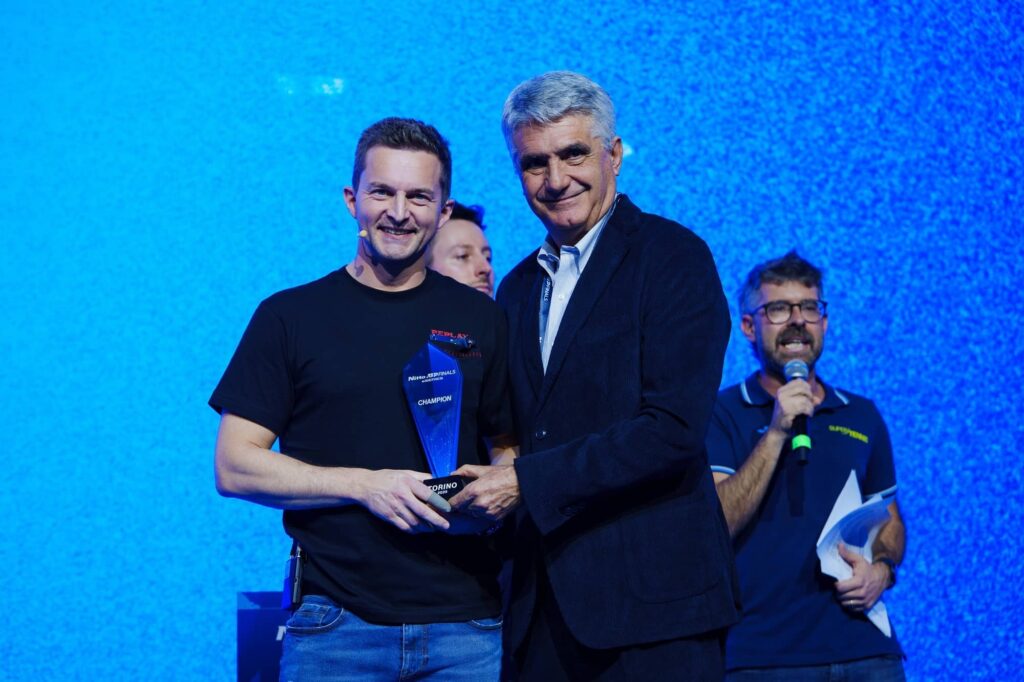
The initiative quickly acquired a more substantial competitive dimension. Under a month later, in May 2024, the inaugural IBI eSeries was held at the Foro Italico in Rome, featuring a €10,000 prize pool. Later that year, FITP introduced the Nitto ATP Finals eSeries, culminating in its first Final 8 at Turin’s Inalpi Arena on 20 November.

Giampiero Sposito
What began as a combination of online and live tournaments, rankings and qualification pathways has developed into a year-round programme. In 2026, FITP introduced a Regular Season, monthly Masters competitions and National Finals, while BMW became the title sponsor of the FITP eSeries. Both the IBI eSeries and Nitto ATP Finals eSeries also evolved into fully international competitions.
For Martinasso, the distinction between organising one-off tournaments and building a continuous competitive environment is fundamental to the federation’s ambitions.
“Just as in traditional sports, esports for us are not defined by a single tournament or a single event. They represent an ecosystem built on participation, engagement, and progression throughout the year,” he explained.
The federation therefore maintains a dedicated online platform throughout the season, allowing players to compete at different levels and through different formats rather than limiting participation to specific dates or physical locations. The live events become the culmination of that process, rewarding players who have invested time in the competition.
It is also a deliberate attempt to avoid building a programme exclusively around its most competitive participants. FITP has designed a multi-tier structure intended to accommodate casual players alongside those seeking qualification for its flagship finals.
“Our focus extends beyond elite competition. We aim to build an environment that welcomes players of different ages, backgrounds, and skill levels, turning esports into a gateway to the FITP ecosystem for a global, always-active community,” Martinasso said.
Giving Tennis Clash a place in competitive gaming
Tennis Clash occupies an interesting position within the wider competitive gaming industry. Unlike established, major esports titles such as Counter-Strike 2 or League of Legends, it does not have the same viewership objectives or the tiered professional structures associated with those games. Its relevance, however, comes from something different: an immediately recognisable sporting discipline, a substantial mobile audience and an established relationship with some of tennis’ most important institutions.
Wildlife Studios’ game had already developed connections with professional tennis before FITP entered the picture. In 2021, the ATP (Association of Tennis Professionals) and WTA (Women’s Tennis Association) joined forces with Wildlife for the Tennis United in-game tournament, while the International Tennis Federation (ITF) had been working with the Brazilian publisher since the same year, bringing the Billie Jean King Cup into the game.

In 2023, Tennis Clash also became the platform for the tennis competition within the Olympic Esports Series. The ITF and Wildlife launched the World Tennis eChampionship later that year, further establishing the title as a recurring competitive platform connected to traditional tennis.
These initiatives helped give Tennis Clash visibility within the sporting ecosystem, although its journey has not been without challenges in finding the right audience and competitive positioning.
As previously explored by The Esports Radar in its feature on eRoland-Garros, the 2023 Olympic Esports Week illustrated some of the difficulties of trying to fit sports simulations into an esports environment without sufficiently considering the communities and contexts surrounding individual games. The French Tennis Federation (FFT), meanwhile, has demonstrated a different approach through the Roland-Garros eSeries by Renault.
Rather than attempting to position Tennis Clash as a direct competitor to mainstream esports titles, the FFT has built a competition around the prestige of its Grand Slam, with long-standing commercial partners Renault and Mastercard helping to connect the digital experience with the physical tournament.
The 2026 edition attracted more than 561,000 participants and generated 11.5 million matches during its open qualifiers, illustrating the potential scale of a competition built around a mobile tennis game. The FFT’s strategy also recognises that a large player base does not automatically translate into a live esports audience. Instead, it uses in-game activations, content, ambassadors and physical experiences to progressively introduce players to the Roland-Garros ecosystem.
FITP is following a related philosophy, albeit with a different institutional ambition. Its objective is not simply to attach Tennis Clash to a prestigious tennis tournament, but to establish a competitive environment that belongs to the federation itself.
Attracting the next generation of tennis enthusiasts
Martinasso believes the game’s quality and connection to the physical sport was one of the decisive factors behind its selection.
“Tennis Clash was the right choice first and foremost because of its authenticity. It is not a generic video game with a tennis theme applied on top; it is a title built entirely around the core mechanics of tennis. The scoring system, one-on-one competition, serve mechanics and match structure all closely reflect the sport itself,” he said.
Accessibility was another consideration. As a free-to-play mobile game, Tennis Clash does not require specialised hardware, allowing the federation to reach people through devices they already own.
For FITP, this creates an opportunity to engage with an audience that might not otherwise participate in its activities. The federation’s figures suggest that the approach is already attracting people from outside its traditional community. The 2026 IBI eSeries involved players from more than 100 countries, with France and Italy accounting for the largest participation numbers, followed by India, the United States and Brazil.
Martinasso also highlighted the different audiences encountered through the programme. Activations at traditional tennis events such as IBI, the Nitto ATP Finals and the Davis Cup provide opportunities to engage existing tennis fans, while gaming conventions introduce FITP to younger audiences who are already familiar with mobile gaming.
“Generation Z is emerging as a key audience, increasingly recognising FITP through its presence in gaming, from digital competitions to industry expos and gaming-focused events,” he explained.
The ambition is to make that relationship work in both directions: introducing tennis fans to gaming while giving people who discover the sport through Tennis Clash a reason to explore its physical counterpart.
One of the most significant aspects of FITP’s approach is the infrastructure being developed around the game. The FITP eSports Membership is central to this strategy. Introduced in 2025, it provides a connection between the federation’s digital and physical environments, allowing players to become part of an organised community rather than simply participating in individual in-game competitions.
The operational relationship with Wildlife Studios is also designed to support that objective. FITP provides its technological ecosystem, including the membership programme and myFITP platform, alongside the operational expertise required to organise online and live events. Wildlife contributes its global player community, in-game tournament infrastructure and customised features developed specifically for the FITP circuit.
He described the relationship as an operational partnership rather than a licensing agreement, with both organisations involved in planning, scheduling and the continuous development of the programme.
The federation is also monitoring the initiative through a combination of unique users, active users and valid FITP eSports memberships. One particularly encouraging indicator is player retention. According to Martinasso, more than half of first-time participants return to compete in another tournament within 30 days of their initial participation.
Commercial partnerships are another component of the model, although FITP maintains that revenue generation is not its primary objective.
BMW’s arrival as title sponsor of the FITP eSeries in 2026 represents the most visible example of the commercial opportunity. For Martinasso, the value lies in creating a shared environment for the federation, publisher, partners and players rather than treating sponsorship as a conventional visibility exercise.
“Esports allow us to expand the traditional concept of sponsorship by creating experiences that exist across both physical and digital environments,” he said.
He added that commercial partnerships help fund the programme and support its development, but that growing participation remains the priority. This is an important distinction for sports federations exploring competitive gaming. A title’s commercial potential is not necessarily determined by its ability to drive revenue in and of themselves, nor drive the same level of attention against the largest esports properties. Instead, its value can come from how effectively it connects a particular audience with an existing sporting institution.
The Nitto ATP Finals eSeries will bring together the eight best players for a single-day competition in November 2026 at Turin’s Inalpi Arena, taking place on the main stage of the Fan Village alongside one of the most prestigious events on the professional tennis calendar.
“The milestone that matters most to us is seeing a player progress from their first tournament on a mobile device to competing at an event that also hosts some of the world’s best tennis players,” Martinasso said.
There is still room for the model to expand. Martinasso confirmed that FITP does not currently have formal gaming partnerships with other national tennis federations, although he sees significant potential for collaboration between governing bodies, tournament organisers and publishers. He also pointed towards the possibility of an increasingly interconnected ecosystem in which players can move between different virtual tennis experiences and competitions.
Ultimately, FITP’s approach offers another interesting case study for sports organisations looking to engage with competitive gaming without attempting to imitate the business models or structures of established esports disciplines. Tennis Clash does not need to become the next Counter-Strike or League of Legends to deliver significant value to its stakeholders. Its accessibility and quality as a casual game and its connection to a global sport gives it a different starting point, while federations such as FITP and FFT can provide the competitive structures, physical experiences and institutional relationships needed to turn that connection into something more substantial.
As Martinasso himself put it, the objective is not to replicate the physical and digital worlds inside one another, but to create something new between them.