

Sponsored content: This article was produced in partnership with ZOWIE.
In the high-stakes, trend-driven world of esports hardware, where brands often chase broad visibility and fleeting influencer deals, one company’s strategy stands in stark contrast. For ZOWIE, the gaming division of global tech giant BenQ, success isn’t measured in viral moments or mass-market appeal. It’s found in the quiet consistency of a monitor at a Counter-Strike Major, the specific preference of a pro player mid-tournament, and a decades-long promise to a community it calls home.
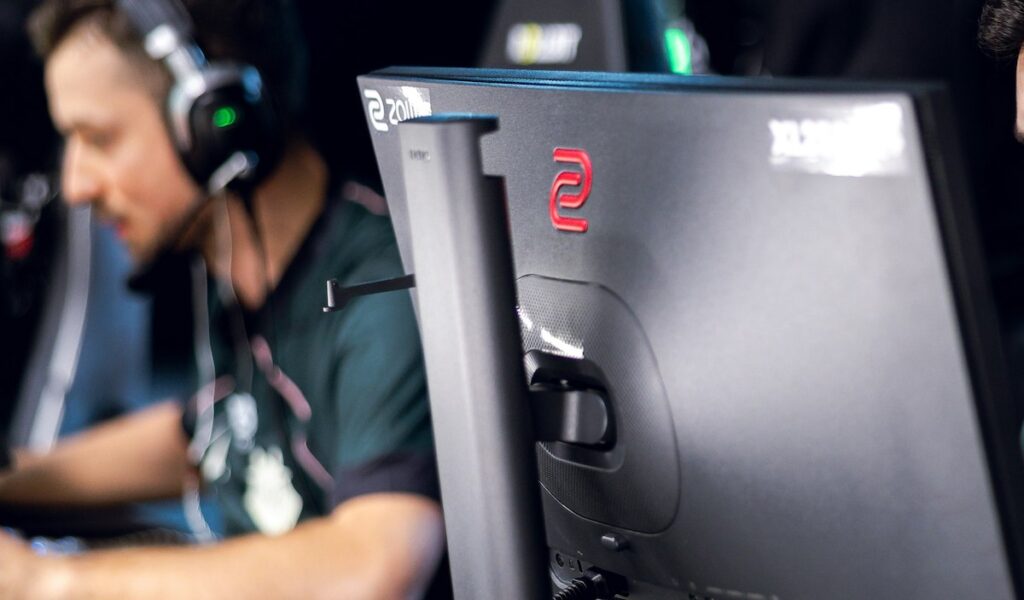
This focus is exceptionally narrow and profoundly deep: the world of competitive, first-person shooters (FPS), and within that, the titanic ecosystem of Counter-Strike. The proof is in the data provided by the brand: third-party studies of professional players consistently show ZOWIE monitors commanding a staggering ~88% usage rate among Counter-Strike professionals, a level of dominance that underscores near-universal trust at the pinnacle of play.
Recent conversations with the brand’s leadership reveal a core philosophy that turns conventional marketing wisdom on its head. ZOWIE isn’t just serving the competitive esports community; it operates from a foundational belief that it is an inseparable part of it.
The Strategic Why: Focus Over Breadth
When BenQ, a powerhouse in general display technology and headquartered in Taipei but with offices worldwide, saw its monitors organically adopted by professional gamers in the early Counter-Strike 1.6 days, the obvious business move might have been to funnel that credibility back under the main brand. Instead, they acquired ZOWIE in late 2015 and institutionalised it as a dedicated entity.
“ZOWIE is not built for broad reach; it is built for competitive players, especially FPS,” states Celsa Wu, Head of Esports Business at BenQ Europe B.V. This precision is its defining characteristic. The logic defies typical brand-extension theory. While leveraging the established BenQ umbrella might seem efficient, ZOWIE argues it would “broaden or blend the identity,” diluting the exact focus that makes it relevant to its core audience.
The brand’s philosophy of integrating player feedback into product development dates back to its founding in 2008 as a brand focused on professional esports gear.A foundational example is the development of their EC-series ergonomic mouse, which began around 2010 in collaboration with legendary Counter-Strike player Emil “HeatoN”Christensen. This partnership helped establish ZOWIE’s reputation for performance-oriented design. Over more than a decade, ZOWIE has continued to evolve the EC series and other products informed by real player feedback, ergonomic research, and sports-science insights.
The acquisition of ZOWIE by BenQ was, ironically, a move to protect this focus. “The intent is… to continue to grow and invest so the brand becomes more influential and more beneficial to competitive players, while protecting the legacy ZOWIE has earned across esports history,” Wu explained. This isn’t a story of a corporate parent absorbing a niche subsidiary; it’s one of providing a foundation for a specialised brand to deepen its roots.
The “Insider” Advantage: Research as Identity
Perhaps the most radical departure from standard corporate practice is ZOWIE’s approach to research and development. There is no dedicated “insights team” handing down reports on the “esports demographic.” The need for a standalone brand didn’t emerge from a market gap analysis or a portfolio review.
“The need for a standalone esports brand comes from who we are, not from a ‘project-style’ process,” they assert. The core team is comprised of competitive players and community veterans. This “insider” status means strategy is born from identity, not opportunism. Decisions flow from a shared culture and a unified understanding of what the community needs, allowing the team to “move as one” without being bogged down by constant justification cycles.
The Eindhoven facility is not an isolated outpost but a key node in a dedicated global network. ZOWIE uniquely operates three Esports Science Labs—in Taipei (opened 2020), Suzhou (2023), and now Eindhoven (2025)—designed specifically to deconstruct the demands of high-level play. These labs move beyond traditional product testing, employing motion capture and electromyography (EMG) to analyse ergonomics, muscle activity, and biomechanics as players interact with gear. This transforms observed player preference into empirical data, directly informing design—such as tailoring lightweight “U series” mice for high-speed titles like VALORANT, or refining the ergonomics of the EC3 mouse to minimise strain.
This triad of labs underscores a fundamental truth about ZOWIE’s model: its “insider” status is not merely cultural, but operationalised through a proprietary scientific framework. The labs are the physical manifestation of their commitment, ensuring that the insights gleaned from being “one element of the community” are systematically translated into the tools used by an estimated 70% of professional players globally.
However, inspiration isn’t manufactured in a lab; it’s generated through “ongoing conversations with friends in the ecosystem—pro players, teams, and organisation partners.” This organic, identity-driven approach creates a level of authenticity that resonates in a community deeply skeptical of corporate pandering.
This deep integration informs even their geographical strategy. Recognising that approximately 70% of players at CS Majors from 2013-2024 hailed from Europe—with powerhouses like Denmark, Russia, and Sweden leading the charge—ZOWIE didn’t just increase marketing spend. They embedded themselves, opening the third R&D lab in the Netherlands to stay physically and culturally closer to the heart of the competitive scene.

Redefining Return: Commitment as Currency
The company openly admits that evaluating its esports commitment in “pure monetary” terms is difficult, and that’s not the point.
“Our starting point is not treating esports as an external market we only evaluate and harvest from,” they explain. The primary goal is to meet the minimum return needed to sustainably keep supporting the community. The real gains are intangible but powerful: internal alignment, a clear and consistent brand message, and the trust of the community.
This long-term posture becomes a self-reinforcing asset. It attracts talent—passionate players and community figures—who “refresh the vision, bring fresh blood, [and] keep us rooted.” This cycle of commitment builds what ZOWIE values most: “the capability, clarity, alignment, and talent momentum that comes from staying long-term and staying real.”
The Evolving Role: Consistency as Evolution
As esports balloons into a global entertainment industry, many brands scramble to craft new narratives or latch onto emerging trends. ZOWIE’s vision for its own evolution is characteristically steadfast.
“We don’t see our role as ‘building a new storyline from outside the scene,’” they state. The center will always be the sport itself—the players and the competition. Therefore, ZOWIE’s role is to become “more consistent and more rooted,” a reliable support system that amplifies the athletes’ performance.
This translates to a practice of deep immersion: staying close to tournaments, learning from real competitive pressure, and translating those lessons into incremental improvements in gear, service, and support—from on-site logistics to performance consulting. “We don’t need to chase visibility… we need to keep showing up, keep refining, and keep being reliable as one element of the community.”
The Takeaway: A Model of Authentic Partnership
ZOWIE’s story offers a compelling case study in niche branding. It demonstrates that in communities built on passion and performance, authenticity trumps broad awareness. By choosing identity over opportunism, commitment over quarterly returns, and deep support and focus over loud, broad marketing, ZOWIE hasn’t just sold monitors to esports; it has earned a permanent seat at the table by proving, over multiple game eras, that it sees the table as its home.
Their strategy is a reminder that sometimes, the most powerful brand statement isn’t what you say to your audience, but proving, through years of action, that you are of your audience. In the volatile world of esports, that may build a legacy that truly lasts.
Follow The Esports Radar on social media: