



The economics and feasibility of esports first venues has become a hot button topic for the industry once more, with major infrastructure projects emerging, whilst other cities reconsider their plans. While the debate often centres on whether organisations can attract enough events and fans to justify the cost of a physical arena, Karmine Corp’s experience in France points to another factor that can be equally important: the structure of the deal behind the venue.
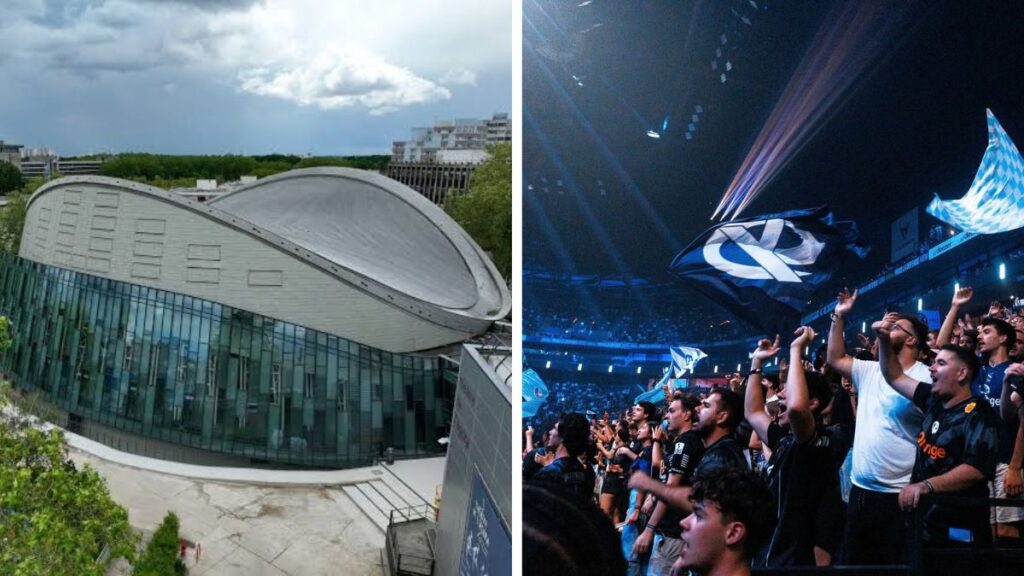
The French organisation has established a regular home for its League of Legends and Rocket League events in Les Arènes Évry-Courcouronnes without owning the facility. Instead, it operates through a five-year agreement with the public local authority, the Agglomération Grand Paris Sud which reportedly spent €35 million on renovating the venue, under which it commits to organise events and stage a certain number of them each year. According to Arthur Perticoz, Board Member of Karmine Corp, the arrangement means the organisation does not pay any venue rental fee.
In an industry where dedicated esports facilities have often been associated with substantial construction, maintenance and operating costs. Karmine Corp’s approach separates the ability to establish a consistent physical presence from the significant financial responsibility of owning and operating the property itself.
“The secret is beneath the deal,” Perticoz told The Esports Radar during the Esports World Cup 2026 in Paris. “It’s not possible to own, to build, to manage a venue, so we didn’t do it. We don’t own the venue. It’s not our venue as one of the owners, but we have an amazing deal thanks to the French law.”

Perticoz explained that the agreement draws on a model already familiar to traditional sports in France. Many football clubs in the country play in stadiums owned by cities, regions or other public institutions, rather than owning the facilities themselves. Under the relevant arrangements, a club can become a venue’s designated sporting partner and organise events there.
He pointed to Paris Saint-Germain’s relationship with the Parc des Princes as an example of the broader ownership structure, noting too that the Parisian club has been seeking to acquire the stadium from the city.
Karmine Corp’s arrangement follows a similar principle, although the organisation’s agreement is specific to its own circumstances. “The cost of the stadium is zero, because the deal is amazing,” Perticoz said.
That does not mean the venue is cost-free to operate in every sense. Karmine Corp still has to organise and fund its events, and the agreement comes with obligations such as a minimum number of events to be organised there.
The club’s audience played a role in making the partnership possible. Perticoz mentioned how Karmine Corp’s ability to attract fans gave the venue’s owners confidence that events could bring people into the city, helping make the arrangement a worthwhile investment for the local institutions involved. “We could not negotiate that kind of deal without the fans of KC,” he said.
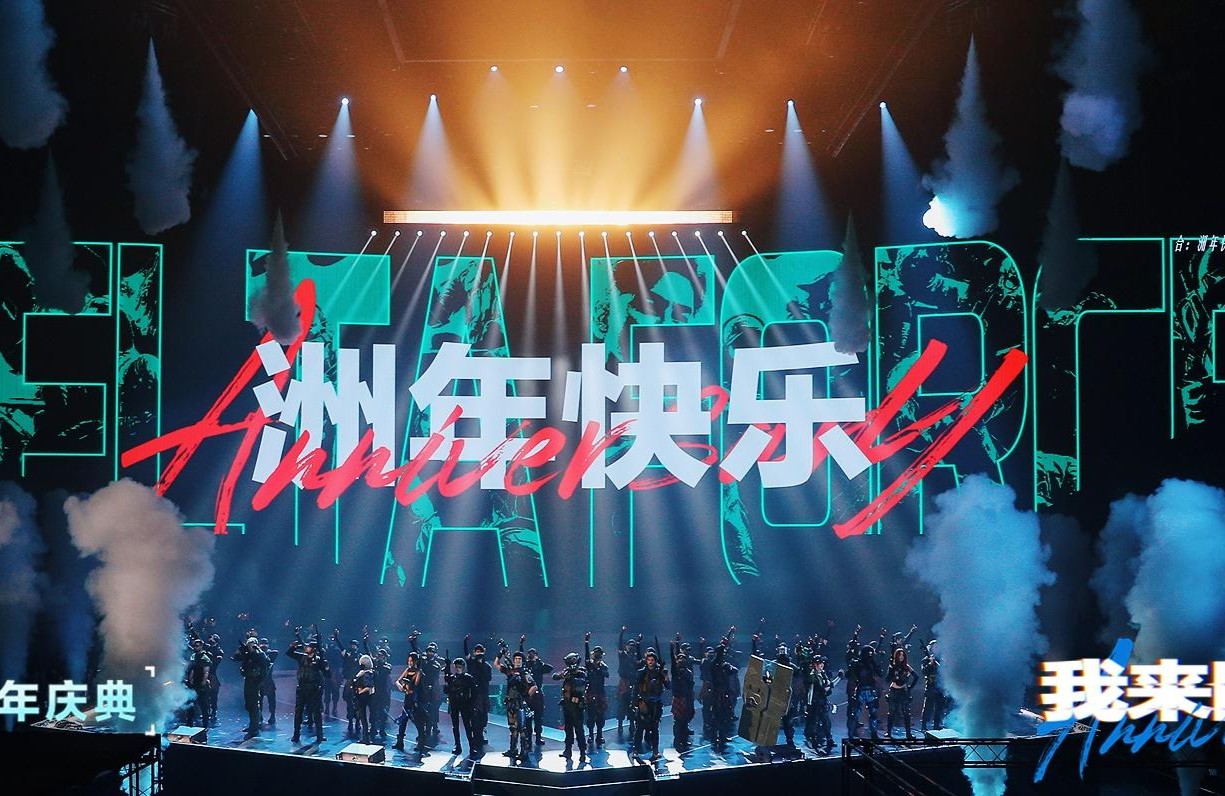
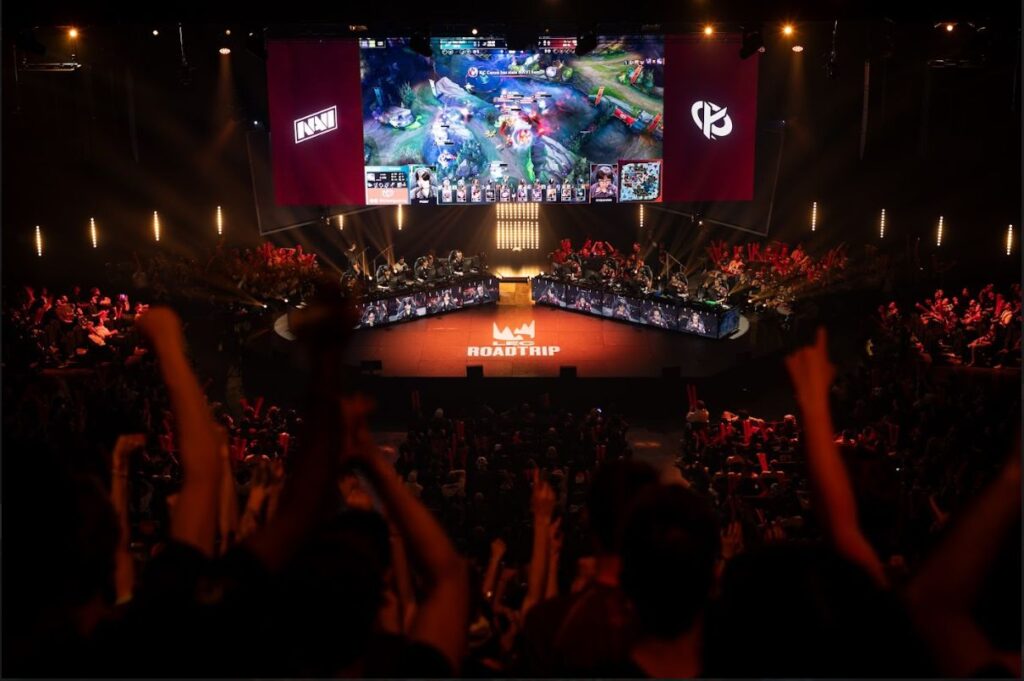
This fan engagement is backed by strong live turnout metrics: KCorp regularly sells out massive venues, scaling from drawing 28,000+ spectators to Paris La Défense Arena for KCX3 and KCX4 events down to filling the 3,000-seat venue in Évry. The home arena operates at full capacity for both local club events, such as Rocket League showmatches, and official tier-one international stages like the LEC Roadtrip and VALORANT Champions Paris, demonstrating consistent, repeatable foot traffic across multiple esports titles.”
Benefits for the public also reach beyond the boundaries of the arena. By driving foot traffic to the surrounding area, the audience generates economic value that stimulates the local economy and boosts nearby businesses.
Finding a place in the French legal framework
The agreement also reflects a broader challenge for esports organisations in France: navigating a legal and administrative system that has not yet fully defined the sector on its own terms.
Perticoz said that the country’s existing structures can provide financial and institutional support, but organisations first need to fit into a recognised category to access those opportunities.
“France is a specific country where there are a lot of legal things, and there are ‘cases’, ‘boxes’. You need to be in the ‘box’,” he said. “If there is no esports ‘box’ in the law, you are nowhere.”
For Karmine Corp, that has meant using a framework designed for traditional sports in order to establish its venue relationship. Perticoz explained that, for the purposes of the agreement, the organisation is considered a sports team rather than an esports team.
The club is also working with other stakeholders to establish a category that recognises esports directly, rather than requiring organisations to operate through classifications associated with sport, culture, music or other established industries.
He described the objective as creating a framework in which institutions and government bodies understand what esports organisations are, what support they may be eligible for and what obligations they must fulfil.
The issue extends beyond venues. Perticoz said Karmine Corp had worked to be recognised as a sports event organiser to benefit from tax arrangements available to other event categories, including sport, music, concerts and art. He identified this kind of administrative recognition as a central part of the work undertaken through the Union Française des Clubs d’Esport Professionnels (UFCEP), an association founded by 12 of France’s leading professional esports clubs, including Karmine Corp, Team Vitality and Gentle Mates.
For esports organisations, the implications are practical. Recognition within the legal system can affect access to institutional relationships and financial arrangements, while the absence of a clearly defined category can create additional friction when closing deals with non-endemic partners.
Karmine Corp’s experience comes at a time when esports infrastructure is being approached in different ways. The reported construction contract for a major arena in Qiddiya City’s $700 million Gaming and Esports District near Riyadh represents continued investment in dedicated facilities, while Jecheon’s decision to cancel its planned $22 million esports arena in South Korea, choosing to dedicate the money to other “general support programmes for young people” instead, highlights how local priorities can change.
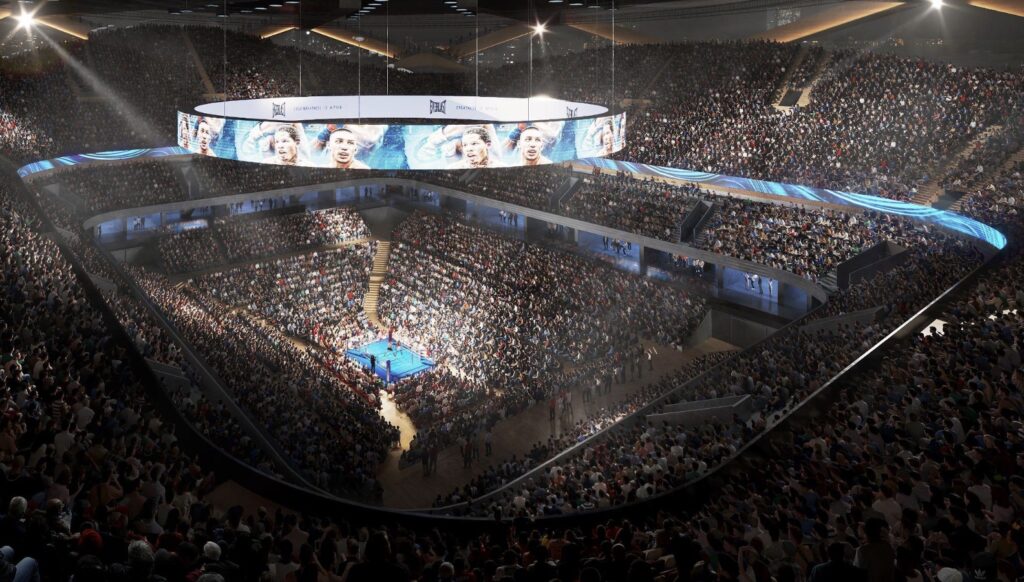
Other projects also illustrate different considerations. The British Arena in Sunderland, led by British Esports, provides another hybrid model, built to be fully esports-ready yet purposely designed as a flexible, multi-use venue hosting music, comedy, and general live events. The 25,000-seat London Colosseum has also been positioned as a broader sports and entertainment facility, designed to host even NBA (United Estates’ National Basketball Association) games.
Meanwhile, the long-delayed completion of Invictus Gaming’s venue in China has renewed attention on the risks associated with major infrastructure commitments. The project’s investor described it as the lowest-return-on-investment project of his career, a reminder that the completion of a venue does not settle questions about its financial sustainability.
Karmine Corp does not provide a universal blueprint for esports organisations. Its agreement depends on a particular legal framework, local institutions and the organisation’s ability to attract audiences. Those conditions may or may not be available elsewhere, and a contract that works for one club cannot be assumed to work for another.
What its example does demonstrate, however, is that the venue question is not limited to whether an organisation has enough fans to fill the seats. Ownership, rental arrangements, event obligations, public-sector partnerships and legal recognition can all shape the economics of a physical home.
For Karmine Corp, the ability to organise events in Évry-Courcouronnes without owning the venue has allowed it to build a recurring physical presence while avoiding the direct cost of renting the stadium. Its fans help make that partnership valuable, but the underlying agreement is what makes the arrangement possible.
As esports continues to reconsider its relationship with physical infrastructure, that may be the more useful question for organisations to ask: not simply whether they should have a venue and what size and type of venue that should be, but what kind of relationship with a venue operator makes the most sense for their business.