

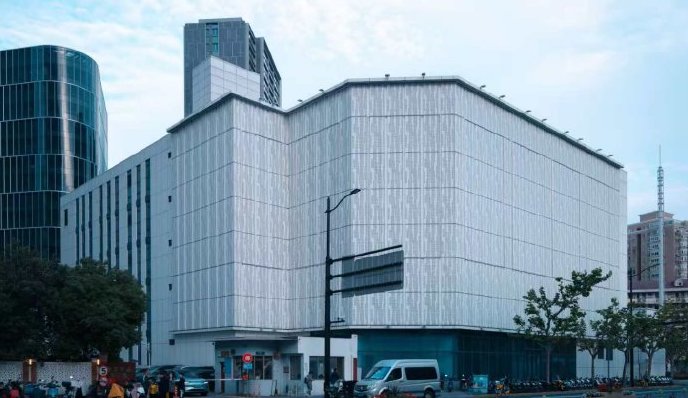


Invictus Gaming (iG) investor Zhang Haohan has officially announced the opening of the organisation’s new home venue in the Putuo District of Shanghai.
The facility, part of the Inzone Esports Industrial Park, represents a $20 million investment that was entirely privately funded, according to a personal statement released by Zhang on Weibo on 2 May 2026. The venue is scheduled to begin trial operations on 12 May, coinciding with a high-profile LPL match between iG and Bilibili Gaming (BLG).
The project, which has been under development for six years, survived multiple industry shifts, the pandemic, and the loss of initial corporate partners. Zhang noted that the arena was built without government subsidies or direct backing from major game publishers, describing it as the “lowest return-on-investment project” of his career, driven primarily by personal passion for the industry.
He cited the underdog victory of Chinese StarCraft II player Li “Oliveira” Peinan at IEM Katowice 2023 as a key inspiration that prevented him from abandoning the project during its most difficult phases.
“This project has been in the works for six years, without relying on government subsidies or big-name backing. It has survived industry changes and the pandemic,” Zhang Haohan shared via Weibo. “It is certainly the lowest return-on-investment project I’ve ever been involved in… but everything is the best arrangement. Trial operations start on the 12th, and we welcome everyone’s feedback.”
Also read:
- Metizport and Maysun partner to integrate professional healthcare infrastructure
- SteelSeries and Pelaajat.com announce partnership for the Finnish market
- Team Vitality names Blacklyte as official gaming chair partner
The opening of the Inzone facility adds a second dedicated League of Legends arena to the Shanghai landscape, alongside the official LPL (League of Legends Pro League) venue. The site, which spans over 10,000 square metres, is already being utilized for the production of digital content and regional broadcasts, such as the Immortal Cup. Furthermore, the building will serve as a key operations hub for iG’s content team.
The launch of iG’s privately-funded arena arrives at a pivotal moment for the Chinese ecosystem. While iG is doubling down on physical infrastructure, the LPL itself is undergoing a major contraction. Following a structured slot repurchase programme, the league has shrunk from 17 teams to 14 for the 2026 season, following the departures of Rare Atom, FunPlus Phoenix (FPX), and most recently, the iconic Royal Never Give Up (RNG).
RNG’s exit, after eleven years and three MSI titles, underscores the immense financial and legal pressures facing even the most successful clubs. Even though China houses other facilities for organisations like Ninjas in Pyjamas (Shenzhen) and JDG (Beijing), the trend goes against a broader tendency noted by industry leaders at EA, who in 2025 suggested that “localized venues” are becoming financially burdensome compared to “scalable, centralised events,” and Riot Games, which considers “limited online play” for some stages of the 2027 League of Legends EMEA Championship (LEC).
Even though, there are also signs supporting the model. Roadtrip events have been welcome for specific matches within the Riot Games ecosystem, with Karmine Corp holding its own 3,000-capacity arena in Évry-Courcouronnes, France, a venue that also hosts events with other titles like Rocket League.
By choosing to build a permanent home in Shanghai, iG is defying the current industry move toward efficiency over spectacle. While other organisations are exiting the league to settle debts or cut costs, iG’s “passion-first” investment positions them as an “anchor” organisation in China. Whether this $20 million gamble can provide a sustainable return through third-party event production and collaborations with companies like Huya will be a key test for the viability of the “home venue” model in the digital-first era of 2026.

Follow The Esports Radar on social media: