

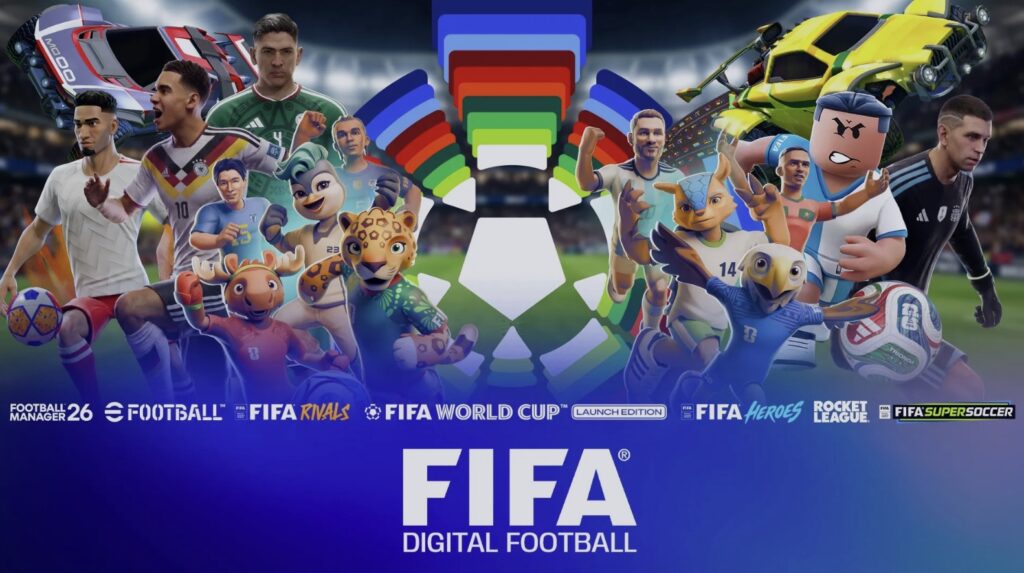


Football governing body FIFA has officially unveiled its updated, long-term Digital Football Strategy, formalising a definitive structural shift in how the organisation operates within the video game and esports industries.
The updated framework confirms FIFA’s permanent transition from its historic single-partner exclusivity model to a diversified, multi-partner digital ecosystem. The strategy is designed to expand the brand’s footprint across multiple gaming genres and platforms ahead of the FIFA World Cup 2026.
Also read:
- Ninjas in Pyjamas eliminates Swedish operational roles following global restructuring
- Team Vitality and Fulllife reveal exclusive FPS jersey for summer majors
- Riot Games builds second studio stage in Berlin to handle expanded VCT EMEA schedule
Under this updated strategy, FIFA is actively expanding its diversified portfolio through established partnerships with major industry stakeholders, including Roblox, Epic Games (Rocket League), Konami (eFootball), SEGA/Sports Interactive (Football Manager), Gamefam, Mythical Games, and Solace Games.
This includes an agreement with Netflix and Delphi Interactive to deliver an “approachable football simulation experience”. Their initial project, FIFA World Cup – Launch Edition, is scheduled for a detailed reveal ahead of its June release and will lay the foundation for future product expansions across consoles, PC, and mobile platforms. Additionally, FIFA announced the upcoming launch of FIFA Heroes on mobile and PC, with a console rollout to follow, alongside the continued expansion of non-simulation experiences that blend football with broader entertainment and cultural intellectual property.
FIFA’s multi-platform approach has already yielded substantial consumer metrics, disclosed by the governing body itself. Operating on Roblox via developer Gamefam, the rebranded FIFA Super Soccer has become the platform’s largest branded sports project, surpassing 10 million monthly active users (MAU) and recording over one billion total plays. On mobile, FIFA Rivals has cleared 2.5 million downloads while integrating commercial endemic partners like adidas.

The strategy heavily impacts the governing body’s competitive gaming portfolio under its FIFAe tournament brand. Moving away from its previous exclusive electronic infrastructure, FIFA’s competitive ecosystem has integrated heavily with the FIFAe World Cup previously played only on Konami’s eFootball and Epic Games’ Rocket League. According to the organisation, this nation-based circuit generated over 1.1 billion broadcast views across its global qualification events.
Moving forward into the 2026 competitive calendar, the group will deliver five FIFAe Continental Championships to serve as direct qualifiers for the FIFAe Finals 2026, while preparing to announce the host city for its inaugural hybrid FIFAe Festival.
“By establishing a scalable foundation in gaming and esports, we’re creating new opportunities for our 211 Member Associations and our Commercial Partners to participate and collaborate,” stated FIFA Secretary General Mattias Grafström. “Our ambition is to build a sustainable and adaptable ecosystem that reflects how football is experienced today and how it’ll continue to evolve in the future.”
The formalisation of the Digital Football Strategy marks the conclusion of a significant transition period that began with the high-profile dissolution of FIFA’s multi-decade exclusivity deal with EA Sports in 2022.

Follow The Esports Radar on social media: