


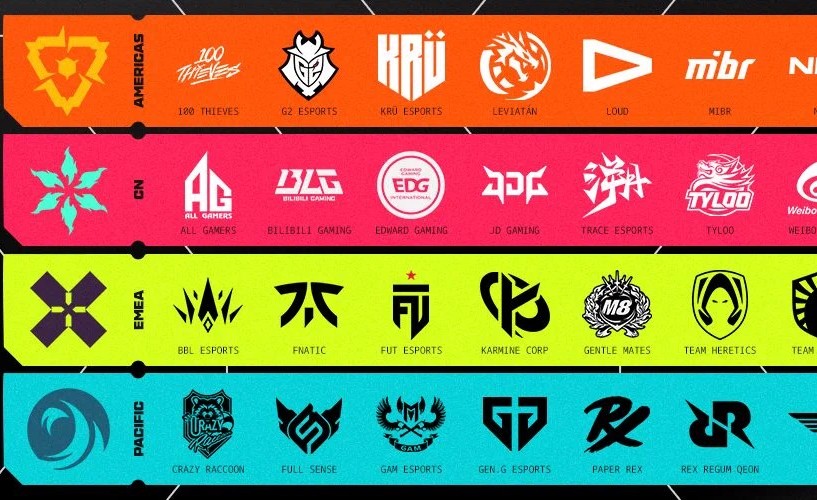


There are easier ways to spend a day as an esports journalist than tracking dozens of organisations announcing their VALORANT Champions Tour (VCT) partnership status one by one across four regions. Riot Games‘ decision to work with teams to allow teams to handle their own announcements instead of revealing the full list in one official communication may seem unnecessarily chaotic, but there is undoubtedly a method to the madness. Moreover it’s one that could benefit the entire ecosystem.
Editor’s note: This analysis was first published in the Heat Map newsletter on 22 October 2026. Subscribe here.
I’ll leave the case-by-case breakdown of confirmed organisations to The Esports Radar’s VCT 2027 Partner Teams Live Tracker. What interests us here is the strategy behind the decentralised announcements; what it means for engagement, and why something that can be a nightmare for the media might actually be a smart move for the business.
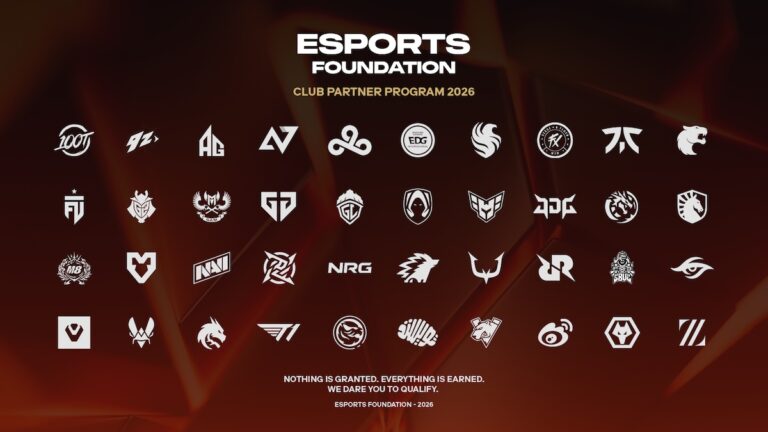
I can tell you first-hand that keeping up with all the announcements wasn’t what I’d call a relaxing experience. It demanded hours of monitoring, a lot of time spent checking social media, and more sleep than I was willing to sacrifice. A single official announcement from Riot, as the company has traditionally done, would have made my life considerably easier. The Esports Foundation, for instance, has also used centralised communications to announce organisations participating in its Club Partner Programme.
But there is another side to this story. As the announcements rolled out, traffic to esportsradar.gg went through the roof. Outlets like Sheep Esports saw their engagement surge dramatically once the announcement season kicked off. Their post impressions on X, in their dedicated VALORANT handle, jumped from a pre-announcement “season” average of 10k–30k to crossing over 60k and 100k-150k views per post, with standout news even surpassing 1 million views.
The constant stream of updates gave readers reasons to keep returning to the website and engaging on socials, while the overall conversation kept VALORANT and its competitive ecosystem firmly in the spotlight. From a media coverage perspective, the process was challenging. From an audience-engagement perspective, however, it was great.
That is where Riot’s strategy starts to make sense.
One announcement becomes dozens of opportunities for engagement
In esports as with anywhere else, attention is a valuable currency. Organisations compete for it, publishers and media need it, and all of these build their businesses around it. A centralised announcement concentrates much of that attention into a single moment. By letting each organisation reveal its status independently, Riot effectively stretches that moment across hours and timezones, spanning from the early hours (BST) of 19th August, starting with LOUD and Team Heretics confirming their spots, to the late hours of 20th August with Evil Geniuses announcing the cease of their operations.
Every partner announcement became an opportunity for an organisation to reach its own audience, generate discussion, and celebrate its place in the VALORANT ecosystem. Fans have more reasons to engage, whether they are celebrating their favourite team making the cut, debating an inclusion and/or an exclusion, or speculating about what the changes mean for the competitive scene.
The effect goes beyond the organisations that make it into the programme. Teams that do not secure a partnership also have a reason to communicate with their communities, whether to explain their position, reassure fans about their future, or signal their intentions for the next competitive season. Their announcements become part of the same conversation, generating further discussion around VCT and its future.
In other words, the news does not belong exclusively to Riot anymore. It becomes a series of conversations distributed across dozens of organisations and their communities.
And there may be one more opportunity for Riot itself. After the community has spent hours (or even days, as no official word from Riot came out at the time of writing) following individual announcements, the publisher can still detail its own official list of partner teams, generating another wave of attention around the programme. It is a second opportunity to capitalise on a conversation that has already been running across socials.
The precise engagement impact would need to be measured to establish how much this approach adds compared with a singular announcement, but the logic is clear: instead of asking the entire ecosystem to focus on one moment, Riot allows for multiple reasons to do so and better capitalises on the wealth of talent in the creative and marketing departments of esports teams in its ecosystem.
Did you expect anything else?
From EMEA, to Americas Ascension, China’s 5th seed, and now a VCT Partner Team. https://t.co/YidZcSMVuq
— G2 VALORANT (@G2VALORANT) October 19, 2026
When FURIA decided to ride the wave
This is not an entirely unfamiliar strategy to me personally. When I was Head of Public Relations at FURIA, we faced two situations in which information about major roster moves leaked before we could make an official announcement.
The first involved discussions with Gabriel ‘FalleN‘ Toledo about potentially bringing the legendary Counter-Strike player into FURIA’s roster. The second concerned the signing of the three-time world champion Rainbow Six Siege roster that was representing W7M at the time.
In both cases, we had a choice: try to settle the conversation as quickly as possible or find a way to work with the attention that had already been generated. We chose the latter, allowing speculation and anticipation to build instead of treating every leak as something that needed to be extinguished immediately. In FalleN’s case, we also had to exercise patience before we could finally confirm the signing.
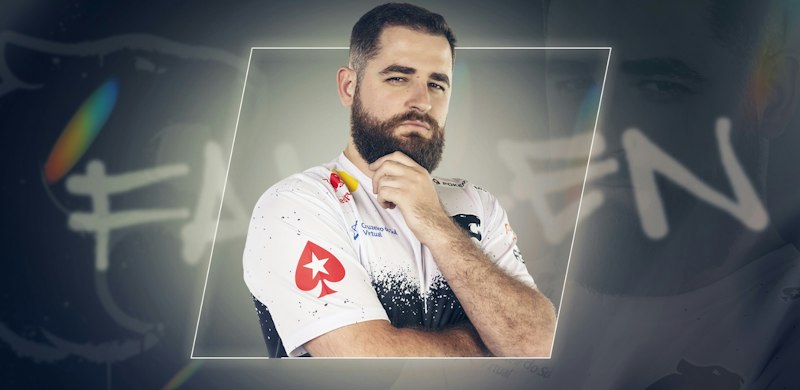
The result was an opportunity to generate engagement at more than one stage of the process. The speculation itself became a talking point, followed by the eventual, hyped official announcement. Rather than concentrating all the attention into a single post, we had the opportunity to benefit from both the anticipation and the reveal.
I no longer work at FURIA, so I cannot share the metrics from those campaigns, but I remember the engagement being astronomical.
Of course, a leaked transfer and a publisher’s decision to decentralise partnership announcements are not identical situations. One is a response to information escaping before the organisation is ready; the other is a communications approach that distributes announcements across an ecosystem. But the underlying principle is similar: attention generated before the official reveal can be just as valuable as attention generated by the reveal itself.
Is there a wrong way to announce something in esports?
I will not deny that it is easy to criticise Riot’s approach from many perspectives. A single official announcement would have been cleaner, easier to follow, and considerably less demanding to understand the whole picture. For anyone trying to get the information as quickly as possible, decentralisation creates extra work and makes it harder to know when the story is complete.
But communication strategies should not be judged solely by one optic. The fact that awareness and engagement for teams and for VCT itself will possibly be boosted does not automatically make decentralisation the best approach in every situation. The results also depend on what should be achieved, the story to be told, and whether their audiences are willing to engage.
I believe there is no universally right or wrong communication strategy. There are different approaches, each with its own strengths and weaknesses, and the right choice depends on the objectives.
Riot has chosen to let the ecosystem do more of the talking this time. From where I stand, it is a perfectly valid strategy. One that creates more work for journalists, sure, but may also generate more opportunities for everyone involved. The audience at least can access things like TER’s live tracker, but for who makes the trackers, oh well, that is the job we chose right?
And judging by the sheer volume of conversation surrounding VCT right now, one thing is certain: the Heat Map is blazing and VALORANT is right at the center of it.
This analysis was first published in the Heat Map newsletter on 22 October 2026. For early access to our analysis and more exclusive content, subscribe to The Esports Radar’s newsletters via this link.