

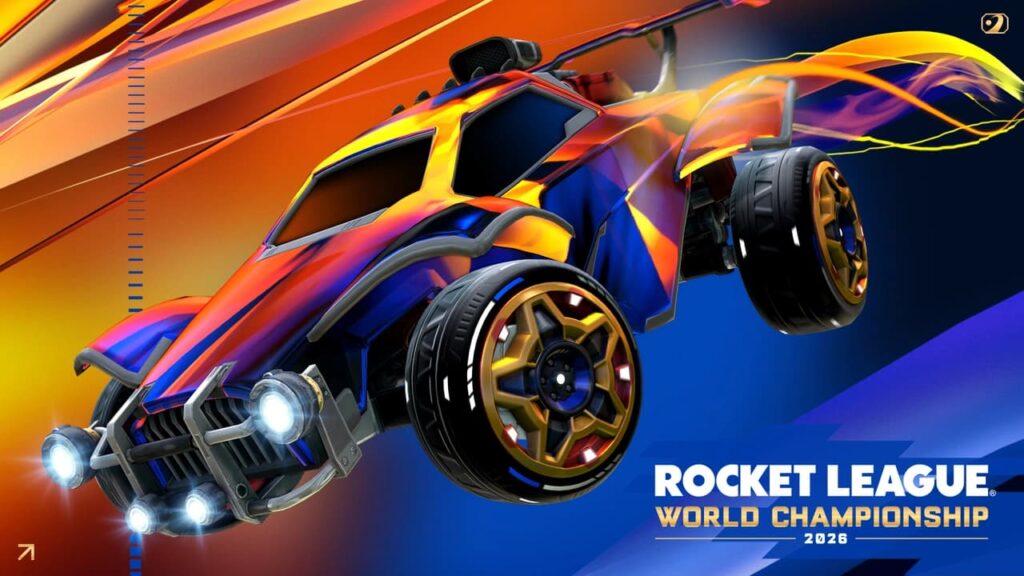


Rocket League publisher Epic Games and tournament partner BLAST have launched a new “World Championship Bundle” ahead of the RLCS 2026 World Championship, with 100% of its net sales going directly toward the prize pool.
Epic defines net sales as what remains of the bundle’s revenue after taxes, payment processing costs, and fees charged by console makers are deducted. Whatever remains is passed on in full to the competitors.
Of that remaining pool, 70 percent goes to teams, while 30 percent goes to individual players. The team share is split among the 20 squads competing at the World Championship, with the money distributed according to each team’s finish. In other words, the better the placement, the larger the payout.
These payouts will come on top of the fixed $1.2 million prize pool and will be distributed based on how far teams advance in the tournament. So, the bundle is essentially designed to grow the tournament’s overall prize pool.
The new “World Championship” bundle goes live in the in-game shop on September 1 and will remain available through September 23. It is priced at 1,100 Credits, which roughly costs $10.
The 2026 Rocket League World Championship will take place in Fort Worth, Texas, from 15 September through 20 September 2026, with 20 of the world’s top rosters competing for a share of the $1.2 million prize pool.
This isn’t the first time Rocket League has tried using bundle sales to help fund a prize pool. Earlier in 2026, the Paris Major Bundle used a similar idea but split things differently: half of net sales went to individual player performance awards, and the other half was divided among the 16 competing teams by final placement. That bundle marked the first real test of this kind of community-funded model for an RLCS event, and it ultimately raised about $550,000 for the players and teams involved.
Apart from the community-funded model, Rocket League also has a long-running system that allows professional esports teams to create their own branded cosmetic items for the game. When someone buys one of these team-branded items, a portion of the revenue from the sale is shared with the team that created it.
Under the standard arrangement that has been in place for years, teams typically receive about 30 percent of the revenue, while Epic Games keeps the remaining 70 percent. This setup gives organisations a way to generate ongoing income from their fans beyond tournament prize money and sponsorships.