

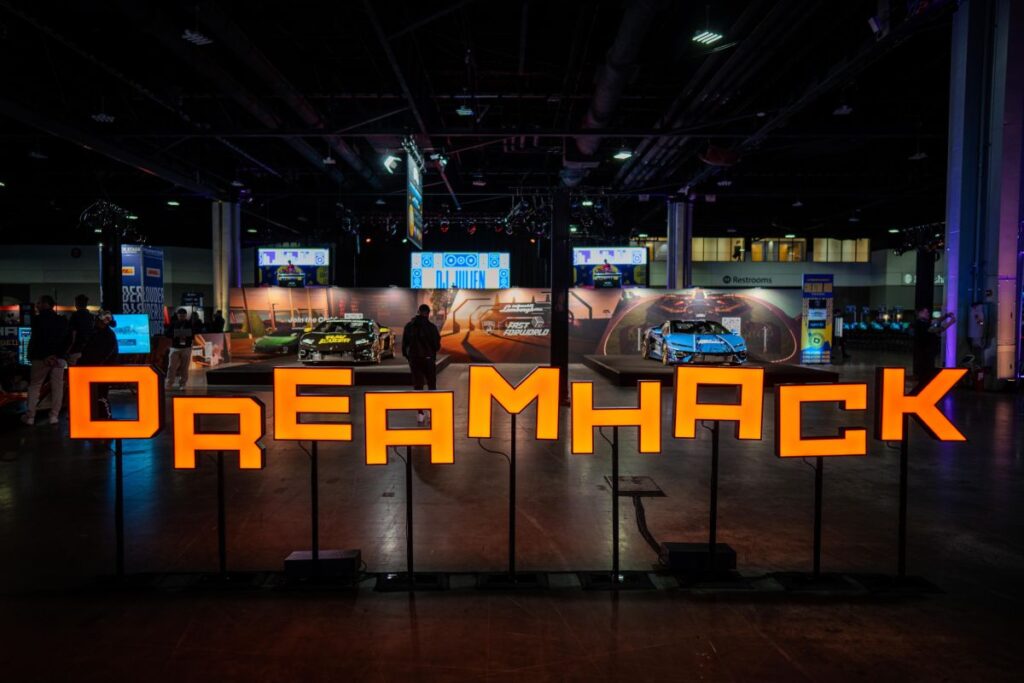


ESL FACEIT Group (EFG)’s multi-year partnership with Automobili Lamborghini positions the Italian supercar manufacturer as the Official Automotive Partner of DreamHack festivals across the United States and Europe. While luxury automotive brands entering gaming is no longer unprecedented, the agreement raises a broader question: why does a company whose products are inaccessible to almost every attendee invest in gaming and esports festivals?
According to Andreas Jernberg, VP Brand Partnership Development at EFG, the answer has less to do with selling cars and far more to do with remaining culturally relevant to a generation whose entertainment habits are increasingly centred around gaming.
The Esports Radar spoke with Jernberg to understand why premium brands continue to invest in esports and gaming events, why DreamHack represents a different proposition from traditional esports tournaments, and what success actually looks like for a heritage luxury brand entering the ecosystem.
- Suggested article: EFG and Lamborghini announce long-term DreamHack partnership

Esports sponsorships have matured considerably over the past decade. While early partnerships often focused on visibility or experimentation, brands today increasingly expect long-term cultural relevance instead of short-term marketing campaigns. According to Jernberg, that shift is precisely why premium companies cannot approach esports as a one-off activation.
“To really reap the rewards and earn genuine cultural credibility here, it can’t be a one-off activation. It’s not about making a single commitment, it’s about long-term cultural immersion with the community, built through live experiences over time.”
Jernberg argues that the industry’s audience has now reached a scale where it becomes difficult for global brands to ignore. He points to research conducted by EFG alongside Hero Esports and Niko Partners, which found that around 400 million members of Generation Z regularly engage with esports globally, while nearly three quarters said esports influences their purchasing decisions.
However, he believes audience size alone is not enough to justify investment. Instead, sustained participation is what transforms sponsors from outsiders into accepted members of the community.
“We’ve seen what happens when a brand sticks with it properly too. DHL‘s been a partner of ours for eight years now, and they’ve become so embedded in the ecosystem that they feel almost endemic to the CS2 [Counter-Strike 2] and Dota 2 communities at this point, so much so that crowds chant DHL in packed arenas.”
One of the main pillars of the deal between Lamborghini and Dreamhack, though, is the distinction between competitive esports and gaming culture more broadly. Rather than describing the festival as another esports tournament, Jernberg compares it to a mainstream cultural festival, arguing that its appeal extends well beyond spectators watching professional competition.
“We think of DreamHack as the Coachella of gaming. It’s a festival, not just a tournament,” said Jernberg. That broader positioning significantly changes the type of audience brands engage with. Instead of targeting only competitive players, companies can reach creators, casual gamers, cosplay enthusiasts, technology fans and families within the same environment.
EFG’s own research supports this approach. Ahead of DreamHack Birmingham, the company found that 90% of UK teenagers would be more likely to attend a gaming festival than a traditional music festival, while 92% said they actually preferred the gaming experience.
For Jernberg, this means successful partnerships depend less on reaching every gamer than on finding the right community.
“Different EFG properties attract different audiences, so it’s about choosing the environment that naturally aligns with your brand. DreamHack is a natural fit for Lamborghini because of its community and culture, whereas IEM is a stronger fit for a brand like DHL.”
For relevance, not immediate sales
For a manufacturer whose vehicles often cost hundreds of thousands of dollars, measuring sponsorship success through direct purchases would be unrealistic.
Instead, Lamborghini’s activation at DreamHack Atlanta combines physical displays of its new Temerario alongside sim racing experiences, allowing visitors to interact with the brand in ways that would otherwise be impossible.

According to Jernberg, this creates a stronger experience than either activation would achieve independently.
“It’s not really about conversion, and I don’t think it’s just awareness either. Lamborghini’s already one of the most recognisable names out there, they don’t need help with that. It’s more about staying relevant to a generation that’s still working out what it aspires to, and making sure Lamborghini’s part of that conversation.”

He added that future activations will evolve between events, including sim racing experiences and integrations inside titles such as Fortnite, while continuing to feature the Temerario as the central element.
From EFG’s perspective, the partnership emerged naturally from shared values around performance, innovation and design rather than purely commercial objectives. When evaluating success, the company focuses less on measurable sales and more on community perception.”We try not to track this by a sales number; we look more at how the community actually reacts.”
Jernberg references a previous collaboration with Porsche that prioritised brand perception over advertising metrics. Positive reactions during Lamborghini’s initial activations ultimately contributed to extending the relationship into a multi-year agreement running through 2028.
Beyond the “Gen Z” buzzword
Many major brands entering gaming cite Generation Z as their primary target audience, a description that has possibly become overly simplistic.
Instead of defining Gen Z by age, Jernberg believes gaming has become the shared cultural language connecting otherwise diverse audiences.
Jernberg supports his vision with data: At DreamHack Birmingham, for example, 41% of attendees were female. Meanwhile, in China, audiences for competitions such as Peacekeeper Elite League (PEL) and King Pro League (KPL) already surpass 50% female participation.
“What actually holds this group together isn’t age, gender or location, it’s that gaming and esports is genuinely central to how they socialise and form opinions about brands.”

For premium brands, that represents an opportunity to establish long-term relevance before consumer preferences become fixed: “Get in early and get it right, and you’re not just borrowing attention for a campaign, you’re becoming part of how that generation thinks about your category for years to come. Get it wrong, and this is also an audience that’s quick to call it out.”
If not even one Temerario is sold during DreamHack, the Lamborghini’s presence still helps ensure the brand remains a desirable, success-related asset for the next generation of consumers. For a luxury manufacturer, preserving that aspiration—and the premium value attached to it—may ultimately be the real return on investment.