



Brazil’s ban on betting is affecting esports organisations, with several teams having betting and casino-related sponsorships contracts canceled and branding removed from their communications.
This happens as the industry adjusts to the provisional measure (Medida Provisória, or MP, an executive order equivalent to temporary emergency legislation) 1.394/2026. Signed by President Luiz Inácio Lula da Silva on September 25, the measure prohibits the operation of fixed-odds betting in Brazil and introduces restrictions on advertising, marketing and sponsorship for betting operators.
Operators are required to make their websites and applications unavailable in Brazil by October 6, while existing authorisations are due to expire on October 25. Anyone continuing to advertise or promote prohibited betting to Brazilian audiences after the deadline could face administrative sanctions, including civil and potentially criminal liability. The MP also requires digital platforms to prevent and remove prohibited betting content.
The changes have created an immediate challenge for esports organisations that have partnerships with betting companies, particularly in Counter-Strike 2 (CS2), where betting sponsorships have become more prominent than in other major competitive games.
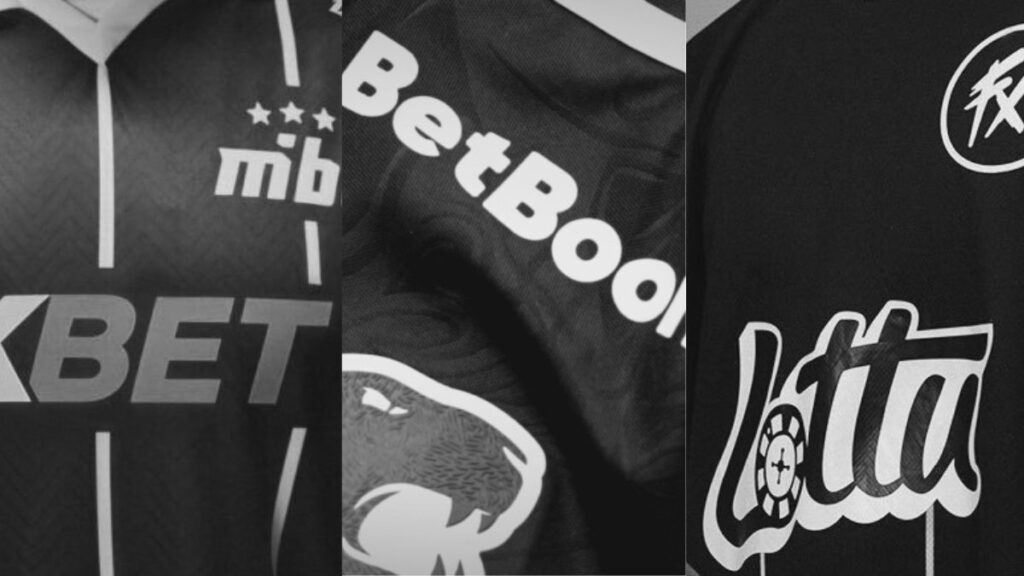
MIBR, which last year became the first organisation within the Riot Games ecosystem to receive approval for a betting sponsorship, has already removed 1xBet branding from all communications. “MIBR follows the discussions on betting in Brazil and acts in compliance with the legislation and the determinations of the Federal Government, always with responsibility towards its audience and its community,” the organisation said in a statement to The Esports Radar.
Fluxo W7M has also stopped displaying Lottu branding, although the organisation did not respond to The Esports Radar’s request for comment.
FURIA, meanwhile, continues to display BetBoom branding in some communications such as social media banners, but The Esports Radar learned that the organisation is terminating their agreement with Betboom and will remove assets before October 5.
Also read:
- Thibaut Courtois and Gonzalo Vila join Astralis parent company as investors
- Co-CEO Vas Roberts leaves Team Vitality
- Kuwait to host inaugural Asian Esports Games in 2027
The situation is less clear for Brazilian organisations whose teams compete primarily outside the country. Legacy, which competes exclusively in international CS2 tournaments, continues to have Rainbet as a sponsor. As the betting operator does not and has never operated in Brazil, the expectation is that nothing changes in Legacy’s case. Imperial is also continuing to display Gamdom branding, having a similar approach that the promotion is directed towards audiences outside Brazil.
However, the new legislation does not establish a straightforward exemption based on either the location of a match or the country in which a betting operator operates. Lawyer Bruno Cassol, who analysed the measure for The Esports Radar, said the relevant question is instead whether advertising is directed towards a Brazilian audience.
“The criterion of application is not where the match takes place nor where the betting house is headquartered — it is who the advertising is directed towards,” Cassol said.
According to the lawyer, a Brazilian team competing abroad is not automatically outside the scope of the measure if its content and broadcasts continue to target Brazilian audiences. Likewise, an operator that does not operate in Brazil is not necessarily exempt from restrictions on advertising its brand to Brazilian audiences.
Cassol added that there is currently no definitive answer for partnerships, such as those involving Legacy and Imperial, because the MP is recent and has yet to be accompanied by further regulation or relevant jurisprudence.
The impact of the ban extends even beyond team sponsorships, as BetBoom has also played a significant role in the Brazilian and Latin American Counter-Strike broadcasting market. The company has acquired rights of competitions organised by BLAST, PGL and ESL FACEIT Group, providing images for multiple Brazilian channels including MadHouse TV and Gaules. The company’s potential departure could therefore affect how some Counter-Strike tournaments are streamed in Portuguese.
The Esports Radar contacted BetBoom to ask if its remaining agreements in Brazil will be terminated following the MP, but had not received a response at the time of publication.
If those rights are returned to the market, they could subsequently be acquired by another broadcaster or commercial partner. It is not yet clear, however, whether replacement agreements will be secured before upcoming tournaments. Findings by The Esports Radar point to BetBoom, which also sponsored other CS2 initiatives in Brazil such as GC Masters, completely pulling the plug on its operations in the country.
Another case that is not clear concerns the prediction market platform Polymarket, which has continued to be promoted through creators and media outlets across social media even after the MP was enacted. The platform presents itself as a prediction market rather than a conventional sportsbook, which raises questions over whether its activities fall within the boundaries of Brazil’s new restrictions. However, The Esports Radar has learned that some creators and platforms are planning to stop Polymarket-related posts targeted at Brazilian audiences on October 5, potentially renegotiating their agreements from that date.
Other esports have less exposure
The changes are expected to be felt differently across esports. Major scenes including League of Legends, VALORANT, and Ubisoft‘s Rainbow Six Siege, have historically had restrictions around betting partnerships, limiting the direct exposure of their teams to the category. Riot Games introduced a framework allowing certain betting partnerships within its ecosystem in 2025, but in Brazil only MIBR’s 1xBet partnership was subsequently approved under that framework.
As a result, the immediate disruption is particularly visible in Counter-Strike, where organisations have had greater freedom to establish betting partnerships in the last decade. Though, the removal of those partnerships could nevertheless affect teams beyond CS2 if organisations had been using sponsorship income from Counter-Strike to support operations across different esports titles.
The new restrictions are being challenged in Brazil, and the provisional measure could be canceled within months through the country’s Congress. The landscape also can change depending on the result of the presidential election this weekend. The next weeks, therefore, will determine whether those changes represent a temporary (major) disruption or the mark of a broader withdrawal of betting companies from Brazil’s esports market.