

As China’s esports ecosystem continued to evolve in 2025, leading organisations offered their perspectives on a year shaped by large-scale live events, policy support, and increasing internationalisation. In the comments below, Weibo Gaming reflects on the developments they believe defined the season — from landmark domestic tournaments and infrastructure investment to the growing influence of global third-party competitions and shifting revenue models.
As 2025 drew to a close, we gathered reflections from esports industry leaders on the year that transformed their world. Read Weibo Gaming key insights, with answers attributed to the organisation itself, and stay tuned for more in our ongoing “Reflections” series.
1 – Looking back at 2025, would you characterize the year as generally positive or challenging for the esports industry as a whole? What factors influenced your view of the industry this year?
I feel that the 2025 esports industry was a year defined by a coexistence of positive momentum and challenges, with an overall shift toward high-quality transformation.
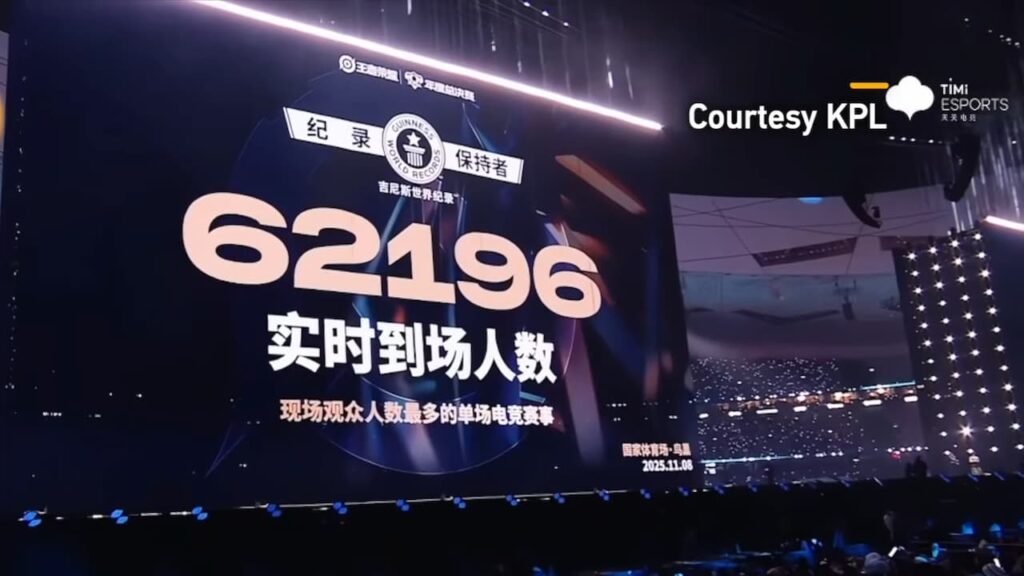
The positive factors solidified the foundation for the industry’s development, while prominent structural issues became key obstacles to its advancement. The growing maturity of the EWC [Esports World Cup] event, the Honor of Kings Annual Grand Finals at the Bird’s Nest in November attracting over 60,000 live spectators, and the continuous introduction of favorable policies by various levels of government in regions like Beijing, Shenzhen, and Chengdu—providing incentives across multiple links of the industry chain, promoting coordinated development between esports and regional culture/economy, and forming a significant scale effect—all attest to the sustained rise in esports’ mainstream acceptance.
As for the challenges, they primarily stem from endemic issues such as the industry’s single revenue structure, the weak risk resistance capability of clubs, and the plateauing of user growth. Over the next few years, core problems related to revenue growth, user growth, and user monetization will become hurdles the industry must overcome, as the path of extensive scale expansion is no longer sustainable.
2 – In your opinion, what were the most notable milestones, breakthroughs, or celebratory moments in the esports field in 2025?
It would still be the Honor of Kings Annual Grand Finals held at the Bird’s Nest in Beijing in November. I believe it was a milestone achievement, with over 62,000 spectators and tickets selling out in just 12 seconds. This accomplishment is something to be extremely proud of, both domestically and internationally, and it marks the official era of esports events moving into “large” venues.
3 – Which organizations, companies, or projects do you believe truly created value for the esports ecosystem in 2025? What is the significance of their contributions?
I believe the vigorous development of the entire esports industry is inseparable from the efforts of all participants. This includes the policy support from various levels of government, event organizers like Tencent and NetEase, event operators like Hero Sports, streaming platforms such as Huya and Kuaishou, and the various clubs active in the competitive scene. Everyone here, in their different roles, is contributing value to the industry.
4 – In connection with your own work and the achievements of the clients you serve, what are you most proud of this year?
For Weibo E-Sports Club, there are two major milestones this year. First is the official inauguration of our venue, the Weibo IN Diamond Center, located within Beijing Chaoyang Park. This marks Weibo’s first genuine external base in Beijing and is a critical part of our club regionalization strategy. Second, we achieved a global 8th-place finish for the club at the EWC. As we have only recently expanded our esports business overseas, this represents a modest yet significant step, boosting our confidence for future strategic planning.

5 – Looking ahead, what are your key predictions for the esports industry in 2026? What trends are worth paying attention to? Where do you anticipate the main growth opportunities and challenges will appear?
2026 will enter a new Asian Games cycle, which will attract more attention and resources from the traditional sports sector. For instance, sponsors and operations teams from traditional sports events may cross over into the esports domain, further enhancing the social recognition of esports players.
Additionally, with the Ministry of Education incorporating esports majors into applied talent cultivation programs, multiple new universities are offering related majors. Coupled with the joint construction of training bases by enterprises and universities, the talent shortage of over 100,000 in roles like event operation and refereeing will gradually ease. The success rate for professional players transitioning into new careers after retirement is expected to increase to over 35%. I believe the entire industry will see further enhancement across all dimensions in 2026.
The core challenge remains the survival status of small and medium-sized enterprises (SMEs). Top-tier companies leverage IP and capital advantages to form monopolies in areas like event operation and user traffic. Nearly 70% of smaller clubs rely on prize money and sponsorship, have a singular profit model, and struggle to compete with market leaders for premium sponsorship resources. Similarly, smaller streaming platforms face difficulties in user retention due to content homogenization. The Matthew effect [a concept in economics and sociology that describes how advantages tend to accumulate with those who already have them] in the industry will become even more pronounced.
Follow The Esports Radar on social media: