



How Tennis Clash found its perfect match at eRoland-Garros
When the Olympic Esports Week announced its line-up in 2023 — virtual archery, sailing, cycling, taekwondo — the competitive gaming world winced. These were not the titles that “true esports” communities rally behind. Among them sat Tennis Clash, a mobile game developed by Wildlife Studios.
The event did not succeed in attracting the wider esports community, with only 809 peak viewers at its shooting competition held on a modified version of Fortnite, but it can also be viewed as a lesson in how not to force square pegs into round holes.
Fast-forward to 2026, and Tennis Clash has found its perfect arena — not inside an Olympic tent, but beneath the clay-court prestige of Roland-Garros, anchored by two corporate giants: Renault and Mastercard, who also happen to be major brands well versed in sports and, in the case of the latter, esports sponsorship activations.
The French Tennis Federation (FFT) has launched the 2026 Roland-Garros eSeries by Renault, the world’s largest tennis-themed esports competition. It is a case study in how a mobile game can work as a competition-based marketing activation when placed in a context that respects its community, leverages authentic brand partnerships, and builds a genuine bridge between sport and gaming.
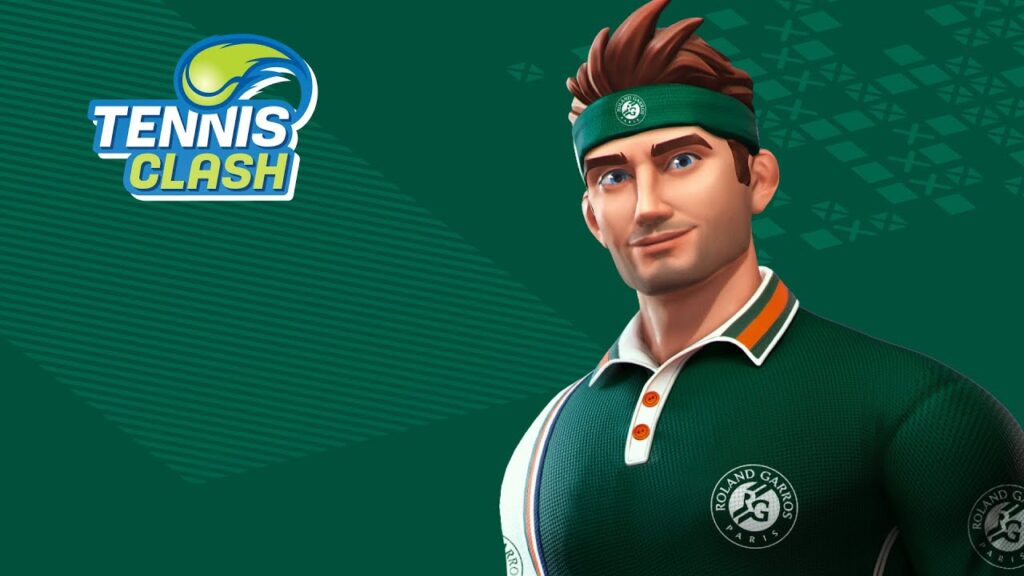
The eSeries is played exclusively on Tennis Clash, which boasts over five million monthly active users. The FFT has extended its partnership with Wildlife Studios through 2030, betting that the title’s mass mobile appeal can attract a younger, digitally native crowd that may never have swung a racket on a real court. The 2025 edition smashed records with over 515,000 participants, but 2026 has already left that in the dust: more than 561,000 players have signed up, grinding through 11.5 million matches in the open qualifiers.
Launched in 2018 with banking giant BNP Paribas as its anchor partner, the tournament had already carved a credible niche by its third edition in 2020, when France’s Team Vitality, was brought in to coach amateur finalists. Under Founder Fabien “Neo” Devide‘s supervision, Vitality pros delivered an intensive session at Roland-Garros ahead of the international final. It was an early signal that the FFT understood the value of grafting authentic gaming culture onto tennis tradition.
This year, Final Stage takes place on 23 May 2026, live from the Roland-Garros auditorium in Paris. Hosting duties fall to Laure Valée, freshly crowned Esports Host of the Year at the 2025 Game Awards, with global broadcasts on YouTube, France TV, and, for the first time, Disney+ in Portuguese-speaking markets. A €5,000 prize pool awaits the top two finishers. Modest by tier-one esports standards, but the real riches lie in the strategy behind the event.
To understand how a mobile tennis game evolved from Olympic misfit to a sponsorship magnet, The Esports Radar sat down with Aymeric Labaste, Head of Roland-Garros International Development.
Renault and Mastercard are long-standing Roland-Garros partners, but Labaste explains what convinced them to expand to the virtual court:
“Our partners have been convinced by our ability to generate strong engagement with a younger, international and highly connected audience. Brands like Renault and Mastercard are looking for activations that deliver value and create genuine interaction with communities, rather than simply delivering traditional visibility. The 2025 edition demonstrated very strong performance in participation, engagement, and digital reach. But beyond the numbers, what truly stood out is the coherence between the premium identity of Roland-Garros and the modern codes of gaming and mobile culture.”
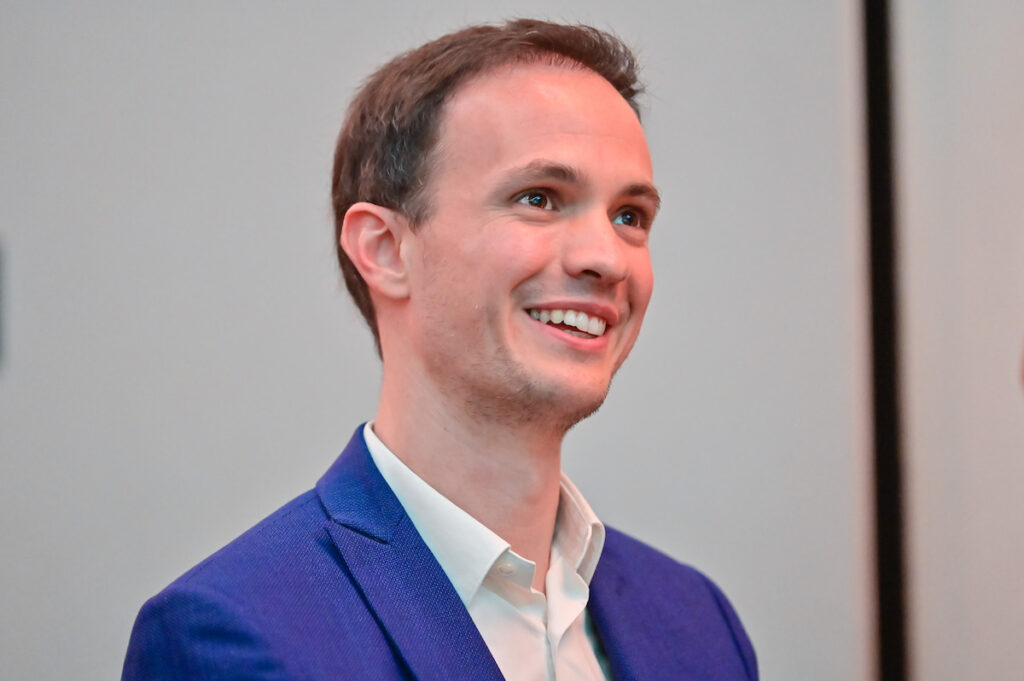
Labaste sees the renewed commitment as a signal for the whole industry. “It shows that mobile esports is no longer perceived as a niche market, but as a credible space for international brands seeking to engage new generations in a more emotional way.”
For Renault, the eSeries fits neatly into a broader marketing evolution. Having partnered with the competition since 2022 and becoming title sponsor in 2024, the French car manufacturer, itself part of one of the largest automotive groups globally, uses the platform to extend its presence far beyond the traditional tennis fan.
“Through this growing platform, Renault can connect with new, younger, more digital-native communities while remaining fully anchored in the Roland-Garros ecosystem,” Labaste explains. “It allows Renault to showcase its capacity to innovate and engage through new formats. On-site activations during the Final Stage at Roland-Garros provide meaningful touchpoints that resonate both physically and across digital channels.”
While Mastercard already enjoys a presence in Riot Games’ ecosystem and at the Esports World Cup, the Roland-Garros eSeries offers something distinct: a canvas for “Priceless Experiences” tailored to cardholders inside the tennis universe.
“Mastercard has the opportunity to offer clients exclusive experiences combining esports and tennis,” says Labaste. “Guests can meet Laure Valée, our new host, as well as tennis ambassadors Gilles Simon and Benoit Paire, who bring credibility from the professional tennis world. Combined with a premium VIP experience around the Final Stage on site, it creates an emotional and memorable moment fully aligned with Mastercard’s ambition to connect through meaningful experiences.”

Gamers’ authenticity radar is notoriously sensitive. Labaste admits this is the “key challenge”: esports communities instantly detect partnerships that feel artificial.
“The objective is to develop activations that bring real value to the player and community experience. This can take the form of exclusive content, dedicated in-game mechanics, live experiences, or integrations directly embedded within the game universe itself. For example, during the competition on Tennis Clash, participants are offered valuable in-game content featuring Renault electric vehicles (e.g. Renault 5 strings boosting the stamina and power).
“This type of integration works because it fits naturally within the gameplay experience, rather than interrupting the community with a traditional advertising approach. What works today is when a brand truly understands the culture of the ecosystem and is willing to participate in a more organic way. Players expect authenticity, creativity and a meaningful contribution to the experience, not only visibility.”
The long-standing nature of the partnerships is an asset. “They are both top Roland-Garros sponsors and are already part of our eTennis tournament’s history, which allows us to create something far more coherent and natural for the Tennis Clash community as well as the new generation of tennis fans.”
Success for non-endemic sponsors in the eSeries isn’t measured in traditional brand-awareness metrics alone. “Of course, audience numbers still matter, but they are not the main metrics for us and our partners.” Labaste says ROI is defined by engagement time, digital reach, and first-party data — “engagements, reach and earned media to ensure that both Roland-Garros and Tennis Clash communities get engaged during the entire competition, from March to the Final Stage in May”.
The broadcast strategy reflects this: “Broadcasting across France TV, YouTube and Disney+ allows us to reach complementary audiences: traditional audiences on one side and digital-native communities on the other. Choosing Laure Valée as the new host is a game changer and part of our strategy to bridge the worlds of tennis, esports and streaming.”

The 5-million-strong player base of Tennis Clash doesn’t automatically translate into viewers of a multi-hour live stream. A casual mobile player on a five-minute commute needs a deliberate journey.
Labaste outlines the funnel: “During the entire competition, Tennis Clash players are exposed to several Roland-Garros touch points through in-game activations and tournament highlights leading up to the climax in Paris. This creates a natural connection between their everyday gameplay experience and the live event. We also place a strong focus on production quality to make them experience the Final Stage on site or remotely.”
A crucial statistic guides the approach: 67 per cent of the Tennis Clash community doesn’t currently play tennis in real life. “Choosing the right ambassadors — Laure Valée, Gilles Simon, Benoit Paire, and Tennis Clash content creators — is absolutely key to bringing tennis and eTennis communities together.”
The long game is conversion: “Our eTennis competition is a gateway into the Roland‑Garros ecosystem. The entire philosophy behind Roland‑Garros eSeries by Renault is to bring new audiences into our marketing funnel: first to build awareness and positive perception of Roland‑Garros, then to engage these fans strongly during our Grand Slam but also throughout the year, and ultimately to convert them into customers while nurturing long‑term brand loyalty.”
The Olympic Esports Week tried to make Tennis Clash something it wasn’t: a standalone esports spectacle unmoored from the sport’s culture. The FFT’s approach reverses the logic, it uses Tennis Clash as an invitation into the broader clay-court world, backed by sponsors who understand the difference between a badge and a bridge.
Labaste’s final reflection is telling: “Delivering all these Roland-Garros experiences globally across our key markets is always an exciting challenge for the French Tennis Federation. We strongly believe that creating these engaging marketing platforms is the most effective way to build emotional attachment, sustain engagement over time, and progressively convert new audiences into genuine Roland-Garros fans, and ultimately into clients.”
For initiatives in the surroundings of esports, sometimes the best way to win at an initiative tapping into competitive gaming isn’t to chase the status of the biggest, established communities, but to find the right home for the right title and let authenticity do the heavy lifting.

Follow The Esports Radar on social media: