



Esports is undoubtedly a booming industry right now, with huge prize pools, packed arenas, and millions of fans watching online. But behind all that growth, gender equity remains a complex and persistent issue. Whether in competitive esports or industry roles, very few women make it to the top levels of the esports space. Those who do often face challenges that men rarely have to think about.
The situation is particularly noticeable in the competitive area, where opportunities for women have struggled to keep pace with the growth of the esports ecosystem. One notable example of this is FURIA recently moving its entire CS2 women’s roster into VALORANT, highlighting the difficulties female players can face when trying to build sustainable careers in Counter-Strike.
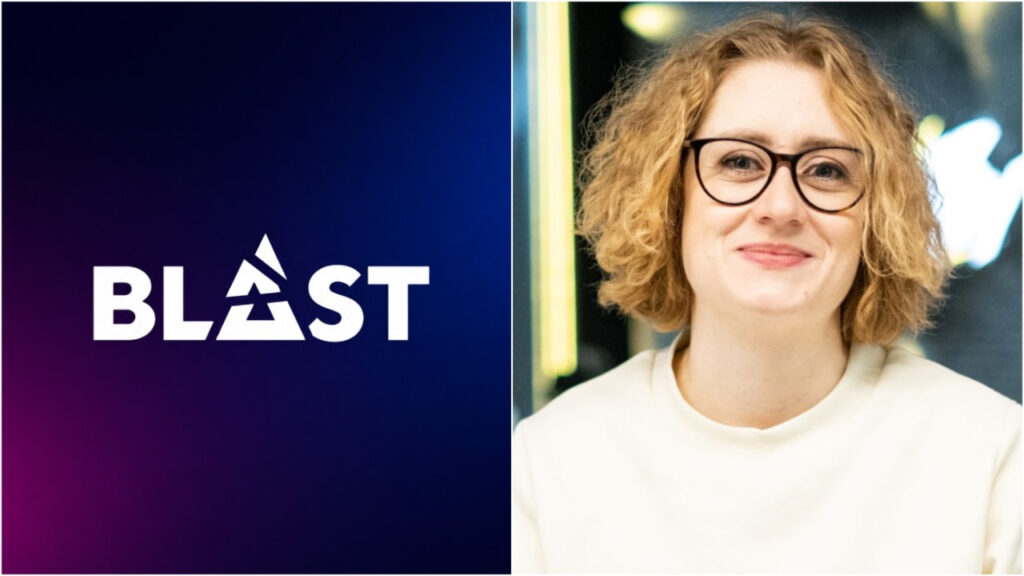
And for women working behind the scenes, the challenges can look different but are no less significant. One woman who knows these challenges firsthand is Anne Banschbach, BLAST’s Programme Director for Valve and Supercell Ecosystems and Development. Recently, Banschbach spoke with Esports 101 about her experience as a woman in esports leadership and the challenges she has faced along the way.
Banschbach, who joined BLAST in 2025 after nearly four years running esports operations at Team Vitality (and earlier roles at G2 Esports), explained in the interview that being a woman in esports isn’t fundamentally different from being a woman in any other industry. The obstacles she’s faced, she said, aren’t worse, but they aren’t better either. They’re simply a reflection of the same society everyone operates in, esports included.
Banschbach noted that because she reached senior roles relatively early in her career, she often faced scepticism not just for being a woman, but specifically for being a young woman. She described tense meetings with male colleagues, some of whom technically reported to her, who had more years in the industry and struggled to accept her authority. She believes a man in the same position would have faced some of that friction too, but to a much smaller degree.
However, Banschbach said her approach has been to simply do the job well. She was honest that this sometimes means putting in extra effort, doing twice the work and offering twice the justification that a male colleague in the same position might not need to.
She also spoke about how she has changed over time when it comes to handling inappropriate comments. Earlier in her career, she says she experienced more of them but usually brushed them off or ignored them because she felt less secure in her position. Now, with more experience and confidence, she said she calls people out directly and speaks up if she sees it happening to colleagues too.
For Anne, navigating the industry effectively comes down to strategic selectivity and clear personal boundaries. While she acknowledges that picking your moments is essential for long-term sustainability, she strongly encourages women to address major boundary violations head-on, balancing advocacy with a sharp awareness of workplace dynamics.
Another notable pattern she pointed out is that esports companies tend to have plenty of women working in marketing, commercial, or HR roles. But when it comes to the actual “product” side of esports such as team and tournament operations, performance staff, and similar roles, women are few and far between, often limited to support or psychological roles rather than leadership positions.
Banschbach’s point about women being more common across the wider industry than in performance-related roles is therefore not just about office jobs. It also raises questions about how much space women have in the part of esports where the actual competition takes place.
Counter-Strike 2 is perhaps one of the clearest examples of this. The women’s competitive scene has taken a major hit over the past year. ESL Impact, which had been the main circuit for female Counter-Strike players, was put on indefinite hold at the end of 2025. With that main source of competition gone, tournaments became much harder to find, prize money and opportunities became more limited, and several organisations started pulling out of women’s Counter-Strike altogether.
For players who have spent years competing in Counter-Strike, that kind of situation is difficult to ignore. Zainab “zAAz” Turkie, one of the best-known names in women’s Counter-Strike, has been particularly vocal about the decline. She publicly stated that the current esports situation is demotivating, with fewer tournaments, top players stepping away from competition and more women choosing to stream instead of play professionally. More recently, she also criticised Valve, saying the company should be doing much more to support the women’s side of Counter-Strike.
What zAAz is talking about is closely linked to what Banschbach described from her own experience. Having women working in esports is important, but simply having more women in the industry does not automatically mean they have the same opportunities to compete, move into senior roles or help shape the direction of the scene.
Research from the Norwegian University of Science and Technology in Norway has found similar problems. The study described the esports industry as often hostile towards women and affected by open sexism. It also found that women who reach leadership positions in esports organisations have had to break through a “seemingly impenetrable barrier sustained through normalised male dominance”.
At the same time, the landscape is not entirely static, with incremental efforts emerging across different corners of the industry. Women across the industry continue to drive success in diverse roles, as recently highlighted in The Esports Radar’s International Women’s Day feature, while organisations and brands have also started paying more attention to making the industry more welcoming.
There have been examples in competitive esports as well. Riot Games has announced that the Verizon VALORANT Game Changers NA Stage 2 Finals will culminate in a live LAN event for the first time in the circuit’s history. L’Oréal Paris has also entered the women’s esports space through a one-time collaboration with Brazilian organisation FURIA, while McDonald’s Germany made its partnership with G2 Esports conditional on expanding support to G2 Hel, the organisation’s women’s League of Legends roster, as CEO Alban Dechelotte revealed to The Esports Radar.
These efforts will not fix the problems overnight, but they do give women more chances to compete and be seen. And that is an important part of the bigger issue Banschbach was talking about. Establishing a presence across esports is a crucial first step, but real industry evolution demands dismantling the cultural preconceptions, social friction, and structural barriers that continue to limit women.
Overall, Banschbach’s comments give a quite honest look at what it’s like to lead in an industry that’s still figuring out gender diversity. Her message wasn’t one of complaint but of realism paired with encouragement: the road can be harder, but leading by example is, in her view, the most effective way to change things over time.