



The Esports Radar travelled to the French capital at the invitation of the Esports Foundation to cover the first week of the Esports World Cup (EWC) 2026.
When the event relocation from Riyadh, Saudi Arabia, was announced only two months ahead of the tournament, it felt reasonable to expect compromises. Building an event of this scale (2,000+ players and a $75 million prize pool across seven weeks) in such a short timeframe is no small feat, and even the most experienced organisers would have had to make sacrifices somewhere along the way.
Instead, what I found was an event that, in several respects, felt every bit as polished as Riyadh thus far—and in some areas even surpassed it.
Part of that comes down to the venue itself. The EWC structure at Riyadh’s Boulevard City is purpose-built and offers enough space for stages, activations and entertainment. The selection of Paris Expo Porte de Versailles as the main venue means a different approach. Rather than spreading visitors across multiple buildings, it brings almost everything under one roof. The result is a venue that feels denser and makes sponsor activations and team booths feel much closer to the audience instead of becoming stops along a walk between arenas.

Naturally, there were trade-offs. The press room, for example, was located much farther from the main halls than in Riyadh, making for a fairly long walk several times a day. For journalists, that quickly became part of the routine. For spectators, however, it was entirely irrelevant. In fact, from an industry perspective, the media facilities themselves represented a noticeable improvement over what was available in Riyadh in 2025, offering more space, additional workstations, and significantly better desks and chairs.
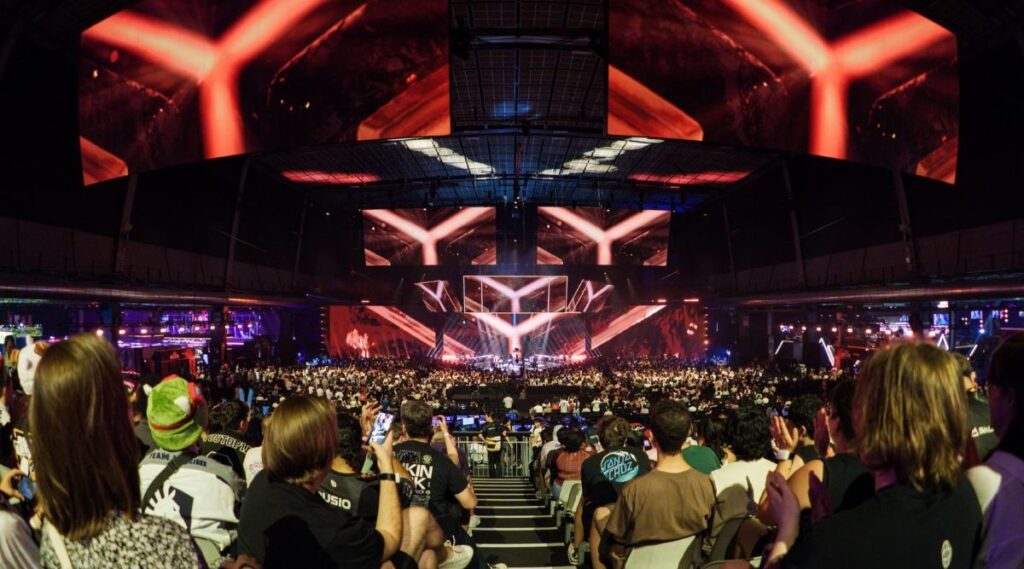
Back on the show floor, the scale of some of the competition stages was impossible to ignore. Even though online viewership for the title fell almost 50% in comparison to 2025, the main arena hosting the VALORANT finals on 12 July, with over 7,000 seats, was packed to capacity, with a larger footprint than the principal stages at Boulevard City. Apex Legends drew similarly impressive crowds, with every seat occupied and spectators gathering on staircases or simply watching from outside the arena to remain part of the atmosphere, while 440,000 online viewers granted EWC a peak higher than the ALGS: 2026 Championship itself. Even smaller stages, such as the one dedicated to Fatal Fury, impressed through production quality rather than sheer size.
One of my personal favourite additions was the Hall of Champions, celebrating winners from previous editions while gradually welcoming this year’s alongside them. With the EWC trophy displayed at its centre, the space genuinely feels ceremonial. It succeeds in making access feel exclusive, reserved only for those who have earned the privilege of lifting the trophy themselves.

That level of production was consistently remarkable throughout the venue. Large LED installations, carefully designed stage layouts and striking visual identities gave every competition its own character while maintaining a cohesive event aesthetic. I even found myself wondering who the creative director behind the artistic vision was, only to learn that, surprisingly, there was not a single art director responsible for overseeing the entire production.
Of course, none of this happens by accident. The Esports Foundation has reportedly invested more than $290 million into this year’s event, but it is far from the only contributor. Brands, publishers, and organisations such as Lenovo, Riot Games and Karmine Corp, delivered booths and experiences that hardly reflected the limited time available to build them. Even the Esports Embassy, the premium hospitality space first introduced in Riyadh, arguably benefited from its new location, sitting at the heart of the venue with a 360-degree presence that made it feel even more integrated into the event.

What impressed me most, however, was not a particular stage or activation. It was the speed at which all of this came together. The event never felt rushed. If anything, it gave the impression of having been planned for far longer than a couple of months.
That says as much about the organisers’ execution as it does about Paris itself. The French capital has decades of experience hosting global events—from major gaming competitions to the Summer Olympics—and the event counts with the open support from President Emmanuel Macron along with Parisian Mayor Emmanuel Grégoire and Marina Ferrari, France’s Minister of Sports, Youth, and Community Life (both present at the opening press conference). That expertise was reflected not only in the production but also in attendance. The city’s accessibility undoubtedly helped deliver packed arenas throughout the opening week despite the late change of plans. At the time of writing, the Esports Foundation had confirmed 120,000 tickets sold for the event. For comparison, ticket sales for the 2025 edition in Riyadh stood at 100,000 by the end of Week 1.
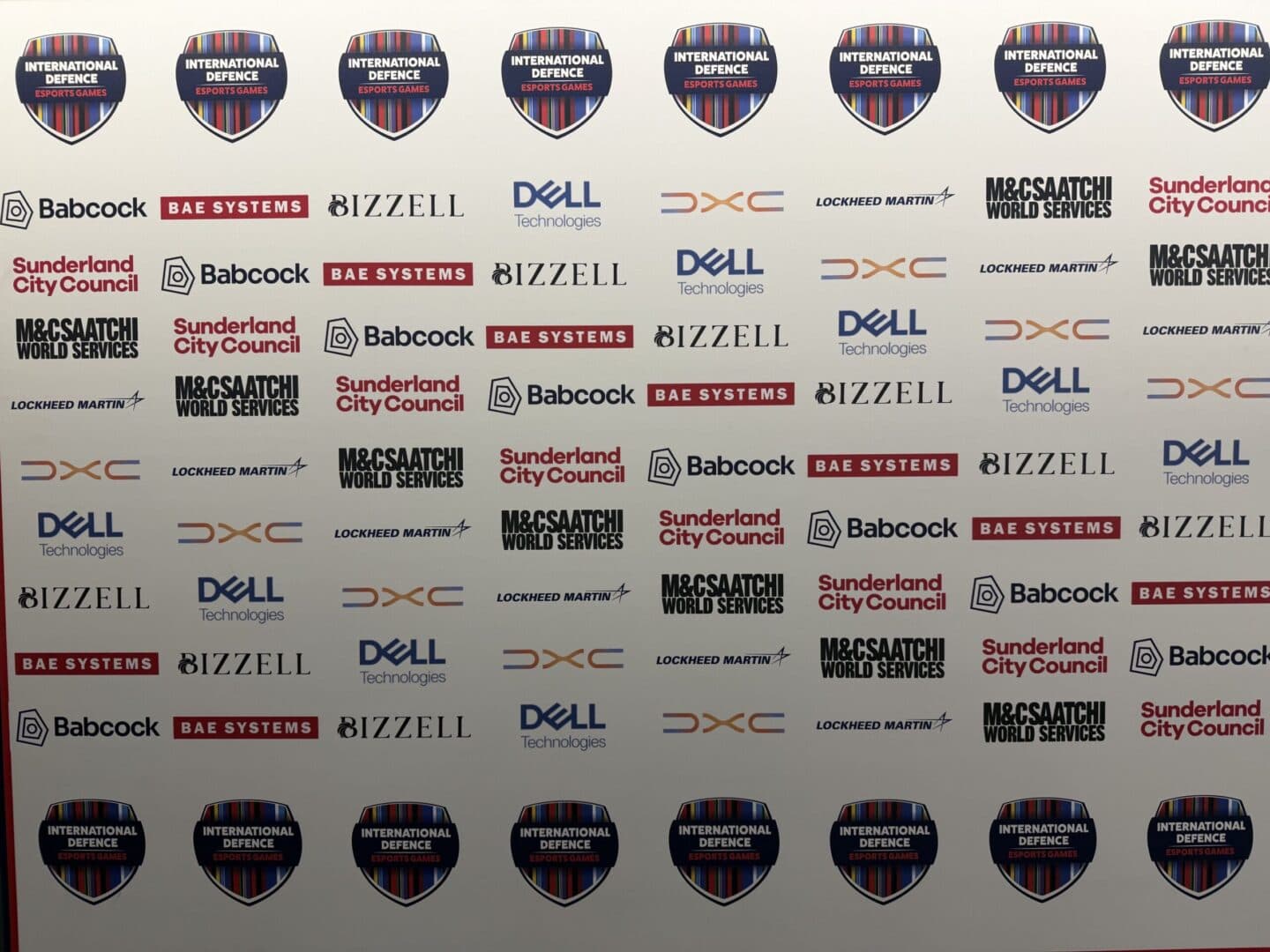
That is not to say everything was perfect. One aspect that stood out was sponsorship. Allianz’s arrival is significant, particularly given its history with major international sporting events, but the overall roster of non-endemic brands felt lighter than last year. Companies such as Amazon and Pepsi, visible in Riyadh, were notably absent in Paris. Whether that reflects higher costs, shorter planning cycles or different commercial priorities is impossible to say from the outside. It’s certainly a question worth putting to Esports Foundation CCO Mohammed Al Nimer in the near future.
For now, though, I leave Paris with a different question in mind, initially brought to me by my boss and friend Sam Cooke:
If this is what the Esports World Cup can deliver after only a couple of months of preparation and a major relocation, what could it look like with a full year to plan?
Make sure to follow The Esports Radar on social media and keep up with our coverage via esportsradar.gg!
Disclaimer: The Esports Radar travelled to Paris as a guest of the Esports Foundation with accommodation and travel covered, but this article is not sponsored, commissioned, or edited by any external organisation.
This analysis was first published in the Heat Map newsletter on 16 July 2026. For early access to our analysis and more exclusive content, subscribe to The Esports Radar’s newsletters via this link.