

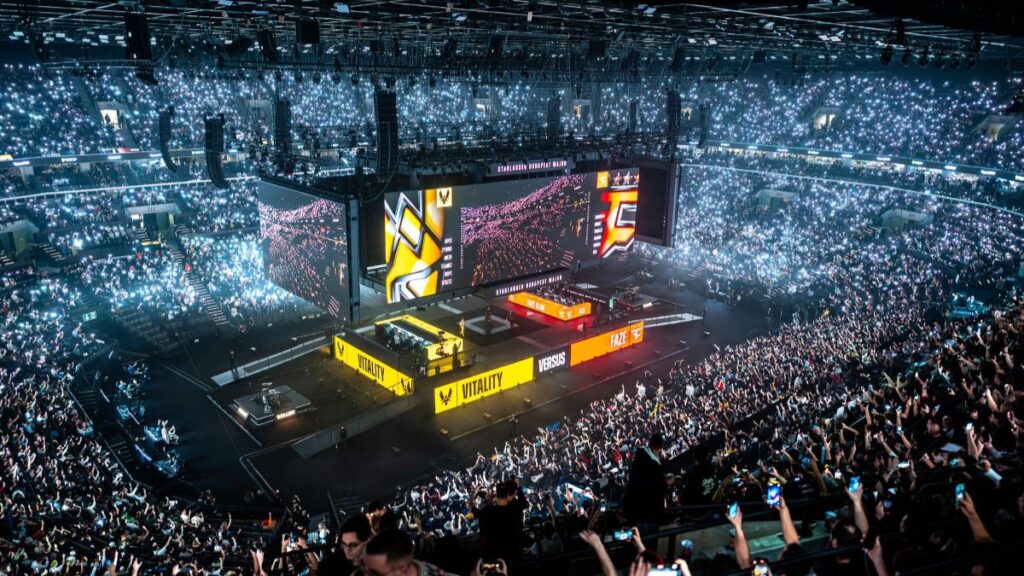


The next time an esports team checks into a hotel, there is a good chance that the property has already had to rethink how it operates.
From sufficient internet infrastructure and round-the-clock food services to rooms temporarily converted into fully kitted out practice facilities, often with room blocks and whole floors separated from other guests, professional esports tournaments bring a different set of requirements to the hospitality industry. Challenging undoubtedly, but, as some bolder hotels are discovering, the work required can be truly rewarding and commercially significant if they get it right.
The timing is not incidental. Esports is becoming a more structured and increasingly live event-led business, with multiple organisers and publishers putting ever more emphasis on bringing competitions to venues and taking them to different cities. The Esports World Cup (EWC) has established a large-scale, multi-title annual event moving over 2,000 players worldwide. Many publishers meanwhile are also changing how their circuits operate. The VALORANT Champions Tour (VCT) 2027, for instance, is adopting a new format with more than 50 tournaments planned across 15 cities in 2027, while Epic Games’ Rocket League is introducing a new club-focused competitive structure.
Valve’s Counter-Strike 2 (CS2) continues to have an exceptionally busy international calendar across different event operators, while League of Legends is taking more competitions and stages beyond their established studio environments. The FGC (fighting games community) is also seeing an expansion of their international footprint through circuits such as Evo, with events multiplying beyond traditional fixtures in the United States and Japan to cover Mexico, France, Brazil, Morocco, and more. For hotels, that creates a richer range of potential business: not only the thousands of people travelling to a global championship, but also teams attending regional tournaments, production crews, sponsors, fans, community events and smaller competitions that can bring guests into a property year round.
The next big event on the esports calendar has, at the time of writing, just kicked off; the PGL Major Singapore 2026 spans 24 November to 13 December. Ahead of the year’s second CS Major, The Esports Radar explored how the relationship between esports and hospitality is becoming an increasingly relevant part of the business surrounding major tournaments. The industry is not simply looking for enough rooms to accommodate players and staff. Hotels are being asked to become part of the operational infrastructure that allows competitive gaming events to happen and succeed, sometimes for several weeks at a time.
The experience of Kempinski Hotel Corvinus Budapest offers a particularly interesting example. When the StarLadder Budapest Major arrived in Hungary in November and December 2025, the five-star property became the host hotel for participating teams and other tournament stakeholders. For Director of Sales Edit Szalczer and Groups & Events Sales Manager Renate Manolescu, it was also something of an introduction to the esports business.

“We had absolutely no idea of the scale that this event would come to,” Szalczer told The Esports Radar. The hotel had not actively pursued the tournament. Instead, the opportunity came through Associated Luxury Hotels International (ALHI), whose Vice President of Esports Sales & Consulting Services, Neil Johnson, had identified the business opportunity earlier.
The initial uncertainty did not last long. As the negotiations progressed and the hotel began to understand the scale of the requirements, expectations changed. “We understood that this was going to be good. And then once we finalised it, we kind of got to understanding that it can even be better than we initially expected,” Szalczer recalled.
This turned out to be a rather significant understatement.
When asked about the financial return, Szalczer confirmed that the business generated by the Major was in the hundreds of thousands of euros. The impact was sufficiently substantial that the hotel’s KPIs for revenue in November and December of the following year were set at what she described as “unrealistically high levels”, based on the previous year’s performance.
“We’ve been struggling for this quite a bit this year,” she joked. But the message was clear: hosting esports had been well worth the investment.
“Room revenue targets for this year’s November and December are set unrealistically high because of what we did last year. It was large in the hundreds of thousands of euros.”
Edit Szalczer, Kempinski Hotel Corvinus Budapest.
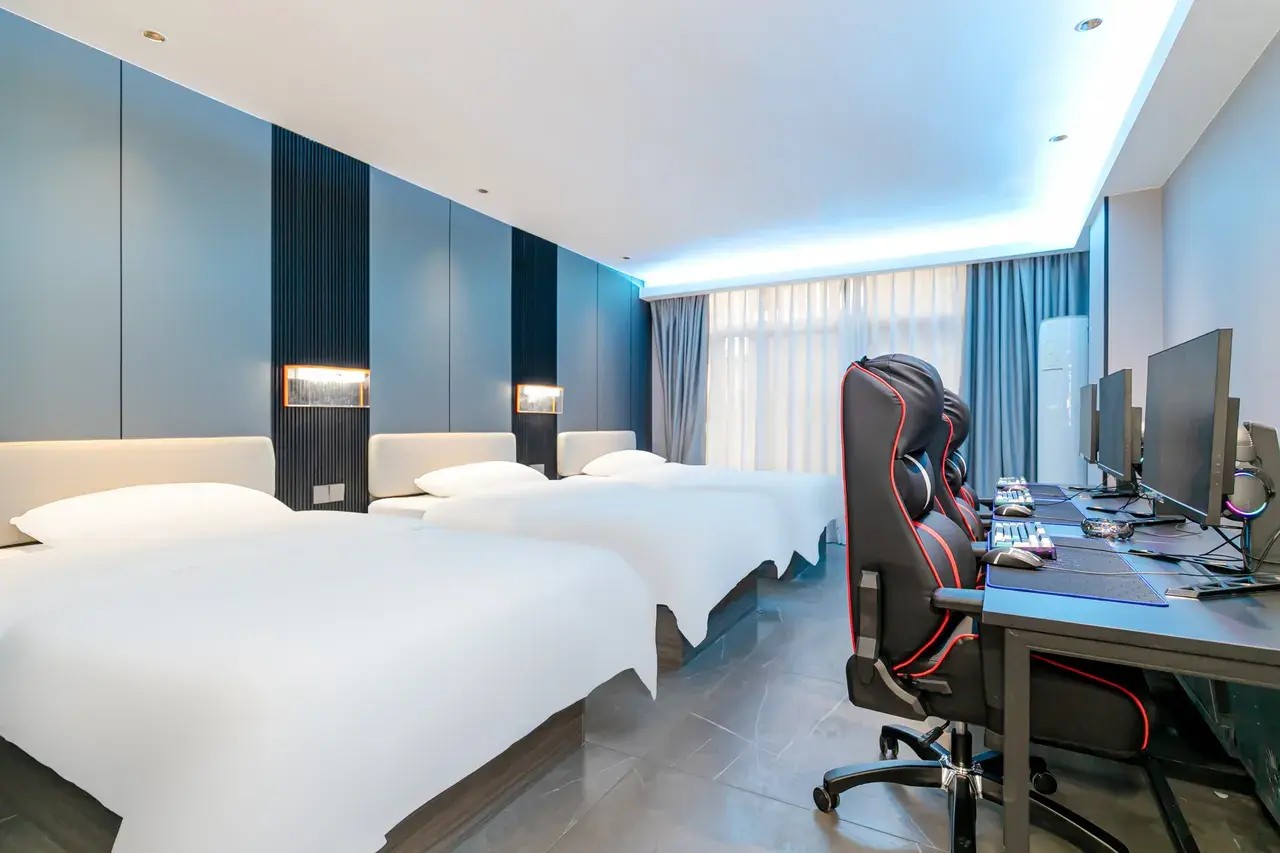
There is, however, another side to esports hospitality that is already well established in parts of Asia. In China, gaming and esports-themed hotels have become a consumer-facing business segment in their own right, with properties offering gaming PCs, large monitors, gaming chairs and multi-bed rooms designed for individuals and groups who want to spend much of their stay playing or playing together. Bloomberg reported in 2024 that hundreds of such hotels were operating in Shenzhen alone, illustrating a model that is quite different from the traditional hotel responding to the needs of a visiting professional team.
The distinction matters. In the case of a major tournament, a hotel might adapt its infrastructure to accommodate teams, organisers and production staff for a limited period. An esports hotel, by contrast, makes gaming part of the core product being sold to guests. The model is not necessarily transferable to every market: consumer habits, local gaming culture and the economics of hotel development differ considerably between regions. But it demonstrates that the relationship between gaming and accommodation can extend well beyond event logistics.
A different kind of hotel guest
The Budapest experience illustrates why esports is not simply another standard group booking for a hotel. The accommodation requirements may initially look familiar, but the way teams operate can make the difference between a straightforward event stay and a month-long logistical exercise.
One of the first challenges for Kempinski was the technical infrastructure. Competitive gaming, especially at the highest level, requires reliable connectivity, sufficient electrical capacity and dedicated spaces where teams can practise comfortably and without interruption. Szalczer recalled involving the hotel’s IT and engineering departments early on in the process, with repeated site visits and discussions involving external suppliers.
The practice facilities were particularly demanding. Guest rooms had to be converted into gaming spaces, with the hotel accommodating the necessary equipment, furniture and technical installations. These rooms also needed to be accessible around the clock, as players do not tend to follow 9-5 schedules.
The preparations extended beyond the rooms themselves. Furniture and equipment, many of those provided by event partners such as gaming monitor brand ZOWIE and gaming chair manufacturer Blacklyte in the case of Budapest Major, had to be shipped to the property, installed on guest floors and coordinated with the hotel’s regular operations. This created an additional challenge: the work had to be completed without unnecessarily disturbing other guests.
It was a level of internal coordination that the hotel would not normally require for a standard group booking: “We never hold that many meetings with all the operational departments together as we did prior to this,” Szalczer explained.
There were still surprises: Szalczer said media requirements were more extensive than initially anticipated, another familiar experience for anyone who has ever heard a production team promise that “it will only need a small amount of space.”
Food services were another important consideration. Rather than operating around fixed meal times, Kempinski eventually agreed on full-board arrangements, with dedicated lunch and dinner buffets that could accommodate unpredictable competition schedules.
Games can run late, practice sessions can change, and teams may need to eat at times that would be unusual for a conventional corporate group. The hotel therefore had to extend its food-service flexibility considerably.
For Szalczer, it was all part of understanding that esports teams operate differently from traditional sports teams, even when the underlying needs are similar.
Having previously accommodated football clubs and national teams, she noticed that esports players tended to work more independently. Football teams generally move together as one according to a coordinated schedule, whereas individual esports players may practise, rest or prepare at different times, with plans changing from one day to the next.
Manolescu also pointed out something that initially surprised her: different esports teams staying in the same hotel. In traditional football, it is less common for more than one squad to be accommodated together in this way.
There are also less obvious but important considerations, including the presence of underage players and the regulations governing minors checking into hotels. In titles like Rocket League or Fortnite, players can compete professionally from age 13 and top-level rosters frequently average under 21, while teenage stars, such as 17-year-old Rocket League pro Zachary “Scrzbbles” Stone or Counter-Strike 2 phenoms like Danil “donk” Kryshkovets, who won his first elite trophies at 16, are a regular fixture on the international circuit. What might appear to be a simple accommodation arrangement can therefore involve additional legal and operational preparation.
The business behind the booking
While Kempinski’s experience shows one example of what happens at a property level, Johnson has been working at ALHI to make these opportunities more accessible to the wider hospitality industry.
His involvement in esports dates back to 2016, when he worked at MGM Resorts in Las Vegas. The company hosted several major gaming events, including fighting games tournaments series Evo (Evolution Championship Series) at Mandalay Bay, the HyperX Esports Arena, the Capcom Cup and League of Legends All-Stars. Since then, Johnson has moved through Events DC and other hospitality-related roles before joining ALHI.

His current position puts him in an interesting place between two industries that are still learning how to understand one another. ALHI represents a global collection of premium hotels, resorts and hospitality operators, including major names such as Kempinski and Norwegian Cruises. Its services also extend into destination management, ground transportation, logistics and connecting clients with local suppliers.
Johnson believes that esports is an attractive new market segment for hotels partly because traditional hospitality markets are already mature and competitive. There is also a considerable difference between the way esports organisers and traditional corporate clients plan their accommodation. Professional sports leagues and established corporate organisations often book venues and room blocks two to five years in advance, whereas esports tournament organisers still work on far tighter timelines. For a Counter-Strike 2 event, for instance, plans typically come together around a year out. In a Major, for instance, once Valve selects the tournament operator, which then finalises the host city and venue. Even tighter turnarounds can occur under extraordinary circumstances, such as when the Esports World Cup had to relocate just two months ahead of the event.
“Gaming and esports is a new market. It’s a corporate market, it’s short-term business,” he explained, describing how he approaches the opportunity when speaking with hotel partners. Johnson estimates that booking windows of six to nine months are common in esports, with some programmes only being finalised much closer to the event.
For hotels, this creates uncertainty around inventory, staffing and pricing. For organisers, it can mean missing out on better accommodation options or competing with other large events already booked into the same city. Johnson’s suggestion then is that accommodation should be considered alongside venue selection, rather than after it.
“When you’re looking to secure a venue and its capabilities and its Wi-Fi and all this other stuff, simultaneously you should be looking at hotels,” he said.
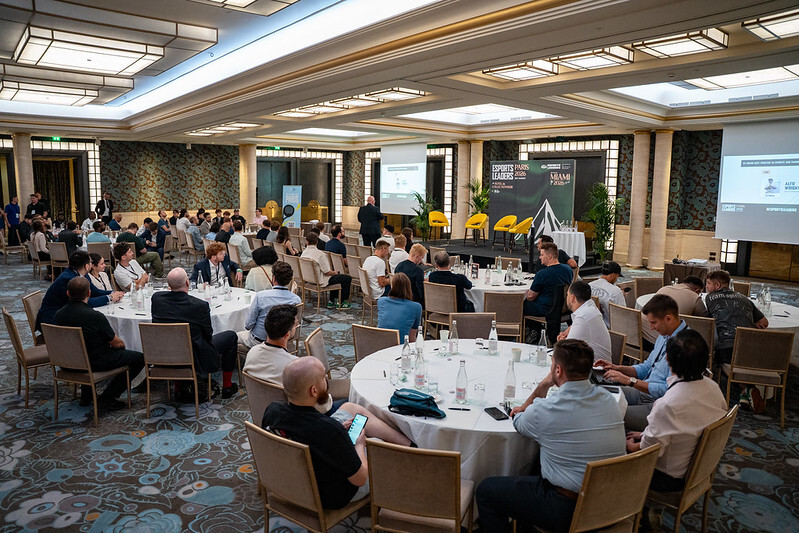
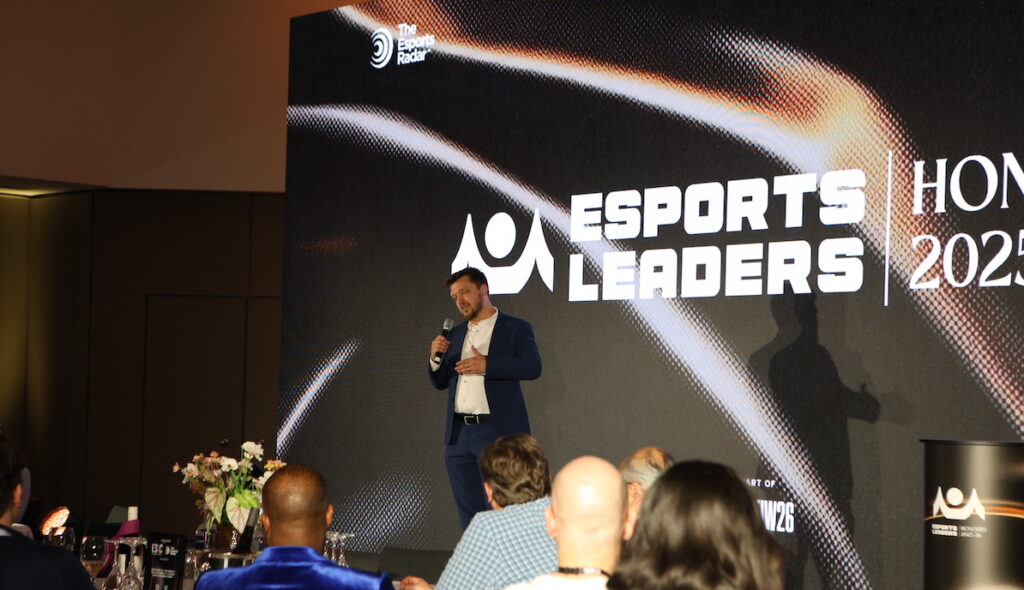
ALHI’s involvement also extends beyond providing accommodation for teams and tournament organisers. The company has been part of the hospitality infrastructure behind industry gatherings. The inaugural Global Esports Industry Week (GEIW) in Austin, held by The Esports Radar in partnership with ESIC, took place at Downright Austin, an ALHI member property, while Esports Leaders London 2025 was hosted at Nobu Hotel London Portman Square, a part of ALHI’s collection at the time. These events serve a very different purpose from a tournament; they gather stakeholders in and around the sector from game publishers, to event and tournament organisers, brands, team owners or decision makers, service providers and more to discuss the business of esports, share insights and build commercial relationships. For hotels, that represents another route into the sector, through the meetings and networking that support the industry behind the games.
The Budapest Major provided a practical example of what happens when that relationship works. ALHI secured the host-hotel business through Kempinski, with Johnson revealing that the arrangement involved approximately 2,200 room nights. From the initial enquiry to signed contracts, the process took around five to six months.
For ALHI, it became a reference case that could be presented to other hotels and tournament organisers to demonstrate what esports can deliver. Johnson recalled that the Budapest business even generated interest from other Kempinski properties. “How do we get some of that business?” was the question he began hearing.
“Our biggest win to date has probably been serving as the host hotel for the StarLadder Budapest Major. From the initial inquiry to signing the contract took about five to six months, and it generated roughly 2,200 room nights. From a financial standpoint, as short-term business for the hotel alone, not even counting what it brought to the wider city, we’re looking at around $465,000, so it’s a really strong piece of business.”
Neil Johnson, ALHI
However, Johnson also sees a need to educate both sides of the relationship. Hotels need to understand who the esports stakeholders are, what their requirements look like and where the commercial opportunities lie. Meanwhile, tournament organisers need to understand that a hotel can contribute considerably more than a discounted room rate.
He believes esports organisers often underestimate their total economic footprint. A tournament might secure accommodation for players and production staff, but thousands of fans, sponsors, media representatives and other visitors may arrange their own stays.
Johnson used DreamHack Dallas as an example of the gap between the number of people attending an event and the accommodation that is formally contracted. Even when an event attracts tens of thousands of visitors, the official room block can represent only a fraction of the total demand. That leaves considerable business outside the organiser’s immediate reach.
His suggestion is for tournament organisers to think beyond player and staff accommodation, considering fan-oriented hotel partnerships and other arrangements that can help capture more of the economic activity generated by an event. “You’re not capturing your total economic footprint,” he argued. “There’s a lot more here.”
The longer booking windows he advocates would also help destinations prepare, attract sponsors and coordinate support from tourism boards and local authorities. In other words, the hotel opportunity is connected to a much larger question about how esports events can generate value for host cities.
From individual events to an esports-ready hotel network
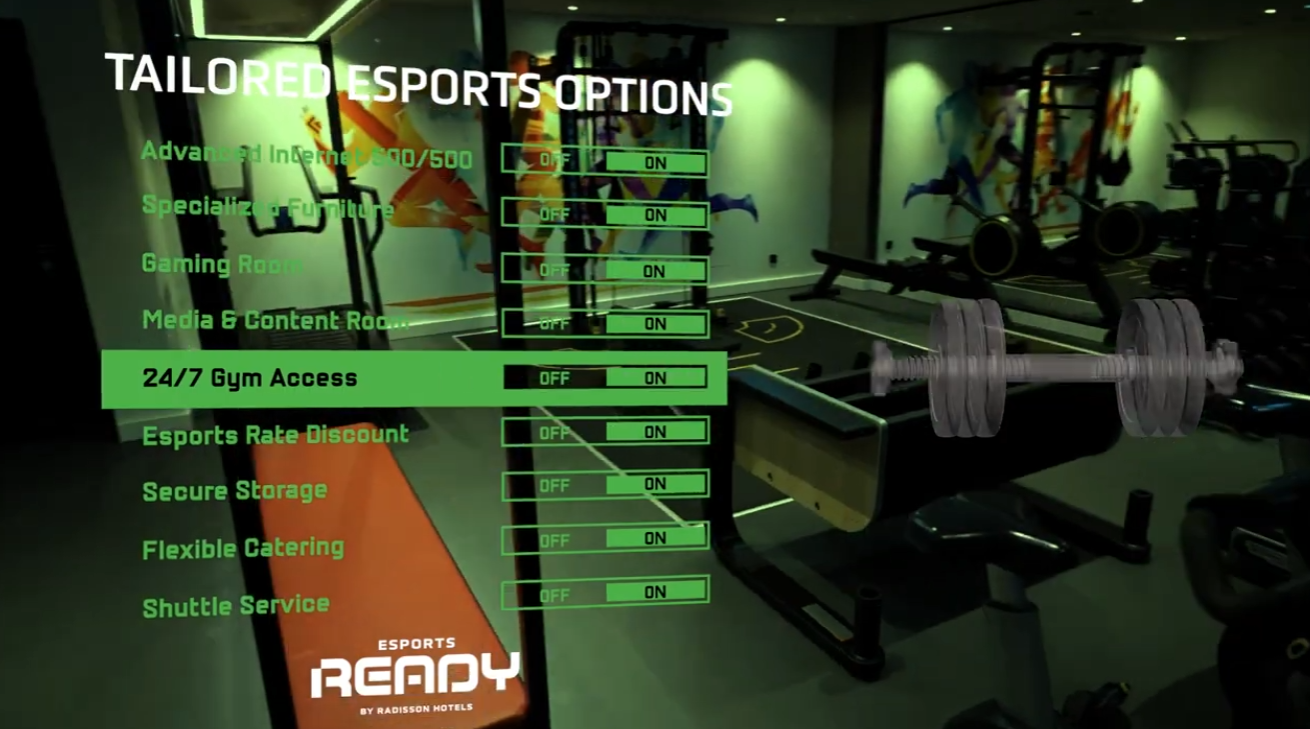
The opportunity is not limited to independent hotel collections or properties that happen to be selected as host hotels. International groups are increasingly developing specific programmes to accommodate esports-related travel. One of the clearest examples is Esports Ready by Radisson Hotels, developed in collaboration with gaming and esports specialist agency Spacefwd and launched in February 2025 with more than 100 participating properties identified across the group’s portfolio.
Maria del Mar Aguado, Senior Global Sales Strategy Manager at Radisson Hotels, explained that the programme was developed in response to the specific requirements of teams, organisers and other professionals travelling around competitions.

“Esports is creating a distinctive new category of travel demand for hospitality,” Aguado told The Esports Radar, “Unlike a single seasonal segment, esports activity takes place throughout the year, ranging from smaller competitions to major international events lasting several weeks.”
Aguado also highlighted that logistics also involve a broad range of travellers, including professional players, organisers, production crews, broadcasters, content creators and sponsors. For Radisson, this means that the hotel experience needs to extend beyond accommodation.
The Esports Ready programme incorporates reliable connectivity, rooms grouped together for teams, flexible catering, early check-in and late check-out, secure equipment storage and dedicated spaces for gaming, media and content production. Advanced network infrastructure is also part of the offering. The programme recognises that professional players have requirements comparable to those of traditional athletes. Preparation, nutrition, fitness, privacy, rest and recovery all influence their ability to perform.
Aguado said the company has been developing its understanding of the industry through direct engagement with organisers and teams, rather than simply applying traditional hospitality services to a new type of customer.
Radisson’s relationship with the Esports Foundation is particularly relevant here. In August 2024, the group travelled to Saudi Arabia to meet representatives of the organisation, understand its ambitions and introduce the Esports Ready programme. The meetings also allowed its local Saudi Arabian team to showcase the group’s properties in Riyadh and establish the foundations for future cooperation.
Hilton meanwhile serves as a main partner for the Esports Foundation’s Esports World Cup, which began ahead of EWC 2025 in Riyadh and continued for EWC 2026 in Paris. However, an event of this scale, welcoming more than 2,000 players alongside thousands of staff, broadcast crew, and guests during peak summer season, typically requires far more room inventory and options than a single hotel group can supply. That creates room for additional partners, such as Radisson and others, to step in.
For Paris, the Accor Group‘s sports and esports team reported securing 70,000 room nights in 15 days across 20 properties, claiming an 80% hotel-side market share, after being selected by Esports Foundation’s operational arm ESL FACEIT Group (EFG) as its hotel partner. Amira Kamli, Global Key Account Manager Sport & Esport at Accor, shared details of the delivery of this project in a LinkedIn post.
“Securing 70,000 room nights in Paris in just 15 days for a major global event relocated at the very last minute… Mission impossible? Not for the Accor Sports teams.”
Amira Kamli, Accor
Radisson’s Aguado noted that performance was strong; “The results in 2025 were excellent, and we cannot wait to continue growing them in 2027,” she said. She did not disclose specific financial figures, but emphasised that the performance encouraged Radisson to continue developing the relationship. The group’s experience also extends beyond the Esports World Cup, having previously supported large-scale competitions such as PGL Major Antwerp 2022 and ESL One Birmingham 2024.
The move of the 2026 Esports World Cup from Riyadh to Paris just two months ahead of the event provided another illustration of how important having a hospitality infrastructure and framework around a major esports event can become. Aguado said Radisson had a strong pipeline of planned openings in Paris and would be delighted to accommodate the competition if it returned to France in the future.
For a hotel group with an international footprint, the ability to follow tournament organisers and their stakeholders across destinations is a significant advantage. Teams and production companies do not necessarily travel to the same cities every year, but they repeatedly need accommodation that understands how they operate.
Radisson is not alone in experimenting with ways to bring gaming into the hotel experience. In Saudi Arabia, Holiday Inn, part of IHG Hotels & Resorts, partnered with EStars in 2026 to introduce ‘Elite Gaming Pods’ across four properties. The installations included gaming PCs, consoles and dedicated spaces for guests to play, with tournaments and community activities also planned. It is a guest consumer-facing initiative rather than a room allocation agreement for a tournament team, showing how a hotel group can use gaming to create an additional reason for guests to spend time (and money) in its properties.
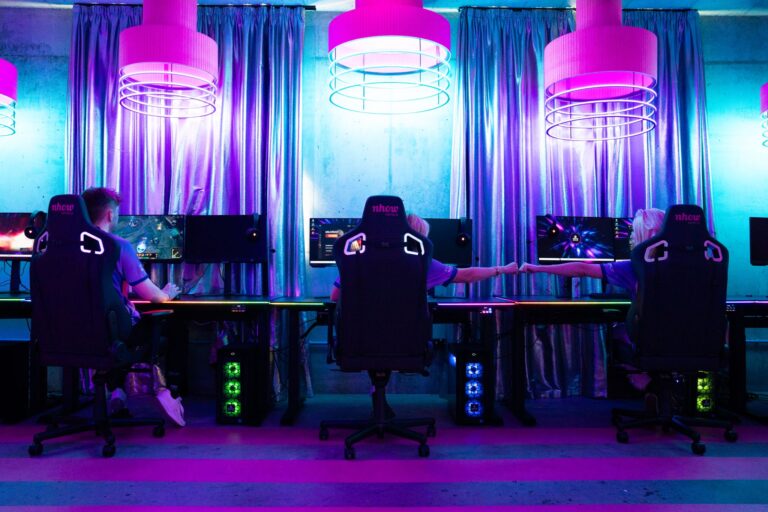
Minor Hotels has taken a different route through its nhow brand. Its relationship with SK Gaming began with accommodation for players travelling to bootcamps and tournaments, before developing into content activations and plans for gaming-themed rooms and bootcamp opportunities. The concept brings together gaming rooms, professional gaming studios and portable gaming equipment, with SK Gaming providing expertise and certification.
Other partnerships illustrate how hotels can become part of the competitive experience itself. Radisson Hotel Group’s collaboration with NOVO Esports during the 2025 EWC included accommodation for the organisation’s staff, gaming-ready rooms and connectivity, as well as jersey visibility and content production
A different approach can be seen in Red Bull GIBAWAY, produced with Nordic esports production agency Black Molly Entertainment. Rather than focusing on professional teams travelling to compete in a conventional tournament, GIBAWAY is designed as a boutique gaming getaway, combining LAN gaming with accommodation, food, entertainment and activities outside the game itself. It is geared towards those who may have aged out of the more traditional LAN experience, or indeed those wanting something more premium and comfortable. It’s been a hit. Its 2026 edition in Åre brought together 450 participants at Holiday Club Åre, with 350 gaming setups and a programme that also included outdoor activities and social experiences. The subsequent edition moved to Billingehus in Skövde, continuing the concept of making a relaxing hotel stay a part of the gaming event itself.
There are examples of esports organisations looking at hospitality beyond traditional partnerships too. NIP Group entered a joint venture with Chinese hotel operator Homeinns in 2024 to develop and operate esports-themed hotels. The agreement combines NIP Group’s gaming expertise with Homeinns’ property network and hospitality operations.
The luxury question
Despite the encouraging results, there is still a question about how much of the hospitality industry esports can realistically attract.
Johnson acknowledges that much of the accommodation business generated by gaming events is driven by value-oriented hotels. For ALHI, which specialises in luxury and independent properties, the challenge is identifying which events have the right commercial profile.
Not every tournament needs five-star accommodation, and not every organiser has the budget for it. However, the requirements change considerably when an event involves high-profile sponsors, executives, government representatives, VIP guests and international stakeholders.
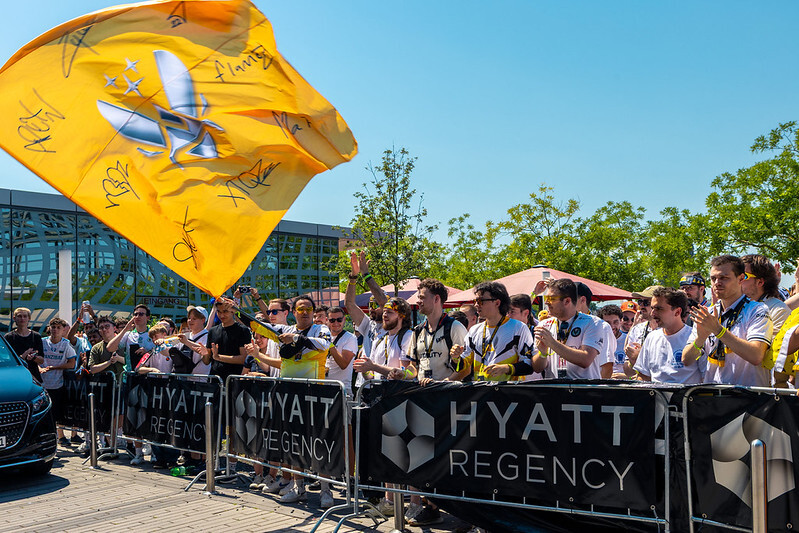
A prime example of this dynamic was seen at IEM Cologne 2026. While the tournament’s main player hotel, the Hyatt Regency, is classified as a high-end, four-star property rather than a full five-star luxury resort, it offered the premium standard required for professional teams. Across the river from the iconic Cologne Cathedral the property managed continuous fan activity, complete with perimeter barriers set up for crowd control as supporters gathered outside throughout the event for autographs, selfies and photos. Additionally, the hotel served as a hub for major activations, such as hosting Global Esports Industry Week 2026 and a Team Vitality fan event, illustrating how upper-tier hospitality properties can successfully balance high-security player needs with fan and industry engagement.
Johnson believes the industry sometimes struggles with the distinction between treating esports players as professional athletes and actually providing them with the conditions expected by professional athletes.
He recalled conversations in which organisers wanted the highest possible level of service while simultaneously negotiating for the lowest available accommodation rates.
“Are these professional athletes who need to be taken care of or are they not?” he asked.
It is a question that goes beyond luxury. Hotels can provide additional security for valuable equipment, dedicated rooms for strategy meetings, hospitality suites and other services that may not be immediately visible in a conventional accommodation quote. For a tournament organiser, the difference between finding the cheapest hotel and finding a partner who understands the event can be especially significant.
His argument is that hospitality providers should be considered partners in event delivery, rather than simply suppliers of accommodation, and that relationship is still developing. Johnson believes that the growing involvement of international hotel groups, alongside specialised programmes and partnerships, is helping esports become more familiar to the hospitality sector.
A market still finding its place
There is something particularly revealing about the Budapest experience. Kempinski did not enter the project as an established esports hospitality specialist. Its team learned about the industry through the process, brought different departments together, dealt with unexpected requirements and ultimately generated hundreds of thousands of euros in business.
Now, Szalczer is keen to explore further opportunities, although she acknowledges that identifying the right events and understanding the market will take time. Manolescu, meanwhile, sees an opportunity for Budapest’s destination marketing efforts to become more closely involved in attracting esports events. Having hosted a Major of this scale, the city now has an example of what its hotels and infrastructure can deliver.
That is another important element of the business: A successful esports event can benefit more than the hotel directly contracted by its organiser. Kempinski was unable to accommodate all that an esports event brings along with the teams themselves, with other nearby properties also benefiting from additional demand as supporters, media and associated travellers extended their stays.
With the PGL Major Singapore 2026 bringing 32 teams to Southeast Asia for nearly three weeks, the hospitality requirements of competitive gaming will once again be put to the test. For hotels in Singapore, the event represents another opportunity to serve an international esports audience, while the wider industry will be watching how accommodation, logistics and event operations continue to evolve, especially given the perspective of hosting more events held in the country driven by the deal between the Singapore Tourism Board (STB) with tournament and event operator BLAST.
Taken together, these examples show that there is no single esports hospitality model. A hotel in China, where market research firm Zhiyan Consulting estimated there were already more than 23,000 dedicated esports hotels in 2023, might build its business around consumers booking rooms specifically to play games, while a European property might work with an esports organisation to host bootcamps, install a gaming studio or stage community tournaments. In Saudi Arabia, a global hotel brand can use gaming facilities to connect with a wider national gaming strategy and attract guests beyond the event itself. Elsewhere, a property may simply benefit from providing accommodation, meeting space and operational support to a major tournament.
For hotel operators, the first question is therefore not necessarily whether to build an esports hotel. It is which part of the gaming audience their property can realistically serve, and what that audience wants or needs. A city-centre business hotel, a resort, a luxury property and a hotel in a market with a large gaming community will not have the same opportunities. The commercial potential lies in recognising those differences, rather than assuming that every property needs gaming PCs in its rooms or that every esports event requires a large-scale venue.
Perhaps the most interesting takeaway from these conversations is that hotels are not necessarily waiting for esports to become a bigger business before getting involved. Some are already investing in understanding it, developing specialised services and establishing relationships with the right stakeholders.
As the Budapest example demonstrates, the financial results can be convincing enough to make them want more. For Kempinski, at least, it seems the first experience was well worth the trouble.