

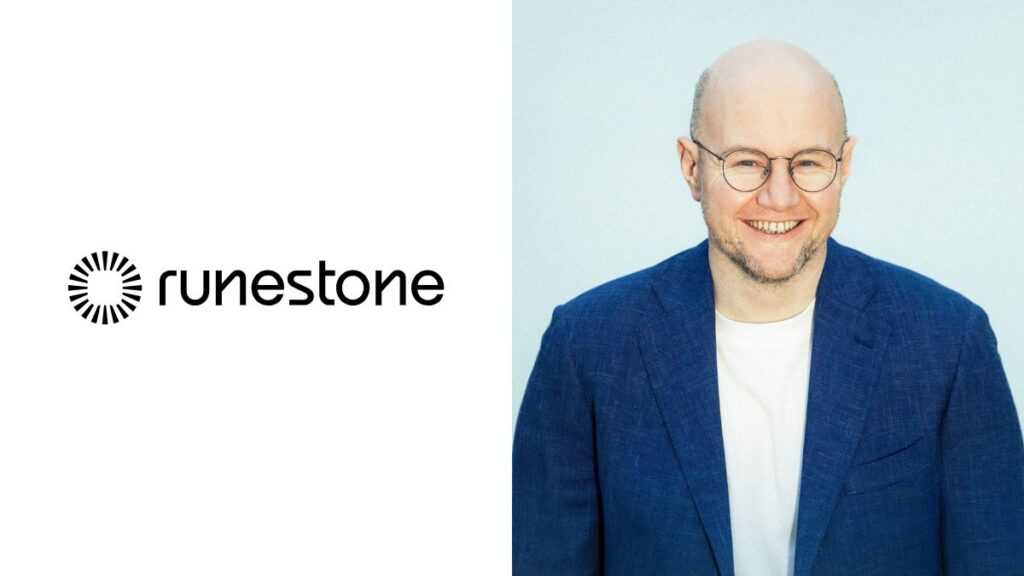


The esports industry has long grappled with a fundamental question: how do you monetise a community that has grown accustomed to consuming content for free? For Shane Clarke, a decade-long veteran of the space who helped build the Dota 2 ecosystem during his seven years at ESL, the answer lies in data – not as a dry, technical commodity, but as a tool for storytelling, engagement, and entertainment.
Clarke is the Managing Director of Runestone, a specialist esports technology company operating under the Realms Group umbrella. With a team of around 40 people, Runestone is dedicated to what Clarke describes as the most underdeveloped corner of the esports ecosystem: the data space.
Less than one year after its founding, Runestone has quietly become a true force to be reckoned with in competitive gaming. Led by Clarke, the company has transformed from a startup into a data infrastructure powerhouse, and is moving faster than almost anyone expected.
In recent months alone, Runestone has announced a data partnership with StarLadder for the Counter-Strike 2 (CS2) Budapest Major, inked a PGL data partnership for the CS2 circuit through 2029, and extended that same PGL agreement to Dota 2 – another four‑year commitment. It has also partnered with NODWIN Gaming to secure data integrity across the Global South, teamed up with SURGE to scale the EMEA Mobile Legends: Bang Bang (MLBB) circuit for a full year, and became the Title Partner of Global Esports Industry Week 2026 in Cologne.
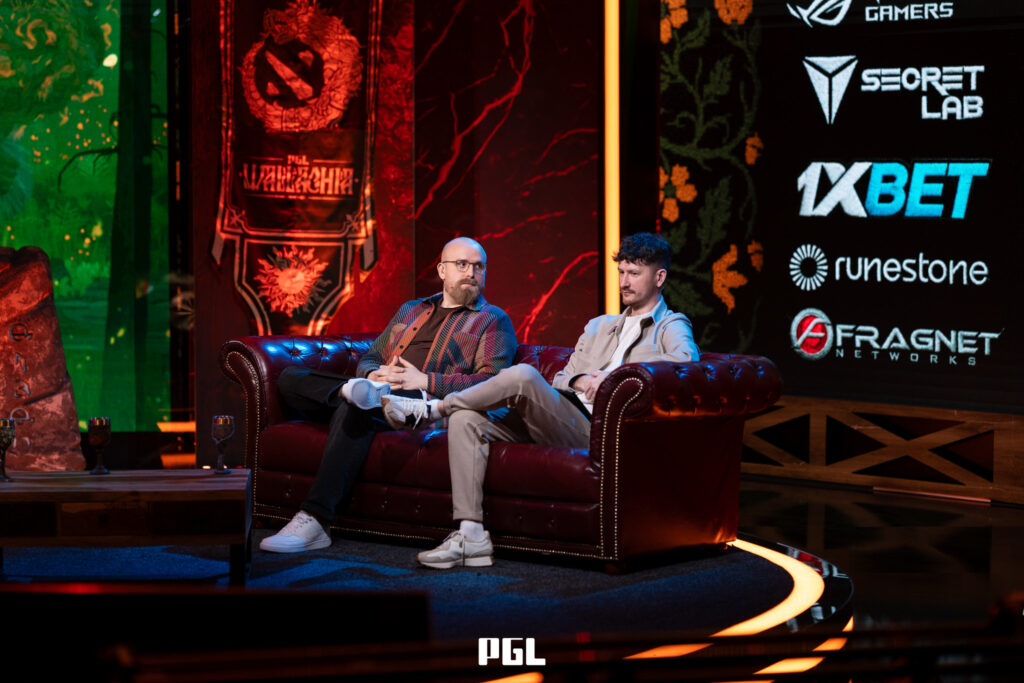
But Runestone isn’t just a commercial success story. Its technology is already helping in delivering hard results. Working with the Esports Integrity Commission (ESIC), Runestone’s real‑time data platform helped identify a pattern of unusual in‑game incidents – repeated deaths by Molotovs and incendiary grenades that led to a four‑year ban for CS2 professional Dmytro “nifee” Tediashvili for match fixing. It was a clear demonstration of what the company calls its second pillar: protecting fair play.
So what does Runestone do, exactly? They take live gaming and tournament data and use it in three main ways: first, they build next-generation features and predictive models to make watching esports more exciting for fans; second, they buy exclusive rights to gaming data and help tournament organisers make money from it; and third, they monitor the gameplay and community trends to catch cheaters and keep the competitions fair. Essentially, they turn raw gaming data into better entertainment, extra revenue, and fairer matches.
To understand the vision behind this rapid rise – and where the industry goes next – The Esports Radar sat down with Clarke for an exclusive interview.
“It’s really exciting to work on this side of things. You can understand the different side of the ecosystem that I hadn’t experienced before,” said Clarke.
His timing proved serendipitous. When Clarke joined the ecosystem in a product role, everything exploded – the DPC (Dota Pro Circuit) died, the ecosystem transformed entirely, and chaos reigned for a year. “Once it was established and it kind of worked, it was like, ‘Okay, cool. Now what do I do?'”
Looking at the ecosystem holistically, Clarke spotted numerous opportunities, but one stood above the rest. “The data space is probably the one that is, in my opinion, the most underdeveloped.” He points to the historical dominance of a small number of companies in the space and argues that data’s potential as a tool – whether for B2C engagement, entertainment, or monetisation – has been largely lackluster.
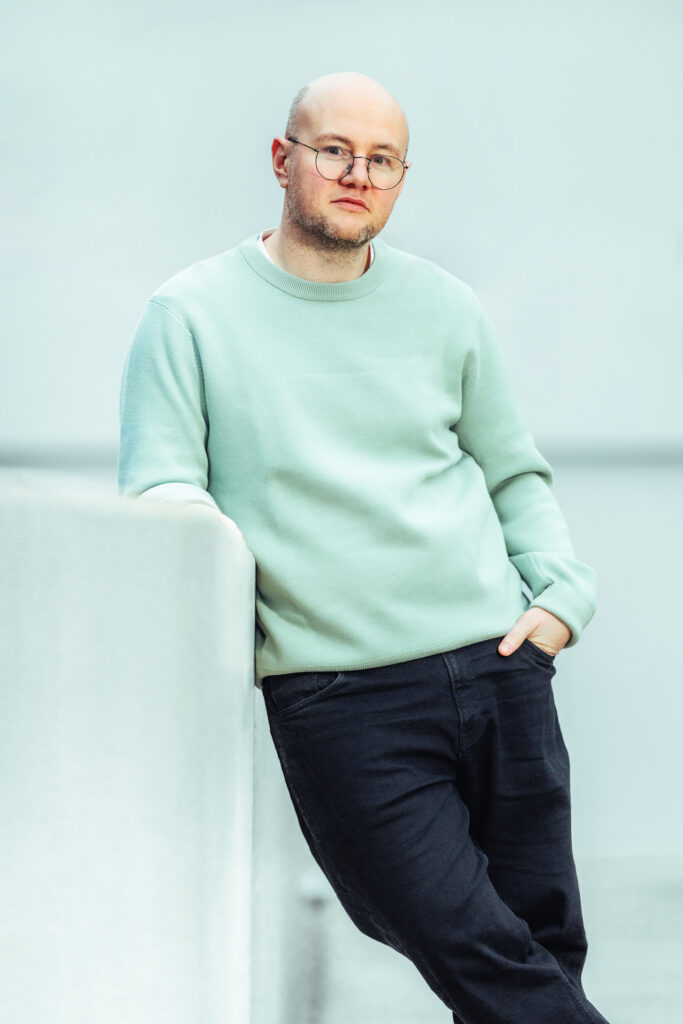
When pressed on the core vision behind Runestone, Clarke articulates a dual focus. “Number one, to create availability of data for all the ecosystems out there.” He points to community websites like HLTV as examples of what becomes possible when data is accessible and accurate; richer storytelling, new monetisation avenues, and deeper engagement.
The second pillar is more personal. “I’m a simple dude. I’ve played too many video games in my life,” Clarke joked before stating Runestone’s straightforward but transformative objective: “When you’re watching a professional broadcast, especially with how technology is developing these days, you need more. Improve the broadcast, improve the entertainment experience through the use of data, to add more layers so you can feel more engaged deeper and quicker.”
He observes a fundamental shift in content consumption habits, particularly among younger generations. “No one has time to sit down and watch an entire game of X, Y, Z these days. The way everyone’s consuming content is changing – it’s quicker, it’s faster, there’s more.”
Does the esports industry share this consciousness yet? Clarke is characteristically blunt. “No, I don’t think people see it this way yet.”
He sees the esports industry as going through a necessary growing phase. Right now, companies are focusing heavily on the basics: fixing budgets and building a more solid financial foundation. While this intense focus on the present makes it tough to plan years down the road (which is what inspired him to take on a new challenge), it is a vital step toward making the whole industry more stable and successful in the long run.
The shifting landscape of Counter-Strike provides a case in point. “With the VRS (Valve Regional Standings) system, there is a massive increase in tier-two operators, and it’s becoming significantly more complicated to monetise. It’s a tricky thing to solve, and it will balance itself out, I believe. But we’re not there yet.”
Building Trust
Runestone operates as part of the Realms Group, a holding company that oversees six separate, independently operating businesses including esports odds provider Oddin.gg. “Every company in the group has a specific focus and objective,” Clarke explains.
The structure allows Runestone to focus exclusively on enabling publishers and tournament operators with technology that improves their products and the wider ecosystem. With around 40 employees, the company has grown faster than its founder anticipated.
Despite only launching one year ago, Runestone has rapidly secured partnerships with major tournament organisers. He acknowledges that trust remains the crucial currency. “Giving Runestone access to sensitive data takes a level of trust and space.” The company’s work with ESIC (the Esports Integrity Commission) – providing detailed data that Clarke claims “only we are capable of providing” – serves as both a service to the community and a demonstration of their commitment to positive change, like it was at the previously mentioned match-fixing case involving Molotov deaths in CS2.
“The next step is for potential clients we’ve never had direct connections with to trust Runestone. Extending that outward is going to be the most important step.”
Looking Ahead: Mobile Gaming and the Near Future
What comes next for Runestone? Clarke’s immediate focus is on strengthening their position in MLBB (Mobile Legends: Bang Bang), a recent addition to their portfolio. “I believe it’s up and coming as the biggest game probably out there.”
Clarke sees enormous potential in mobile gaming as a concept. “As phones become more accessible and technology becomes more open, mobile gaming will only grow. I’m not very good at the game, to be honest,” he admits, “but there’s a lot of future there.”
Runestone then announced major moves with SURGE and NODWIN to develop MLBB in Europe and Americas respectively. The agreement for the MLBB Championship Tour (MCT) AMER 2026, covering North America, Latin America, and Brazil, is a cornerstone of that strategy.
Beyond MLBB, Clarke hints at new technology releases expected by the end of June or July.
Throughout the conversation, Clarke returns to a core philosophy: esports requires flexibility and a willingness to test new approaches. “It doesn’t always have to be 100 per cent perfect right away. We’re up for testing things. Esports is an ever-growing, ever-changing beast. If we’re too pinned down by one specific way of thinking, it ends up going up in smoke.”
As for his message to the esports industry? Clarke pauses, then demurs. “That’s strong, but no.” Perhaps the message is implicit in Runestone’s existence: that the industry’s future lies not in clinging to familiar revenue streams, but in unlocking the untapped potential of its own data.
“What we’re basically trying to do is make esports more accessible and more open for everybody,” he summarises. “Increasing visibility on the broadcast, enabling storylines through statistics, integrity things, extra technology – that’s the goal.”
It is, as Clarke acknowledges, an abstract objective. But after a decade inside the industry’s engine room, he seems uniquely placed to know precisely which levers need pulling.
Sponsored content: This article was produced in partnership with Runestone.

Follow The Esports Radar on social media: