



When French President Emmanuel Macron declared that “France is on top of esports,” it may have sounded like classic political posturing for those not familiar with the industry. But looking at the current landscape, it’s near impossible to argue with him.
Over the past few years, France has put itself right at the centre of the global esports world. Paris isn’t just a tourist spot anymore; besides being set for hosting the 2026 Esports World Cup, the first edition of the seven-week, $75 million tournament outside of Saudi Arabia, it is a regular home for some of the biggest tournaments in gaming. The city just hosted major events for Rainbow Six, VALORANT and Rocket League, with a Counter-Strike Major back in 2023, and it’s already locking down a Call of Duty League Major for later this month [this newsletter was originally published on June 04, 2026].
But hosting tournaments is only half the story. The real power move is happening with the teams themselves. This isn’t luck, France has built a system that mixes winning teams with massive, creator-driven fanbases:
- Team Vitality: Right now, they are sitting at the very top of the Counter-Strike 2 world.
- Karmine Corp: Easily one of the loudest, most passionate fanbases on the planet, fresh off winning the Rocket League Championship Series trophy on home soil. They also just grabbed a spot in the Esports World Cup Partner Program after almost getting left out.
- Gentle Mates: Showing how to blend big content creators with serious competition to bring in fans and revenue.
- Solary and Joblife reinforce the depth of the French ecosystem through strong community engagement and local-language content.
France’s success is not built on a single champion, but on a generation of organisations that have managed to cultivate audiences, identities and competitive relevance simultaneously.
Flashback to 2023
To see how France got here, we have to look back a bit. In 2023, right before I left Esports Insider to join FURIA, I wrote a piece comparing two huge esports countries: Brazil and France.
At the time, the difference was massive: in Brazil, the Sports Minister at the time, Ana Moser, caused controversy by saying esports wasn’t a real sport, but just “entertainment.” Put the “is it a sport?” debate aside for a moment; what those comments really showed at the time was that the government didn’t understand quite how big, or serious, the industry actually is.
Meanwhile, France was doing the exact opposite.
Instead of arguing about definitions, they already had some of the best player-contract laws in the world. That same week, Paris announced even more plans to build up their esports scene, getting the government, game publishers, and teams to work together.
Three years later, we can see the results. Government support matters enormously. Politicians don’t create fans, the community does that, but what good laws and official backing can do is make a safe environment for teams and sponsors to spend money, and for fandom to thrive. France treated esports like real infrastructure, culture, and business, not a temporary hobby. That mature approach is now turning into real influence.
In a recent exclusive interview with The Esports Radar, Esports Foundation CEO Ralf Reichert explained that the French government’s push during host-city talks was the main reason they picked Paris for the 2026 Esports World Cup over other cities.Esports Foundation CEO Ralf Reichert and French President Emmanuel Macron. Image credit: Esports Foundation.
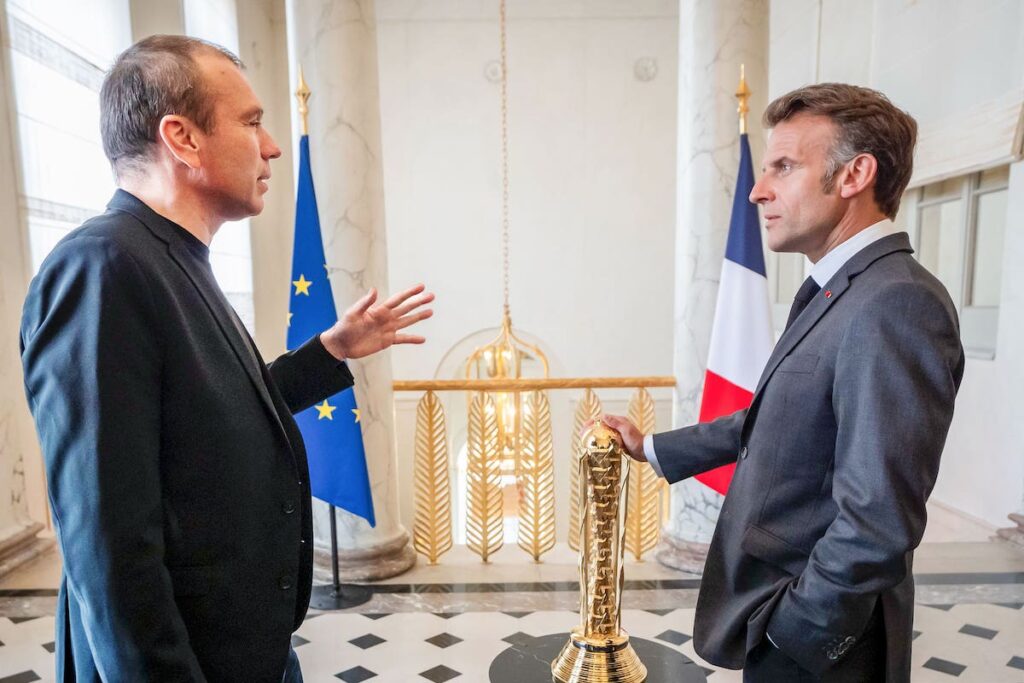
That support appears to extend beyond the bidding process itself. Representatives from participating organisations have publicly praised France’s efforts to facilitate international attendance. As reported by Sheep Esports, the Founder of Aurora Gaming Valerii “L3rich” Kharitonov, for example, highlighted instructions reportedly sent to French embassies to accelerate visa procedures for esports stakeholders around the world.
Esports moves fast, and no one stays number one forever.
- South Korea was the untouchable leader for over a decade;
- The United States had its massive wave of venture capital money;
- Germany for a long time was the center of European esports. Huge relevance for events like IEM Cologne, companies like ESL FACEIT Group, the Riot Games European headquarters, and major esports organisations;
- Saudi Arabia injected millions in the industry and is in the center of two of the biggest events in esports nowadays, the EWC and the Esports Nations Cup;
- Brazil still has the one most passionate communities in the world.
France has put together one of the most complete ecosystems on the planet. Beyond teams and tournaments, it has developed an increasingly sophisticated commercial structure around competitive gaming. The appointment of Havas Play to support sponsorship sales for the Esports World Cup Paris demonstrates how traditional agencies are treating esports as a serious commercial property rather than a niche activation. French authorities have also publicly projected approximately €600 million in economic impact from the event through tourism, hospitality, local spending, employment and related business activity.
Whether those projections ultimately materialise remains to be seen, but the fact they are being made at all speaks volumes about how France now views esports: not simply as entertainment, but as an economic sector worthy of strategic investment. The country’s embrace of gaming and esports is also not limited to specialist stakeholders, traditional institutions have increasingly shown a willingness to engage with the sector, as The Esports Radar recently explored in its coverage of Roland-Garros’ gaming initiatives.
Macron’s claim was bold. But Heat Map has to admit it: France has the receipts. The race doesn’t have a finish line, but right now, they are winning.
This analysis was first published in the Heat Map newsletter on 04 June 2026. For early access to our analysis and more exclusive content, subscribe to The Esports Radar’s newsletters via this link.

Follow The Esports Radar on social media: