

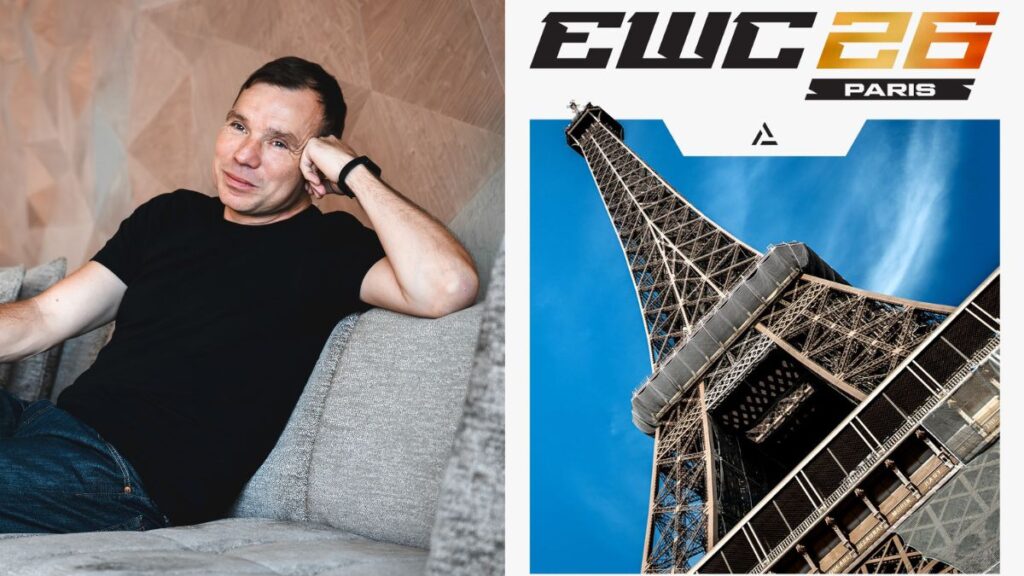


Esports Foundation CEO Ralf Reichert spoke exclusively to The Esports Radar about the EWC 2026 shift from Riyadh to the French capital.
The Esports World Cup (EWC) is packing its bags. After two editions firmly rooted in the purpose-built arenas of Boulevard City, Riyadh, the multi-title behemoth will unfold next summer in a city synonymous with sporting spectacle: Paris, France. Running from 6 July to 23 August 2026, the seven-week festival marks the first time the EWC has ventured beyond Saudi Arabia — a decision shaped by geopolitics, operational discipline, and an extraordinary French reception.
In late-night crisis meetings and cross-continental calls over the past month, the Esports Foundation (EF, formerly the Esports World Cup Foundation) made a move that rocked the industry. Escalating security concerns around the ongoing conflict in Iran, and the very real risk of unpredictable flight disruptions across Middle Eastern airspace, forced the organisers to accelerate an international rotation strategy originally pencilled in for a later stage. The goal was not simply to find a safe harbour, but to safeguard the playing field for more than 2,000 competitors, 200 clubs, dozens of publishers, and a global fanbase that had already bought early-bird tickets.
To understand how Paris won the race, The Esports Radar spoke with Ralf Reichert, CEO of the Esports Foundation, who detailed a convergence of three decisive factors: quick institutional reflexes, world-class infrastructure, and government engagement at the very top.
Reichert is clear about the trigger. “At the centre of every consideration were our players,” he says. “They are the reason EWC exists, and they need to be able to count on a world-class stage and on a clear pathway to get there. The same goes for our fans: everyone needed this clarity.”
“Comprehensive scenario planning is part of how the Esports Foundation operates: for an event of this scale, preparing for multiple futures is simply standard discipline,” Reichert explains.
As the security picture deteriorated, a single question looped through every discussion: could they deliver on 2026 without compromise? “We kept returning to the same three questions: Can we deliver a world-class stage for our players in 2026? Can we ensure planning security for them, their clubs, the publishers, our partners and the fans? And can we protect Riyadh’s role as our home in the long term? The decision was taken in close coordination: internally, with publishers, with clubs, with our partners in Saudi Arabia and with the French side. It was a controlled, strategic decision.”
Once the EF intensified its planning, several European nations with strong esports footprints entered the conversation. Yet one name kept rising to the top, not because of its track record alone but because of the velocity and weight of its response. “What stood out with France was the speed, seriousness, and level of alignment behind the project,” Reichert says. “The French government, including President [Emmanuel] Macron and his administration, moved very quickly and demonstrated a genuine understanding of what it takes to host an event of this complexity. That level of engagement created the confidence that this could be executed successfully within an ambitious timeline.”
The courting of Paris was not a cold tender. It was a dialogue that turned into a full-blown partnership practically overnight. Reichert resists the suggestion that France simply rolled out a red carpet and won by default. “This was not a simple one-way conversation,” he stresses. “Once it became clear we needed to intensify scenario planning, discussions naturally evolved with several stakeholders across Europe.”
But the substance of the French offer tipped the balance. “What ultimately tipped the balance was something you cannot overstate for an event of this scale: France offered us support at the very highest level of government, including the personal engagement of President Macron and his administration. That is more than symbolism. It translates into the practical conditions that make an event of this size possible on this timeline: logistics, visas, infrastructure, the full institutional weight of a host that wants this to succeed.”
Settling on a host city for a tournament of this magnitude, with 24 games, 25 separate tournaments, and a $75 million aggregate prize pool, demanded a stress test on three fronts. Reichert outlines them with the precision of a checklist.
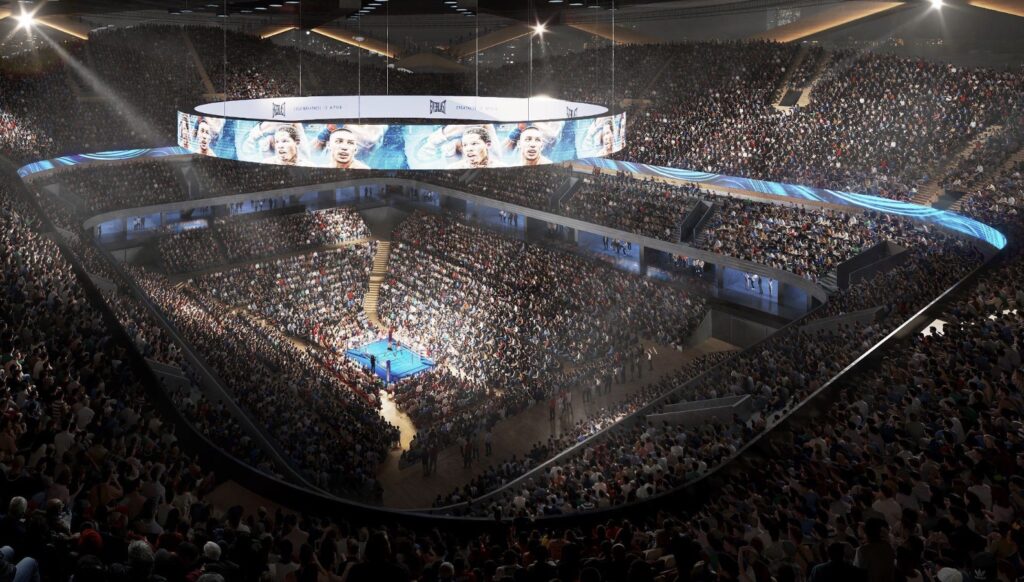
“First, operational capability. The objective was never to create a reduced or compromised version of the Esports World Cup. We needed a city capable of hosting more than seven weeks of global competition across 24 games and 25 tournaments, while supporting thousands of players, staff, partners and fans from around the world. That requires world-class venue infrastructure, broadcast capability, hospitality capacity, security planning and international accessibility at scale.”
Paris passes that examination with its sprawling convention halls, arenas that have already welcomed VALORANT Champions, Rainbow Six, and Counter-Strike Majors and the sort of international transport hub that can swallow thousands of visitors without blinking. The Rocket League and Call of Duty League majors also set in the capital this year adds practical proof.
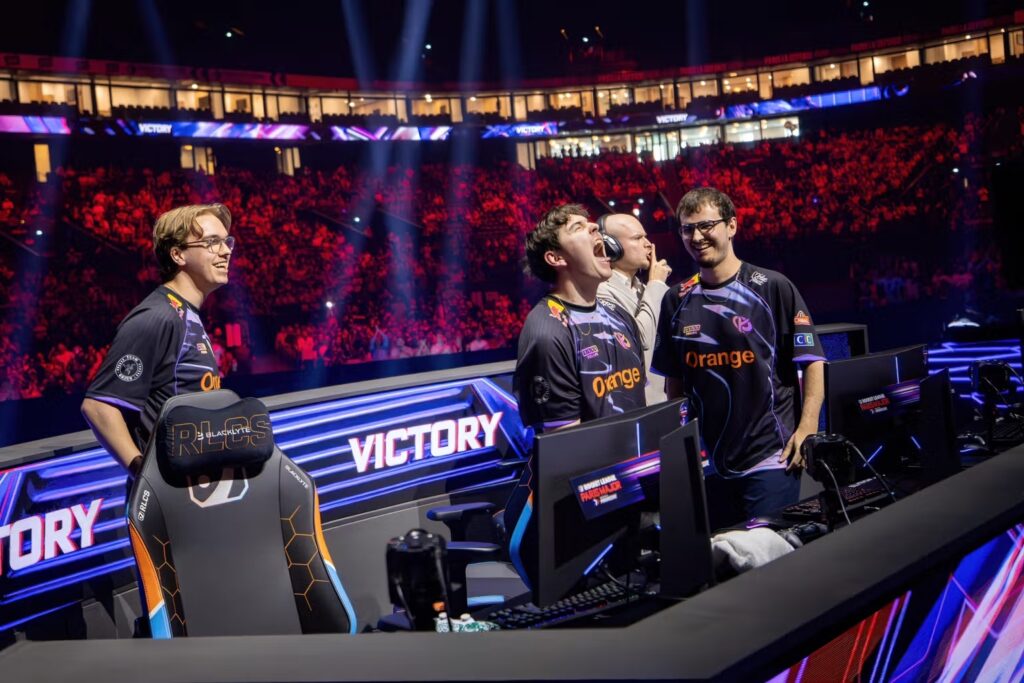
“Second, esports credibility. Paris and France already have one of the strongest esports ecosystems in Europe, with passionate fans, major clubs, established gaming culture and a strong track record of hosting both major international sporting events and top-tier esports competitions.”
Just one day before the relocation was confirmed, French powerhouse Karmine Corp joined its fellow Parisian organisations Team Vitality and Gentle Mates at the EWC Club Partner Program. Now they face the prospect of a home-field summer, with local crowds roaring on familiar colours — a subplot that will ripple through the tournament narrative.
“Third, institutional support and speed of execution. The French government moved extremely quickly to support the project. The level of coordination and commitment across authorities, including around areas like visas, logistics and operational facilitation, was a major factor in making an event of this scale possible within the timeline.”
For Western teams accustomed to administrative headaches in certain territories, the French visa framework and the familiar European tournament infrastructure represent an immediate operational balm.
For all the focus on Parisian landmarks and Macron’s phone calls, the Esports Foundation is adamant: this is a geographical evolution. “Paris marks the beginning of the next phase of the EWC’s evolution as a truly global property,” Reichert says. “From the start, our vision was to build a platform capable of travelling to the world’s great cities while maintaining the same competitive quality and scale everywhere it goes. This proves that the model can work in practice.”

However, this is not a farewell to the Kingdom. Riyadh, he insists, remains “central to the long-term future of the EWC and of esports globally, with Qiddiya [mega-city project built around multiple entertainment attractions including esports] representing the permanent home ecosystem we are building for the future. So this is not a departure from Saudi Arabia. It is the expansion of the EWC into a genuinely global format with Riyadh as its long-term anchor.”
The subtext is clear: a single summer under the Eiffel Tower will not erase the millions (or even billions) invested in gaming and the Qiddiya mega-project. Still, the optics are stark. The original ambitions to use the EWC as a catalyst for Saudi Arabia’s local tech, tourism and entertainment industries will, for 2026 at least, take a back seat to the more immediate necessity of holding the event at all.
While the philosophical framework is settled, several practical details remain in the air. Tickets for the 2026 edition originally went on sale in January, and a wave of international fans snapped up Early Bird passes and premium hospitality packages believing they were booking flights to Riyadh. The EF and its partners are expected to clarify shortly whether those purchases will be honoured for the Paris event or if a refund window will open. Specific venue allocations across the seven-week schedule are also still under wraps, with disclosures promised in the coming weeks.
One thing, however, is no longer a question. When geopolitical instability threatened to ground the world’s biggest esports festival, France didn’t just offer a landing strip, rather it mobilised the full machinery of the state to make it happen. Quick response, infrastructure, and government support: those three levers pulled simultaneously have given the Esports World Cup a Parisian address. The stage, it seems, will not shrink. It will simply look a little more like the Champs-Élysées.

Follow The Esports Radar on social media: