



After the Esports World Cup’s (EWC) audacious shift from Riyadh to Paris in 2026, the global esports industry promptly delivered its verdict: this is a pivot freighted with opportunity, vindication, and no small amount of national pride.
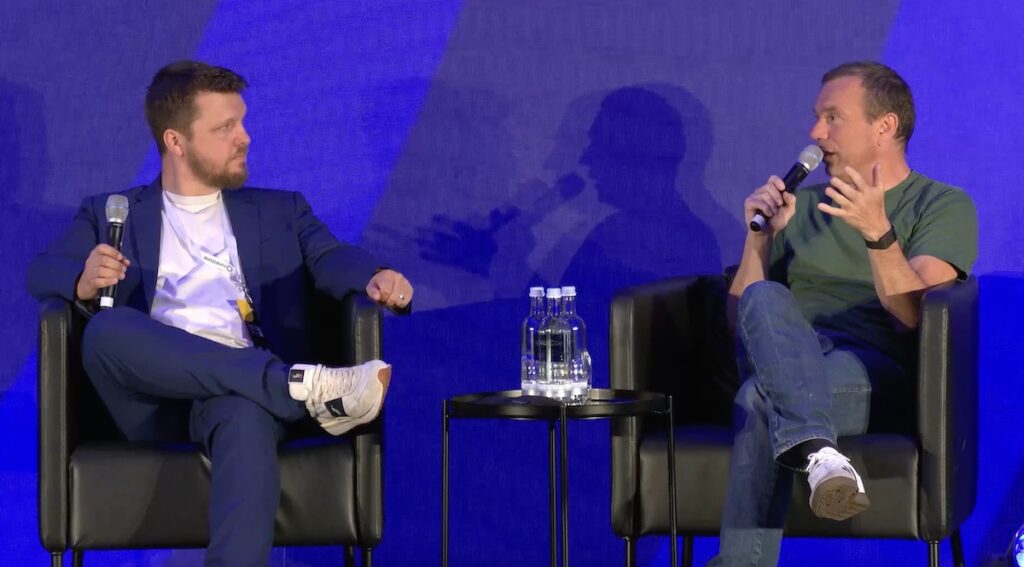
Speaking on the opening main stage session at Global Esports Industry Week 2026 in Cologne, Esports Foundation CEO Ralf Reichert highlighted that the move, though not initially planned, brings “institutional legitimacy” and a bigger main venue than was has been available to date at EWC in previous years to date. The Esports Radar then canvassed reactions from LinkedIn, X, and direct outreach since the announcement on 20th May. What emerged is a mosaic of relief, strategic calculation, and a single resounding question: when will the rest of the world catch up?
David Neichel, SVP at ESL FACEIT Group and a man who has been at the coalface of competitive gaming for decades, published a bilingual cri de cœur on LinkedIn titled “A divine surprise, a logical outcome, and a great opportunity for French esports.” Calling the move a divine surprise because the event was fully prepped for Riyadh before geopolitical events intervened, Neichel quickly pivoted to the hard-nosed reasons France won.
“The real issue that tipped the scales,” he revealed, “is the regulatory framework and the ability of the State services to commit to managing the visas of athletes from all over the world. Very few countries in the world have this capacity; basically, in Europe, only Germany and France.”
He underscored Macron’s “permanent commitment” and the diplomatic ties between Paris and Riyadh. For Neichel, the move is also deeply personal: he hailed his “lifelong friend” Ralf Reichert and expressed hope that a successful 2026 edition would turbocharge France’s bid to host the 2028 Esports Nations Cup. “Vive l’esports, et vive la France.”
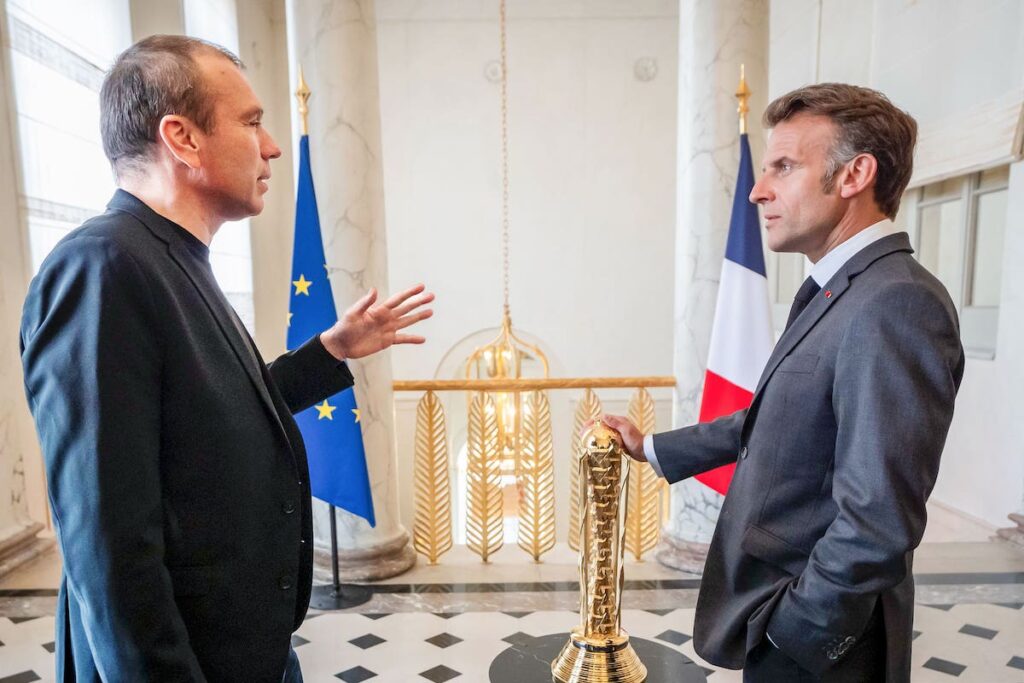
Few reactions carried the symbolic weight of Chandy Teixeira’s. The Chief Executive of Games and Esports for the City of Rio de Janeiro posted a photograph that stopped scrollers in their tracks: Ralf Reichert, CEO of the Esports Foundation, standing alongside French President Emmanuel Macron inside the Élysée Palace.
“Are esports a matter of state? The answer is yes!” Teixeira wrote. He framed the relocation as a wake-up call for Brazil, noting that France and Saudi Arabia “already understand that the games and esports market must be treated as a strategy of state, tourism, and economy.” His post was part celebration of what Paris had achieved, part lament that Rio — a city that has been actively courting major events — lacks the federal government’s clear, material, and symbolic backing. “It’s not just entertainment,” he insisted. “It’s also technology, employment, revenue, and soft power. When is Brazil going to enter this game?”
This sentiment was echoed by Nepomuk Nothelfer, Esports and Gaming-specialised Attorney at MELCHERS, a law firm based in Germany. For him, the choice of Paris for the EWC is not merely a victory for Europe as an esports hub, but rather, it’s a victory for France.
“France has demonstrated a long-standing commitment to esports, not only from a regulatory perspective – being the first European country to establish a dedicated legal framework for esports players and tournaments over a decade ago – but also politically,” Nothelfer told The Esports Radar.
He also highlighted the image of Reichert at the Élysée, which crystallised exactly what the CEO had told The Esports Radar in his exclusive interview. “The recent meeting between President Emmanuel Macron and Ralf Reichert is merely the latest in a series of strong signals demonstrating French policymakers regarding their commitment to esports. As a result, France has increasingly become the preferred destination for major international esports events.”
With French authorities expecting the event to generate around €600 million in indirect economic impact, Nothelfer sees the choice of Paris as a “wake up call” for fellow European countries. “The good news is I’m confident that this call will be answered,” he adds.
“A successful Esports World Cup in Paris could have consequences that extend far beyond France itself. It would provide a powerful example for policymakers across Europe and beyond, that esports is a sector worthy of public attention, strategic investment, and long-term support. Bringing one of the world’s largest esports events to the heart of Europe can strengthen Europe’s perception of esports as a major offline event and economic ecosystem,” Nothelfer continued.
Meanwhile, in-house, the French esports ecosystem greeted the event.
Nicolas Maurer, CSO and Co-founder of Team Vitality and the Esports Leader of the Year at the 2025-26 Esports Leaders Hounours, called the arrival of the World Cup in Paris “excellent news for the entire French esports ecosystem.” He framed it as a confirmation of France’s attractiveness, the passion of its fans, and the capacity of local players to make the industry shine internationally. “We will do everything possible to make this event a memorable moment for fans, players, and teams from around the world,” he wrote, “and of course to place Team Vitality at the top of every ranking.”
Matthieu Dallon, a foundational figure in French esports and CEO of Trust Esport and CSO of N.E.O, saw the hand of history. He connected the dots back two decades: “20 years after the ESWC [Electronic Sports World Cup 2006] at the Accor Arena in Paris — the founding event of modern esports — France has another date with History: 25 games, 54 days of competition, $75m in prize money, several iconic venues, several stages that will become legendary.” For Dallon, the decision rewards decades of trust between all parties, French production excellence, and a public whose fervour is “unmatched”.
The Global Competitor View: Opportunity and Challenge
Away from the French celebrations, team executives across the world sized up the new terrain with a mix of enthusiasm, pragmatism, and competitive fire.
Steve Aranchet, co-CEO of Team Liquid, took to X with a thread that framed the relocation as a structural win for the entire industry. “This is bigger than a venue change imo,” he posted. “New sponsor interest. World cups are world cups, cities should host and one day compete to host. Proving the format scales globally (logistically really hard honestly) is a win. Great pivot. See you all in Paris.”
Alban Dechelotte, CEO of G2 Esports, offered an equally sweeping vision, drawing a direct line to the pinnacle of traditional sport. “We welcome the Esports Foundation’s decision to bring the Esports World Cup to Paris this year. As an organisation rooted in Europe, it’s easy for G2 staff and players and fans — they can get there. But the bigger picture matters more, the EWC is on a path to becoming a truly global event, one that belongs to every corner of the world. That ambition is what makes it special. We’ve always believed this should be the most important esports event in the world, and bringing it to Paris only reinforces that. The EWC is on its way to becoming what the World Cup is to football.”
For Dechelotte, the move isn’t a convenience; it’s a coronation of the event’s intended stature. In a forthcoming interview with The Esports Radar this July, Dechelotte said he was “grateful” that the event was relocated instead of simply canceled, given the escalating geopolitical situation in the Middle East since March 2026.
For Jaime Pádua, co-CEO of FURIA, the calculus was more grounded but equally positive. “I believe it was a smart decision by the EWC given that the world has presented logistical planning difficulties in the Middle East region at the moment,” he told The Esports Radar. “We are very excited to participate in this edition in France and see no difficulties with this transition.”
Yet for organisations whose commercial architecture was built specifically around the Saudi host nation, the shift demands a more nuanced recalibration. Emanuele Acerbis, Co-Founder and CEO of Italy’s NOVO Esports, acknowledged the immediate dislocation. “As an organisation with a direct partnership tied to the EWC’s presence in Saudi Arabia, the move to Paris hits differently for us than it might for others. Our agreement with the Saudi Tourism Authority was aimed at using the EWC as a vehicle to bring a young, global audience to Saudi Arabia and let them discover the country firsthand. With the event moving to Paris, that’s obviously no longer the case.”

But Acerbis was quick to identify the silver lining. “That said, new opportunities open up. Paris is easier to reach, which means we can activate our fanbase more effectively and bring brands and stakeholders to experience firsthand what this industry looks like at its highest level. We’ve learned over time that no pitch deck replaces the experience of being there — and Paris makes that a lot easier.” The pivot, while upending one partnership narrative, hands NOVO a more accessible stage for the kind of in-person storytelling that closes deals.
Then came the fighting talk from the heart of the Saudi esports machine. Muhammed Almutairi, General Director of Team Falcons — the back-to-back EWC club champions — posted on X in Arabic, issuing a rallying cry shot through with defiance. “A new challenge awaits us at Falcons, as we will conquer the third title, but this time in Paris, in the middle of our direct rivals’ fans,” he wrote. “The challenge will be difficult, but with the permission of God Almighty, the continued support of our fans, and the players’ efforts, inshallah, we will reach the goal.” He closed with a request: “Your prayers for us and for the Saudi teams for success in the World Cup.”
Away from club boardrooms, some industry observers see the Paris relocation as something more existential: a major test for the entire ecosystem. Esports executive Anna Baumann argues the move is ultimately about proving maturity under pressure.

“From my perspective, the relocation is ultimately a test of the ecosystem’s resilience,” she told The Esports Radar. “Sometimes the biggest proof of maturity isn’t that everything goes according to plan, but that an ecosystem can absorb unexpected change without losing momentum. If the Esports World Cup can successfully relocate to Paris on relatively short notice while maintaining its competitive quality, commercial partnerships and fan engagement, it demonstrates that this is a mature global property rather than an event dependent on a single host city.”
Celsa Wu, Head of Esports & Monitor Business at BenQ‘s gaming brand ZOWIE, also shared with The Esports Radar the brand’s point of view: “I see the relocation from Saudi Arabia to Paris as great news for us,” she stated.
Wu approached the strategic aspect of sales for the monitor brand: “ZOWIE has focused on FPS titles for two decades, growing alongside Counter-Strike. Europe has always been Counter-Strike’s biggest market in terms of actively registered players,” she said, “so having more important global tournaments come to Europe makes it far easier for us to engage with the community.”
“We’re also excited that EWC covers other titles we focus on, like VALORANT and Fortnite. Bringing pro players to Paris gives European audiences the chance to watch these tournaments live and feel the energy in the stadium — and with Paris being such an accessible and popular destination (easy flights, trains, or driving), that’s a huge plus.”
The Business of Hospitality: A Welcome Shift
Beyond the competitive sphere, the move is sending significant ripples through the business of hospitality. Neil Johnson, Vice President of Esports Sales & Consulting Services at ALHI, a consortium of independent luxury hotels, provided The Esports Radar with a detailed assessment that underscored how deeply interconnected the worlds of travel and esports have become.
Johnson broke his reaction into two layers. On the relocation itself: “Prioritizing safety was the right decision. Credit to the Esports Foundation for putting the safety of teams, athletes, sponsors, and attendees first.”
He added a personal note, having attended the 2024 and 2025 editions in Riyadh and harboured real concerns about the regional conflict. “This move removes that uncertainty and allows people to focus on what should be another successful Esports World Cup.” Taking the event global, he said, “is a fantastic” step that turns the EWC into truly international property.
From a business standpoint, the Parisian pivot is a boon. ALHI represents 36 member hotels across Europe, including two Parisian properties, Les Jardins du Marais and L’Hôtel du Collectionneur, which Johnson confirmed will be “actively positioned to support the Esports World Cup this summer.” While luxury doesn’t fit every gaming activation, he argued it is a natural fit for global tentpole moments, citing the New Global Sport Conference at the Four Seasons Riyadh. “Hospitality helped set the stage for esports as we know it today,” he said, tracing a line from early LAN parties in hotel ballrooms to formal partnerships like Hilton’s Official Hotel Partner deal with the EWC. The convergence, he believes, will only deepen.
For now, the prevailing mood is captured by David Neichel’s divine surprise: a continent-sized door has opened, and the industry is sprinting through it. Rio wants in, Falcons wants to conquer, and Paris is ready for its close-up.

Follow The Esports Radar on social media: