



Since its founding in 2013, Team Vitality has grown exponentially in reach and influence across the esports landscape. While the organisation was never a low-profile player, its trajectory shifted dramatically in the 2020’s as it evolved from a French powerhouse into a dominant global force.
Much of this success stems from the organisation’s core leadership, headed by now Chief Strategy Officer (CSO) Nicolas Maurer and CEO Fabien Devide (winner of the 2025–26 Esports Leaders Honours for Esports Leader of the Year). Their vision was backed by an €84 million injection from Rewired.GG across three funding rounds, while international expansion was pushed even further when the now Chief International Officer Danny Engels joined in 2024.
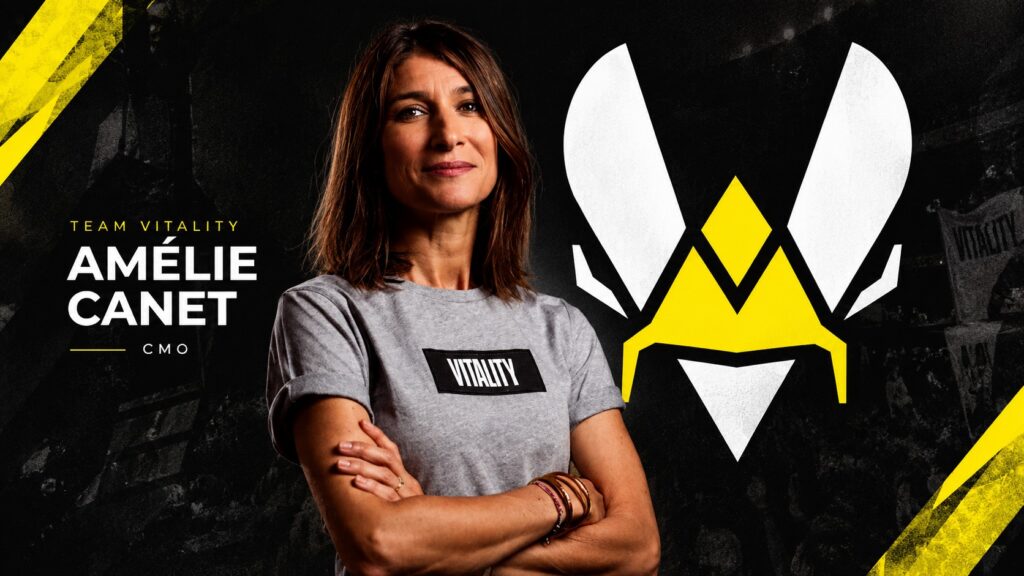
Still, with all that machinery running and all those resources applied to make the engine turn, another key figure who joined in 2020 frequently appears at the center of the club’s most major developments: Amélie Canet. Her career progression, from Merchandising, Retail, and E-Commerce Director to Chief Marketing Officer (CMO), directly mirrors Vitality’s broader ascent.

Canet has been instrumental in diversifying Vitality’s portfolio, including strategic input related to the launch of RushBee, Vitality’s marketing agency. She has also driven the organisation’s global footprint through initiatives like its Chinese merchandise line, an Ivy League-inspired campaign targeting North American expansion, and activations targeted directly at the core of Vitality’s community.
Before that, Canet spent almost two decades at The Walt Disney Company, running everything from merchandising to a stint as head of Disney Princess, joining Team Vitality with barely any knowledge of esports. Today, she is the organisation’s marketing lead, and one of the people most responsible for turning a French esports team into a club that talks — credibly — about being a global powerhouse.
Canet welcomed The Esports Radar at the V.Hive, Vitality’s HQ and office in the heart of Paris, for an hour-long conversation. Her story is worth more than a profile, it is close to a working playbook for anyone trying to figure out how an esports organisation grows into a durable, international brand rather than a results-dependent one. Below, in her own words, is how she did it.
Also read:
- AMC Theatres to screen 2026 Rocket League World Championship finals across the U.S.
- FaZe owner GameSquare regains compliance with Nasdaq’s minimum bid requirement
- Team Vitality’s Tekken player attends state dinner with Korean and French presidents
Vitality co-founders Maurer and Devide didn’t sell Canet on esports specifically. They sold her on themselves. “I had a real professional crush on them,” she says. “I was so astonished to see two young guys so ambitious, with such a clear vision of what they wanted to achieve.”
Their pitch was that Vitality would become the best esports organisation in the world, which, for a French org with nowhere near its current scale, was a big claim to make to a Disney executive. “I loved their values, their vision, and their ambition. I felt it would be a great challenge for me to move from Disney to esports.”

The reality once she got there had less to do with any Disney playbook than with a fairly brutal adjustment period. Canet’s first job was merchandising, a recognisable territory for her. However, the industry around it wasn’t.
“I had no clue what they were talking about. ‘FPS, what the hell is that?’ The competitive schedule was so complicated, and everything moved so fast.”
Disney ran on meetings, email chains and conference calls. At Vitality, decisions were made on Slack in ten minutes. “So yes, the pace of this industry is crazy. It was a shock and a challenge for me, not easy at all.”
What actually carried over from Disney wasn’t a creative sensibility, but an instinct about what a brand is actually worth, and a refusal to treat it as an afterthought to competitive results. Alongside merchandising, Canet was handed fan engagement, digital and data, more or less from a standing start.
“When I joined I said, ‘okay, we have no data, we have no idea who our fans are, we don’t really know what to do with our consumers. We just know they buy jerseys, and that’s it.’”
She hired Hugo Cros, now Vitality’s Head of Growth & Media, to build what she calls the club’s “data house”, forming the layer on which everything else sits on top of, from a growth-media approach to the funnel Vitality now uses to track fans from first awareness through to becoming customers.
“My biggest lesson from Disney is that the most valuable asset you have is the brand.”
Before Vitality could scale, Canet pushed leadership to actually agree on what they were building. Directors spent two days working through it and came out with three pillars, deliberately ranked: performance, fans, and business.
“We’re not an influencer team, we are a performance team, that’s for sure. We’re very ambitious about performance; we want to build our legacy, we want to make history,” said Canet.
Performance is the foundation, but she’s blunt that it can’t be the whole strategy. Fans and commercial output have to follow: “We’re building a brand, but we also monetise. It’s not just marketing for marketing’s sake and just for fans. We love fans, but we need to drive business too.”
That’s part of why Vitality has moved toward something closer to an agency model, folding marketing and partnerships together so the club is selling capability to sponsors, not just logo space. “We co-build strategies with our partners, and we co-build activations together,” Canet added.
Thus, the clearest import from Disney can be framed as “portfolio thinking”, treating individual properties as different assets deserving different levels of investment, rather than resourcing everything the same way. Canet views every roster and scene Vitality enters as its own “franchise”. Each franchise possesses unique characteristics, resource allocations, and distinct requirements that Vitality addresses strategically. This approach allows every sector to stay aligned with its specific community without cannibalising or undercutting other areas of the organisation if select market conditions deteriorate.
“And we believe, because we have data, that our audience is segmented by game. So let’s bring this franchise/portfolio-management approach to esports at Vitality,” said Canet. In practice that’s a tiering system: a title reaches tier one based on things like global audience size, major physical events and an in-game item economy, and marketing spend, partnerships and organisational attention scale accordingly. Brand managers now sit against individual games or audiences, and community managers are expected to actually understand the culture around whichever title they’re covering, and not just post on its behalf.
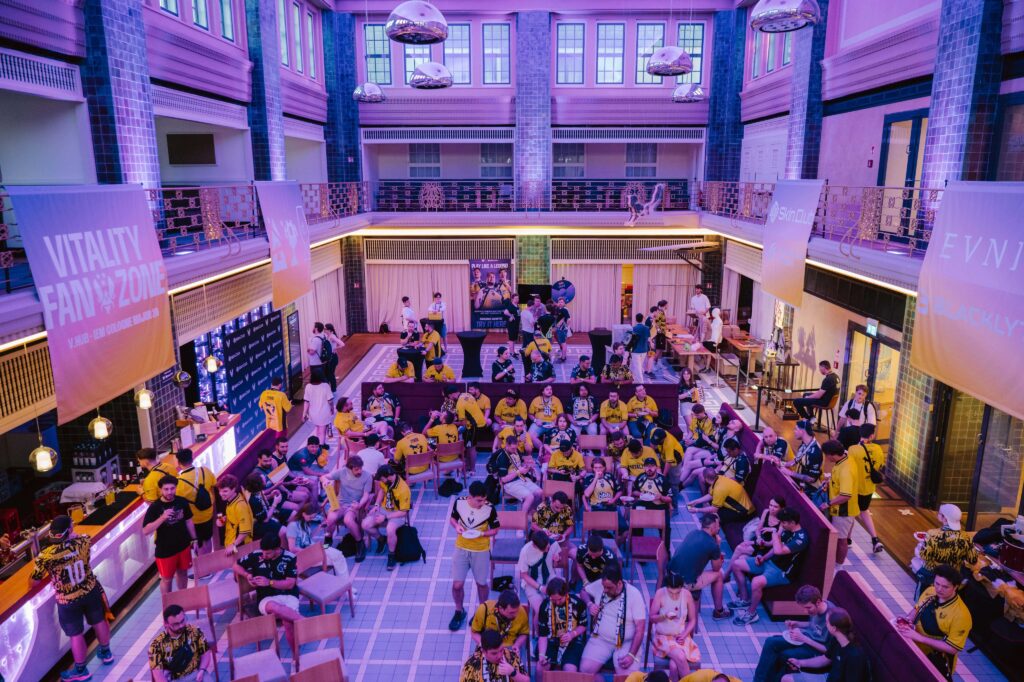
“The middle of the funnel matters most to me.”
For years, Canet says, Vitality was chasing follower counts. That’s no longer how she measures anything. “If you want to build a global team, you first need to raise awareness, not engagement, not conversion, just awareness.”
That means paid media aimed at people who’ve never heard of Vitality, in territories the club has decided are worth the spend. Counter-Strike 2 (CS2) has done a lot of that work, but Canet draws a hard line between someone watching ZywOo (Mathieu Herbaut, Vitality’s CS2 superstar) win a tournament and someone who’s actually a Vitality fan.
To close that gap, the rest of the funnel steps in. Vitality guides fans from initial engagement to true consideration using its consumer-focused website, keeps them hooked with the Hive 2.0 loyalty program, and ultimately turns that relationship into sales.
She’s honest, however, that even that picture is incomplete: “I’d like to be able to plug into publishers’ APIs and get in-game item data. Because at the end of the day fans don’t just buy merch, they buy event tickets, in-game items, and so on, but right now I only have the merch data.”
“You can’t be global and only show up for France, but you also can’t be global and forget where you started.”
Vitality’s move outside France wasn’t a decision to “go global” for its own sake. Canet describes something closer to an evidence check: website traffic or merch sales showing an unexpected concentration of fans somewhere, cross-referenced against the game portfolio, the players and the competitive calendar.
China is the case she reaches for first. Counter-Strike matters there, so does the wider FPS scene including VALORANT, and ZywOo’s popularity gives Vitality a specific hook into that audience. Once there’s a multi-year run of competitions scheduled in a market, that’s the trigger to actually invest in building an audience there.

North America came together differently. Counter-Strike and Rocket League both had events scheduled in the region around the same window, which Canet calls a “planetary alignment.”
“That was the moment to run a Vitality brand campaign across all those games in the US, if we want to back up the claim that we’re the global powerhouse we say we are.”

The obvious risk in that kind of expansion is diluting whatever made the brand distinctive to begin with. After all, if everything goes wrong, having a strengthened core provides a vital safeguard for pulling things together and getting back on track. Vitality’s response has been to treat France as permanent rather than a market it eventually outgrows.
“When we built the strategic framework two years ago, we acknowledged that we wanted to go global, but at the very same time we said we need to be very careful about France and our French fans.”
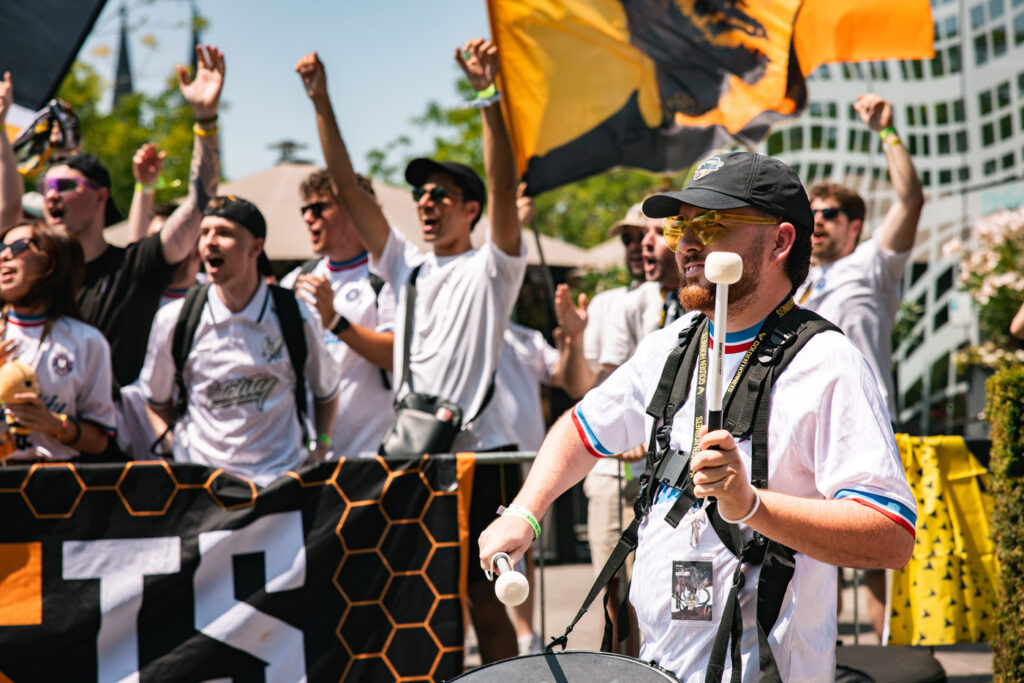
A lot of that is about the Golden Hornets; Vitality’s core fanbase.
“Our most ‘ultra’ fans, the Golden Hornets that we love, are mostly French, and some have been with us since the very start, so we can’t just leave our first supporters behind to chase new ones.”
“We do plan far ahead, but we also know things change constantly in esports.”
Esports doesn’t sit still long enough for a five-year plan to survive contact with reality. Publishers restructure ecosystems, events move cities, sponsorship windows open with almost no notice. Canet’s response isn’t to plan less; it’s to plan far enough ahead that there’s something to adapt when the ground shifts.
The Esports World Cup (EWC)’s move to Paris is the example she points to. Vitality had already flagged EWC as tier one and built a campaign around it, so when the tournament relocated to France with relatively short notice, the club adapted an existing plan rather than starting over, including player-personality content that could be redirected toward the event.
The activation booth in Paris itself, built with partners including E.Leclerc and Magnum, came together inside a few weeks, a genuinely short-notice opportunity rather than something long in the pipeline.
Similarly, Vitality reached the absolute peak of competitive Counter-Strike across a multi-year run, anchored by three Major championship trophies (Paris 2023, Austin 2025, and Budapest 2025) and two consecutive ESL Grand Slams. While recent tournament results have brought new challenges, Canet treated this era of dominance not merely as a high point to enjoy, but as a strategic window to build long-term assets.
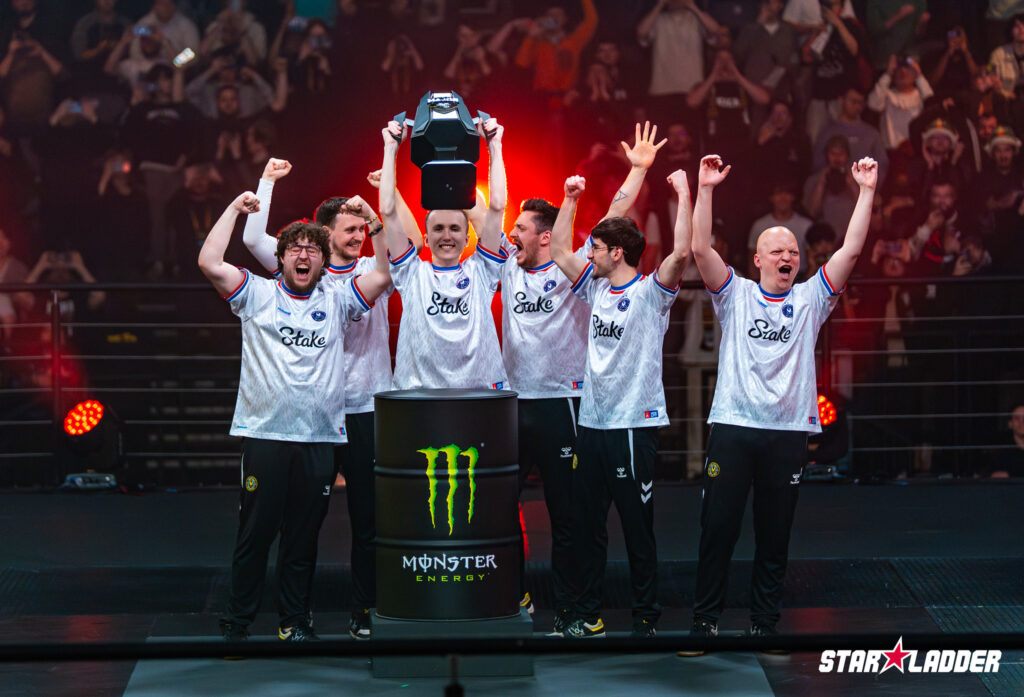
“We need to leverage that, climb on it, make sure the funnel keeps growing significantly. Once you’ve laid down foundations — awareness in certain countries, momentum around competitions — it doesn’t vanish overnight. We want the same kind of approach as a club like Real Madrid. They’ve built a legacy that simply is what it is: ‘look at Real Madrid.’ That’s what we’re building here.”
It’s also why she’s pushing Vitality to build a record across multiple titles rather than let the club become shorthand for one game. “We don’t want to be only an FPS team, we want to be a global club, so we need to build a legacy in other games too.”
“We’re here to stay”
Still, coming from Disney gives Canet a slightly outside view on why esports as a business is harder to stabilise than traditional sport. “In football, you have clubs and players; in esports it’s very different, and you also have publishers in the mix.”
That extra stakeholder changes the maths for everyone. Publishers control the underlying IP and the competitive ecosystem, while organisations like Vitality are trying to build brands that behave more like entertainment properties, with licensing, merchandise, content extensions and all.
“We sit at the crossroads of sport and entertainment, and we don’t fully know whether to follow the traditional-sport path, [which is] sponsorship-focused, without ticketing or TV rights, and with publishers in the picture; or the entertainment path, building and monetising the brand through licensing. Tomorrow I could say our brand is powerful enough to license Vitality onto almost anything, open restaurants under the name, and so on. But at the same time we want to remain a genuinely performance-driven organisation.”
She doesn’t pretend that tension is resolved, for Vitality or for anyone else in the industry. “It’s a very young industry, so you have to experiment. I think we all still need to grow and find the path to sustainability together.”
Vitality’s current position — still a dominant Counter-Strike roster funding campaigns across North America and Asia, alongside a France strategy built specifically to keep its core close — is what this approach looks like when it’s working. What it looks like once the results cool off is the harder question, and one that’s really about the esports business model as much as it is about any one club.
What Canet and Team Vitality’s leadership have established is best captured in her own words: “We’re here to stay, and we know that.” The playbook is set, and the industry is ready to see how far Vitality can carry this momentum.