

When COO Eddy Chen sat down with The Esports Radar during the opening week of the 2026 Esports World Cup (EWC), AG.AL’s global expansion was a bold narrative in progress.
Chen spoke of new regional hubs, international roster additions, Western brand partnerships, and an audacious goal: transforming a club with a reported 350 million domestic followers in China into a household name worldwide.
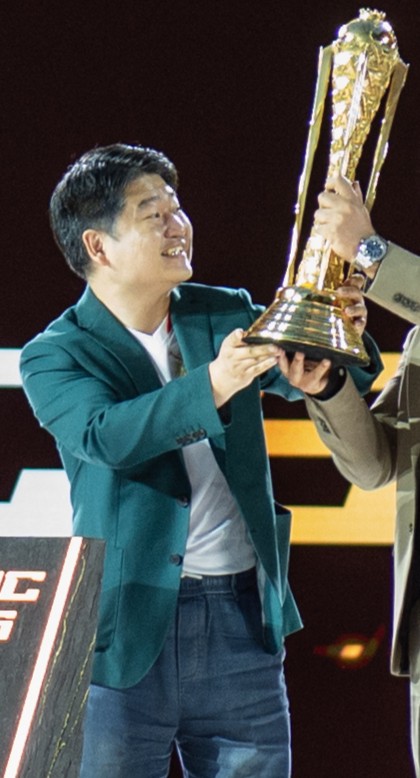
Seven weeks later, Chen’s global ambitions secured a monumental victory: a World Cup title and a $7 million prize cheque.
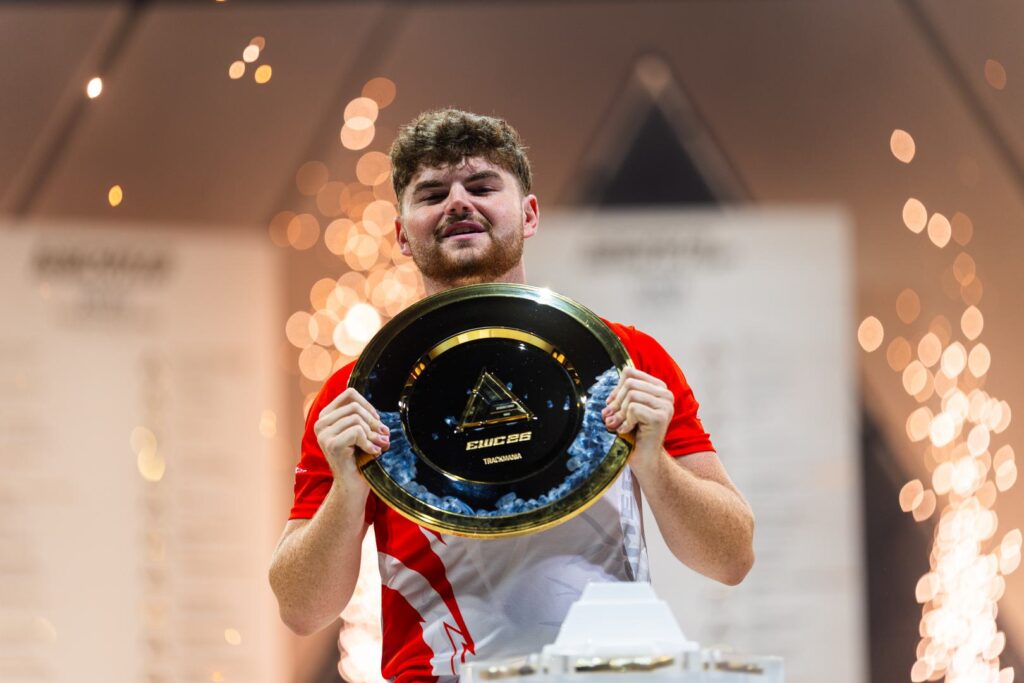
AG.AL was crowned the 2026 EWC Club Champion in Paris at the closing ceremony on 23rd August, tallying 5,300 points across seven weeks of competition. The Chinese powerhouse ousted two-time defending champions Team Falcons (4,600 points), with Team Vitality completing the podium on 3,300 points. The championship was decided on French soil by a French driver for a Chinese team. Gwendal “Gwen” Duparc clinched the inaugural EWC Trackmania tournament for AG.AL, securing the final 1,000 points to pass Falcons in the standings.
The Club Championship fundamentally rewards organisational versatility over single-game dominance, a thesis Chen articulated from day one: AG.AL’s campaign was built on cross-game roster depth. Entering 18 disciplines (second only to runner-up Team Falcons’ 22, and well ahead of multi-game mainstays like Team Liquid and G2), the club secured two tournament titles, three runner-up finishes, and a third-place result. Beyond Gwen’s Trackmania performance, Pakistani player Khawaja “M. Zubair” Muhammad Zubair stormed through the Last Chance Qualifier to win Tekken 8. AG.AL also claimed second place finishes in Chess, Free Fire, and Honor of Kings, alongside third place in Teamfight Tactics.
More than just another tournament circuit, EWC acted as a showroom for the organisation. Though the original brand All Gamers, which forms the current acronym along with legacy brand Anyone’s Legend, dates back to 1999, its operational centre remained strictly domestic for decades. That began to change around 2024 with a deliberate pivot toward international markets, using the then newly established EWC as its primary engine.
In early international recruitment efforts, Chen noted that prospective foreign players rarely recognised the AG.AL banner. EWC exposure rapidly shifted that dynamic. By 2026, the COO reports that foreign talent is now actively researching the organisation, streamlining contract negotiations and naturally elevating the team’s standing across the global ecosystem.
Also read:
- Agency GMD secures partnership to lead Riot Games esports sales in Brazil
- paiN Gaming to relocate to new facility in Sao Paulo
- DRX invests beyond esports into K-dramas and game publishing
“EWC gives us a very good platform to enter markets outside China,” Chen told The Esports Radar. “It provides a stage for our players to compete against top-ranked talent from all over the world.”
For an organisation intent on establishing global credibility, the EWC win therefore serves as a poetic proof of concept. However, AG.AL’s strategy extends far beyond slotting foreign players into existing rosters.
The organisation is restructuring geographically, adding regional headquarters in Hong Kong and Dubai, with a European office scheduled for 2027 — teased by Chen only as being located somewhere “close to France.” The operational logic is pragmatic: localised entities simplify contracts, banking, and legal systems for non-Chinese talent. Culturally, local offices enable nuanced social media management tailored to specific markets, allowing the organisation to reach people beyond Chinese social media like Weibo and TikTok.
“We know that to be a truly global club, we need global staff,” Chen explained. “Localised teams help us run social platforms where content consumption differs entirely from mainland China.”
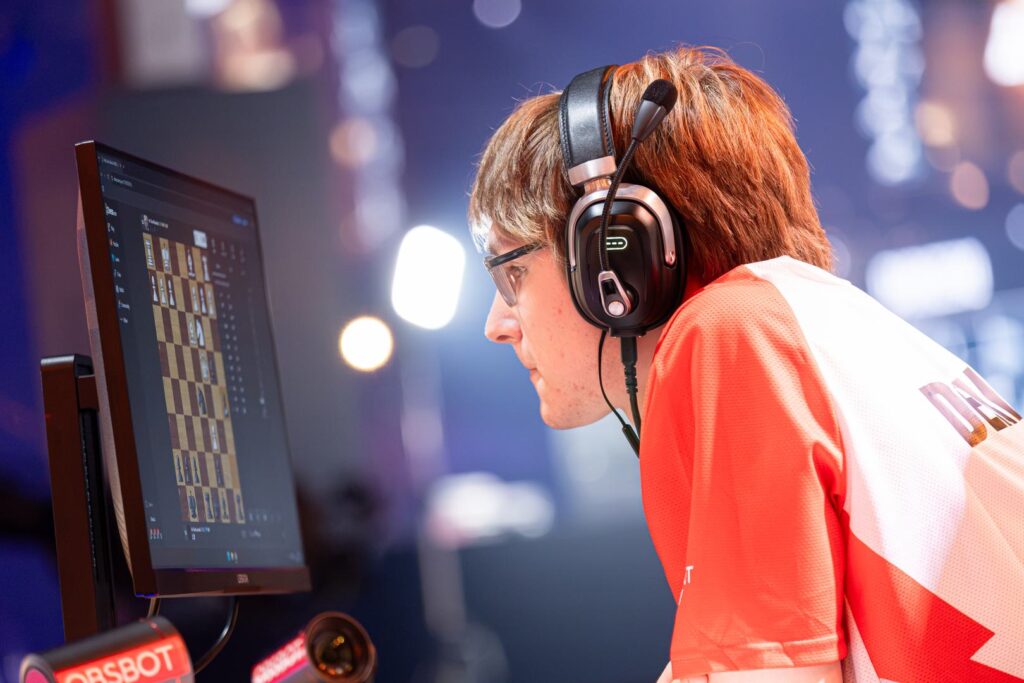
With talent representing over 10 nationalities, including a Danish Fortnite team, Belarusian chess grandmaster Denis Lazavik, and an American/British Warzone team, AG.AL aims to replicate its domestic reach abroad. Chen’s target is explicitly ambitious: matching the club’s 350 million Chinese fans with another 300 million international supporters over the next five years.
When asked why an organisation boasting hundreds of millions of domestic fans needs Western expansion, Chen pointed to traditional sports history.
“Manchester United didn’t focus solely on the English market because they wanted to become a global institution,” said Chen, who became a lifelong fan during United’s 1999 treble run. “If AG only has fans in China, that’s not enough. My dream is to see fans in Vietnam, Malaysia, France, Brazil, and the US supporting us.”
Chen’s vision fixates on emotional investment alongside commercial scale. Winning over fans thousands of miles away requires more than brand presence, it requires cultural resonance and competitive prestige. In that sense, the Manchester United comparison is useful. The ambition isn’t just to sell into another market, it’s to be loved and understood there.
The trick is ensuring the infrastructure, competitive results, and commercial proposition can eventually support it, and commercial execution forms the final pillar of AG.AL’s push.
Serving as a bridge between major markets, AG.AL works with corporate sponsors in China, including Alibaba’s e-commerce Taobao Flash Buy and AI-powered camera brand OBSBOT, offering those entities a pathway to international expansion. Conversely, Western brands seeking access to China’s massive esports demographic can leverage AG.AL’s established infrastructure.
“We already have a huge database of the companies in China who are willing to support and also believe in esports,” said Chen. The COO also pointed out that AG.AL benefits from government support for Chinese corporations looking to expand overseas, making it easier to convince domestic sponsors to follow the organisation into international markets.
“On the other hand, I know that a lot of Western or global companies also want to get into the Chinese market. So we already built up the 350 million fan base. That is very attractive to them.”
“We can also help them to get into this market because young people do not watch television, they do not go after magazines. So how can you reach them? Esports is a very good way,” said the COO.
Winning the EWC Club Championship alters AG.AL’s trajectory. “In the past, they may not know what AG.AL is. So right now I think more and more brands know us,” added Chen. It provides immediate credibility for sponsor negotiations, simplifies international recruitment, and proves that a Chinese esports giant can execute across fragmented global ecosystems.
Building deep international fandom, however, remains a longer, complex battle. Turning casual viewers into lifelong AG.AL supporters demands sustained regional investment, local storytelling, and relentless competitive performance. Trophies open the door but emotional connection ushers and keeps fans inside: a reality AG.AL already seems well aware of as it moves to build a global footprint.
“I hope my chairman is satisfied about this,” Chen added.
The Chairman in question is Layne Le, who heads up AG.AL’s leadership and whom Chen credits for driving the organisation’s international push. While only Le can judge whether he’s satisfied, one thing is certain: walking out of Paris with $7 million and the EWC Club Championship trophy is bound to put a smile on anyone’s face.