

FURIA, which in August reached its ninth year in existence, has spent recent months reshaping its leadership structure. From the Co-CEO’s decision to step down from day-to-day operations, to FURIA’s decision to phase out the CFO position, alongside an approach to sponsorships more as an investment for the future than as a cash generator, and a newly created role overseeing all of the organisation’s partnerships.
The Esports Radar spoke with Andre Akkari, Co-Founder and CEO of FURIA, to understand the reasoning behind the changes, and what they signal about where the Brazilian organisation is heading next.
Also read:
- Tencent in talks with the French government to host CrossFire esports tournaments
- FIFAe World Cup finals head to Jeddah, Saudi Arabia
- Report: Savvy Games Group CEO Brian Ward steps down
While former Co-CEO Jaime Pádua chose to step back from day-to-day operations, Akkari was direct about the intent behind the broader recent restructuring: to keep FURIA as lean and financially disciplined as possible as it competes for possibly the same investors and sponsors as far larger organisations.
“We’re being very precise about building as lean a team as possible, so the company stays lean and financially smart,” Akkari said. “And it’s genuinely difficult to do. We’re trying to hit the targets we’ve set out for our investors and for FURIA’s success. These changes are normal.”
Further organisational changes are coming, though Akkari declined to detail them. He framed the ongoing restructuring as a function of the structural disadvantage of building a globally competitive esports organisation out of Brazil, where revenue is largely collected in Brazilian Reais (BRL) while costs, particularly salaries competing in international markets like in Counter-Strike 2 (CS2), are dollar or Euro-linked. At the time of this publishing, one USD is worth over 5 BRL.
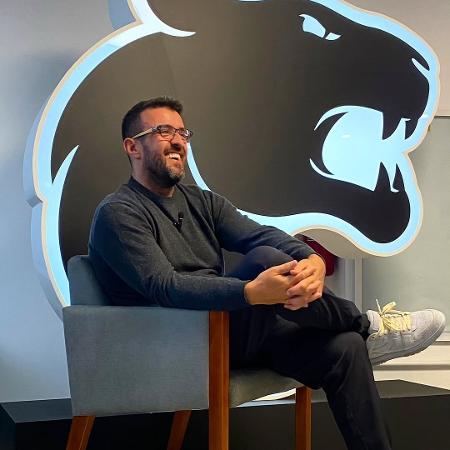
“It was very difficult to build a company that competes with the world while being from Brazil. The dollar against the Real, salary competition, all of it. Think about the biggest organisations: they’re all earning in dollars, billing in dollars, and structuring their sponsorship relationships in dollars. We do it in Reais and have to pay out in dollars. It’s a brutal fight. If we’re not extremely precise in our decision-making, on cost, on everything, we can’t win that battle coming from Brazil.”
He added that, as a growing organisation committed to maintaining a lean structure, FURIA will now prioritise cost-effective, specialised operational management over high-cost executive positions. The restructuring included a strategic phase-out of the traditional executive finance (CFO) role in favor of a modified organisational structure. “We’re going to look for someone in a Controller position,” Akkari explained. “Since we brought Itaú [Brazilian bank] in as our investment and M&A partner, they assist us with macro-level financial strategy.”
Brand recognition is outpacing budgets
Akkari pointed to FURIA’s standing as validation that the organisation’s approach is working: last year, FURIA was ranked in the 2025 top 20 brands in Brazil for engagement on Instagram, ahead of established consumer names including its partner adidas. But he was careful to separate that recognition from proportional revenue growth.
“When the CMOs of big brands look at that and see us as a viable asset to pair with their own brands, that’s a huge validation for us,” Akkari said. “But that doesn’t necessarily mean the financial side moves the same way. Big brands sometimes commit smaller budgets than mid-sized companies do, precisely because they’re big and their name alone helps position you and helps you grow. Contracts don’t just climb because the brand on the jersey got more famous. That’s not really how it works most of the time.”

He said the bigger value of those partnerships often lies in access rather than direct spend. Specifically, exposure to senior marketing leadership at partner brands, which he said has elevated FURIA’s own team. Akkari cited relationships with contacts at Red Bull, BIS chocolate (owned by Mondelēz) and Hellmann’s contacts as examples of the kind of experienced marketing talent FURIA now regularly works alongside. “Getting access to that calibre of people gives you an exponential gain over the long term. But it is a long-term game, you have to make it happen.”
FURIA counts twelve active sponsors, among the highest of any organisation in esports globally — a scale Akkari said eventually outgrew FURIA’s previous structure of multiple account managers without a single senior lead. The organisation reinforced its partnerships team and recently hired Marina Andriolli as Partnership Coordinator to lead account management for all partners. “We needed a strong head of partnerships. We had several account managers handling different accounts, but we needed a leader, someone senior enough to run all the partnerships alongside us,” Akkari said. “Marina looks at things from above. She operates at a higher level of seniority and relationship management.”
That structure leans heavily on data. Akkari described FURIA’s sponsorship reporting, built on dashboards drawn from tools including Blinkfire and Shikenso, as a differentiator with sponsors’ marketing teams. “Every sponsorship is backed by dashboards we control closely. The tools we use give brands a level of reporting that CMOs go crazy for, because they don’t see that from football clubs or in traditional sponsorship environments.”
Alongside its sponsorship base, FURIA has been building out licensing and merchandise as additional revenue streams. The organisation has recently licensed its brand to Foroni for FURIA-themed notebooks and to Luxcel for backpacks. These are early steps in a licensing model designed to generate ongoing royalty income, which FURIA is looking to expand further as part of its broader push to diversify revenue beyond sponsorship deals.
FURIA has also maintained a consistent presence in apparel, striking deals with brands including Champion and New Era, alongside launching its own in-house merchandise lines including collabs with partners such as Red Bull. Taken together with the licensing push, the moves point to an organisation trying to build revenue streams that sit apart from sponsorship and prize-money income, as well as becoming less exposed to swings like the recent CS2 Major sticker revenue collapse.
The CS2 sticker crash and how FURIA felt it
Akkari also addressed the recent collapse in CS2 Major sticker revenue, which has hit cash flow across multiple esports organisations in Counter-Strike. He said FURIA’s diversified sponsor base offered some protection compared to organisations more dependent on sticker income.
“It hits cash flow, it hits everything. It’s been very damaging for every organisation,” Akkari said. “We’re fortunate that FURIA has around twelve major sponsors, so proportionally we probably feel it a little less than some others. There are organisations out there with no sponsorship at all that are living off stickers. That’s tragic, it’s bad for the market, bad for us, bad for them, bad for everyone. I think it’s even bad for Valve.”
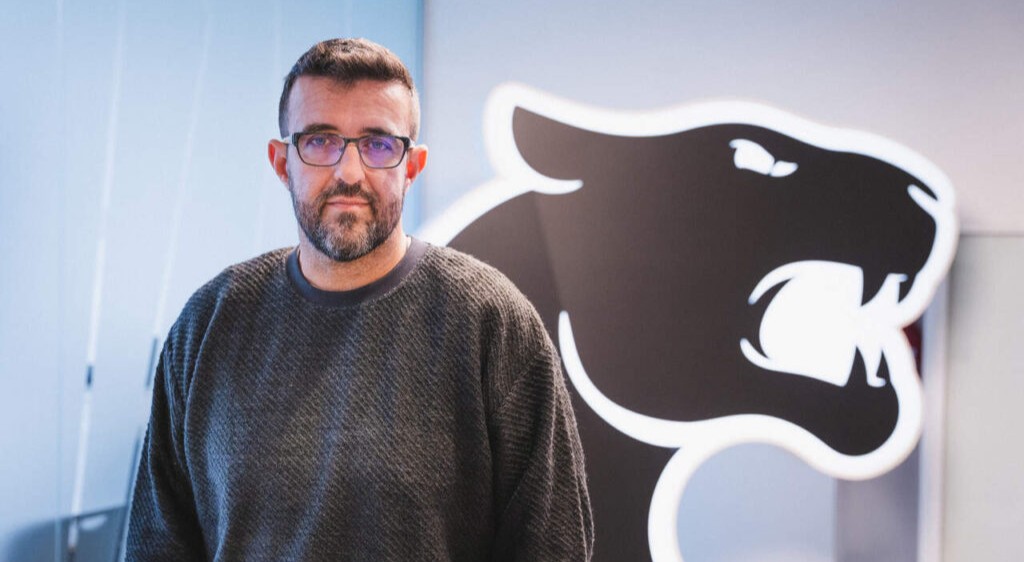
The financial vacuum left from Major stickers had its role in the decisions that triggered organisational changes. These already affected other areas such as design, production, communications, and even social media. However, the process is still not finished: “We will continue restructuring, we will continue changing, we will continue making major, impactful changes,” Akkari said.
Akkari was clear, however, that none of FURIA’s recent departures were performance-related. “These exits have nothing to do with effectiveness,” he said, “none of these people underperformed or weren’t good at their jobs. It’s either a personal decision, or it’s the maths, the cash flow, demanding that the company make a call.”
For a company that has spent much of its existence trying to prove that a Brazilian esports organisation can compete with the world’s biggest brands and teams, the next stage may be less about getting bigger at any cost and more about becoming precise enough to sustain that position.